
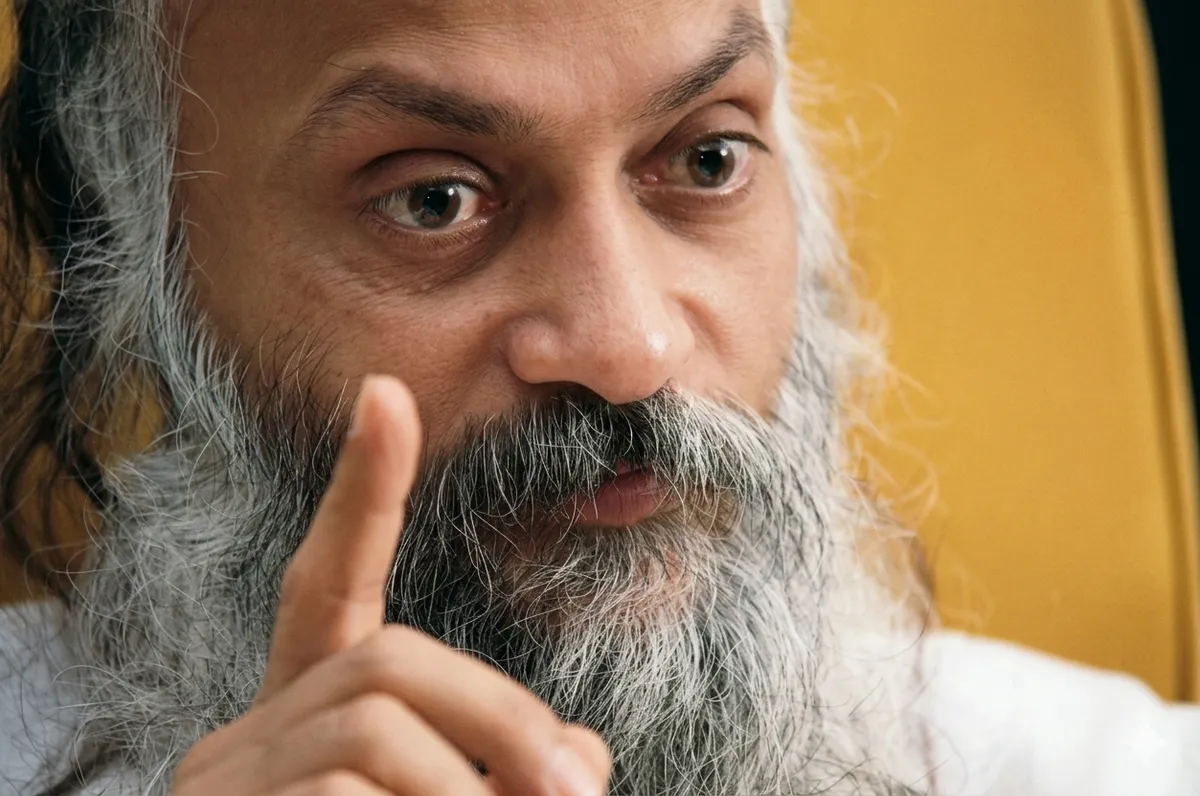
Osho's perspective on Compassion
When Osho Spoke About Compassion
Passages from the discourses where this theme comes alive.
Another friend has asked: How do you differentiate among compassion, nonviolence, pity, and love? Don’t they all mean the same?
Pity does not bring revolution; that is why revolution has not come to India. Pity rather blocks revolution. Because pity gives a beggar two coins, but it does not go in search of why beggars are produced in the first place. And when the beggar gets two coins, he too feels relief. He too does not reach that limit where he grabs the donor by the neck and says, “We will not take this charity. First you pick our pockets and then you give us alms. First you make us beggars and then you arrive to give us charity. First you suck our blood and then you build hospitals for us where ‘blood donation’ is conducted. What kind of net is this?” No, pity does not allow even this to happen. Pity becomes a consolation. And the poor feel that the rich are so “pitiful.” Nothing has shielded the rich…
Beloved Osho, you said that you lie out of compassion, and we, your sannyasins, can understand what you are saying. But can the outside world ever understand? Won't it create more misunderstanding about you, about rajneeshism, about your sannyasins? Please comment.
Compassion knows no conditions. It can do anything, it knows no right and no wrong. Compassion can lie to help you. In fact, in your sleep you can only understand lies, you cannot understand the truth. Many things are involved. First, the experience of enlightenment, awakening, illumination, happens when there is no mind present. Enlightenment is a no-mind experience. Words are not there, language is not there. In fact, you are not there either. It is such a silence, so profound and infinite, it cannot be expressed without lying. The moment the truth is said, it is no longer true. Just the process of saying it makes it a lie. To bring the wordless experience into words is to change the very quality of the experience. So in fact, anything that is great -- if it has been experienced at any time, by any individual -- out of sheer necessity…
In this same context, please also explain how a seeker can distinguish between a command arising from violent tendencies and a teaching arising from compassion?
A seeker will not be able to distinguish—and should not. It makes no difference to the seeker. Understand this well. Even if the master gives an order with a feeling of violence, if there is violence, it will be on the master’s head. The disciple should simply obey the order. He will be transformed whether the order was given out of compassion or out of a violent impulse. Whether I enjoy changing someone because there is a thrill in breaking and demolishing, or I give an order because there is the joy of a new birth, the compassion of creating the new—demolishing the old may carry violence; creating the new is compassion. Whatever the reason I am giving an order—that is my affair. For the one who receives the order, it makes no difference. A house has to be pulled down and rebuilt. It may be that I am taking…
Another friend has asked: Osho, what is the relationship between the method of meditation and jati-smaran (recollection of past lives)?
But the one who becomes skilled in this—who can fully awaken any day’s memory up to the age of five—will find that the memories begin to awaken completely. And you should test it. As today passes, note down some events and lock them up. After two years, try to recall today. Most of it will have been forgotten. Then remember—and after remembering, break the lock and compare whether what you recalled matches what you had written. You will be amazed—astonished—that besides what you wrote, many more details have come back which you did not even note at the time. They will all be there in memory. Buddha called this alaya-vijnana. There is a corner of the human mind he called the storehouse of consciousness. Like a junk room in the house where we keep all the odds and ends, there is a storehouse that collects memories—where everything from birth after…
Is this a story about a master's compassion and equanimity in the face of trust being abused?
definitionWhat is compassion for a rebellious man?
definitionWhat is compassion?
definitionProfound Quotes on Compassion
Explore our structured collection of meaning-mapped quotes regarding Compassion.