
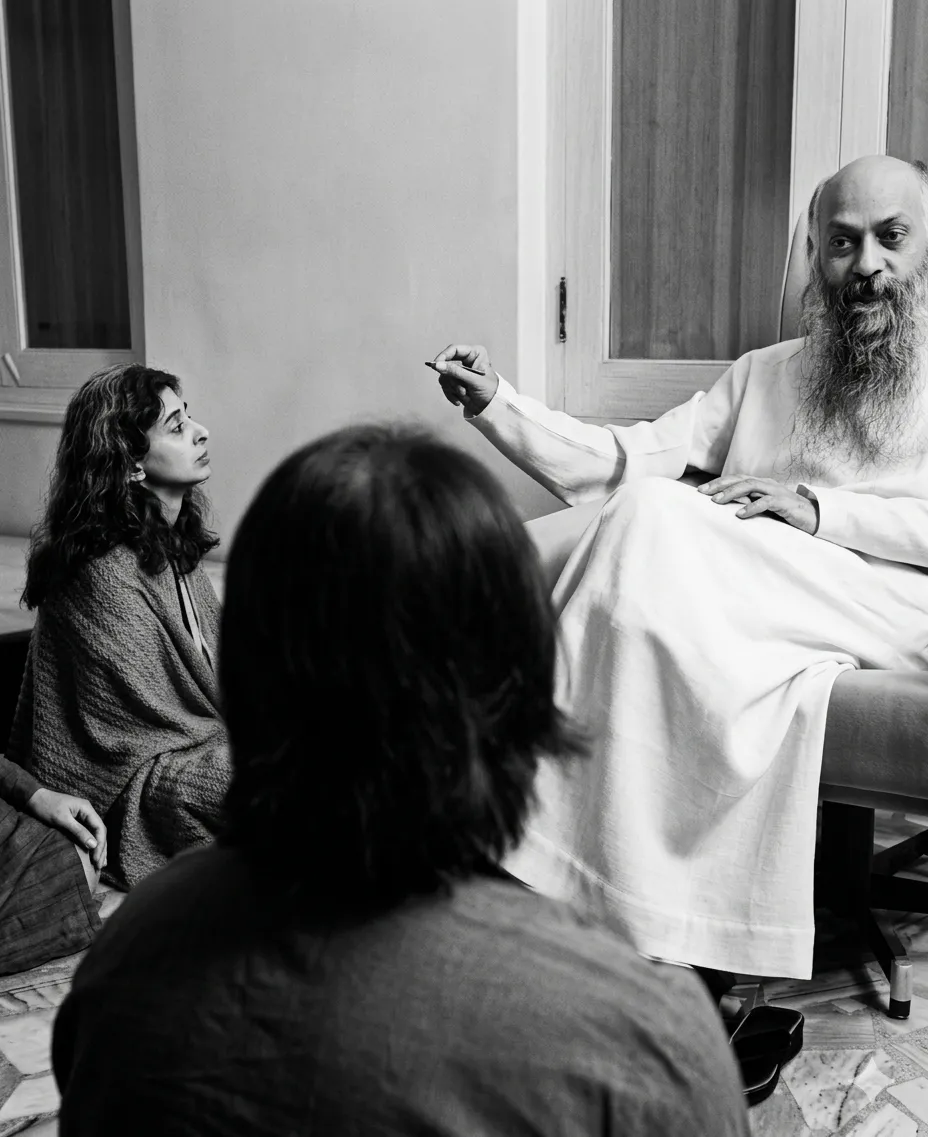
Osho's perspective on Praise
When Osho Spoke About Praise
Passages from the discourses where this theme comes alive.
Verse (Sanskrit): तुल्यनिन्दास्तुतिर्मौनी संतुष्टो येन केनचित्। अनिकेतः स्थिरमतिर्भक्तिमान्मे प्रियो नरः।। 19।। ये तु धर्म्यामृतमिदं यथोक्तं पर्युपासते। श्रद्दधाना मत्परमा भक्तास्तेऽतीव मे प्रियाः।। 20।। Transliteration: tulyanindāstutirmaunī saṃtuṣṭo yena kenacit| aniketaḥ sthiramatirbhaktimānme priyo naraḥ|| 19|| ye tu dharmyāmṛtamidaṃ yathoktaṃ paryupāsate| śraddadhānā matparamā bhaktāste'tīva me priyāḥ|| 20|| Translation: Equal in blame and praise, silent, content with whatever comes. Homeless, steady-minded, devoted—such a man is dear to Me।। 19।। Yet those who worship this nectar of righteousness, as declared. Faith-filled, with Me as their supreme aim—those devotees are exceedingly dear to Me।। 20।। Now let us take the sutra: And he who regards blame and praise alike, is reflective, always content with whatever sustenance comes for the body by any means, and is free of possessiveness toward dwelling—such a steady-minded, devoted man is dear to me.
तथा जो निंदा-स्तुति को समान समझने वाला और मननशील है एवं जिस-किस प्रकार से भी शरीर का निर्वाह होने में सदा ही संतुष्ट है और रहने के स्थान में ममता से रहित है, वह स्थिर बुद्धि वाला भक्तिमान पुरुष मेरे को प्रिय है। और जो मेरे परायण हुए श्रद्धायुक्त पुरुष इस ऊपर कहे हुए धर्ममय अमृत को निष्काम भाव से सेवन करते हैं, वे भक्त मेरे को अतिशय प्रिय हैं। निंदा-स्तुति को समान समझने वाला और मननशील है.।
"favour and disgrace cause one dismay, what we value and what we fear are as if within the self." what is meant by speaking thus of favour and disgrace? Disgrace is being in a low position (after the enjoyment of favour). The getting (of a favour) leads to the apprehension of losing it, and the losing of it leads to the fear of still greater calamity. This is what is meant by saying that favour and disgrace cause one dismay.
It is said that Benito Mussolini was passing by a cinema house one evening. Since the film has just started Mussolini went in unobserved. When, as usual, at the end of the picture, the audience stood up to hail Mussolini, whose picture appeared on the screen, Mussolini, naturally, was filled with pride. He asked the man beside him, "Does it fill you with joy to hail your President?" The man replied, "For your own good I advise you to stand up and hail the Dictator or you will find it very costly. It seems you are a stranger in Italy. You should know that it is impossible to live in this land without cheering Mussolini." Another incident I remember is about Churchill. He was on his way to address the Parliament when his car failed. He hailed a cab, but the driver said he could not take him because he…
The guru tells his disciples: the more humble you are, the simpler you are, the more worthy you become of praise. How amusing! For it is the ego that becomes the recipient of praise. We turn even humility into an ornament of the ego. We bestow prestige upon the one who is humble. And because we give prestige, it becomes easy for him to be humble—for humility becomes an ornament of the ego. Society cannot function without nourishing the ego, because society wants its hands to be inside you. If those hands are not within you, you become free of society. Hence from the small child to the old man we teach everyone ego—in countless forms. The good man has an ego and the bad man has an ego. The saint has an ego and the sinner has an ego.
… गुरु अपने शिष्यों को समझाते हैं, तुम जितने विनम्र रहोगे, जितने सरल रहोगे, उतने प्रशंसा के पात्र बनोगे। यह बड़े मजे की बात है। क्योंकि प्रशंसा का पात्र तो अहंकार बनता है। विनम्रता को भी हम अहंकार का ही आभूषण बनाते हैं। हम उस आदमी को समाज में प्रतिष्ठा देते हैं, जो विनम्र है। और प्रतिष्ठा देते हैं, इसलिए उसे विनम्र होने में सुविधा भी मिलती है। क्योंकि विनम्रता अहंकार का आभूषण बन जाती है। समाज बिना अहंकार को परिपुष्ट किए नहीं जी सकता। क्योंकि समाज चाहता है, आपके भीतर समाज के हाथ होने चाहिए। अगर समाज के हाथ आपके भीतर नहीं हैं, तो आप समाज से मुक्त हो जाते हैं। इसलिए छोटे से बच्चे से लेकर बूढ़े तक, हम हर आदमी को अहंकार सिखा रहे हैं--बहुत-बहुत रूपों में। भले आदमी का अहंकार है, बुरे आदमी का अहंकार है। …
Verse (Sanskrit): निधीनं’ व पवत्तारं यं पस्से वज्जदास्सिनं निग्गय्हवादिं मेधाविं तादिसं पंडितं भजे। तादिसं भजमानस्स सेय्यो होति न पापियो।।70।। न भजे पापके मित्ते न भजे पुरिसाधमे। भजेथ मित्ते कल्याणे भजेथ पुरिसुत्तमे।।71।। धम्मपीती सुखं सेति विपसन्नेन चेतसा। अरियप्पवेदिते धम्मे सदा रमति पंडितो।।72।। उदकं हि नयंति नेत्तिका उसुकारा नमयंति तेजनं। दारुं नमयंति तच्छका अत्तानं दमयंति पंडिता।।73।। Transliteration: nidhīnaṃ’ va pavattāraṃ yaṃ passe vajjadāssinaṃ niggayhavādiṃ medhāviṃ tādisaṃ paṃḍitaṃ bhaje| tādisaṃ bhajamānassa seyyo hoti na pāpiyo||70|| na bhaje pāpake mitte na bhaje purisādhame| bhajetha mitte kalyāṇe bhajetha purisuttame||71|| dhammapītī sukhaṃ seti vipasannena cetasā| ariyappavedite dhamme sadā ramati paṃḍito||72|| udakaṃ hi nayaṃti nettikā usukārā namayaṃti tejanaṃ| dāruṃ namayaṃti tacchakā attānaṃ damayaṃti paṃḍitā||73|| Translation: Like one who reveals a treasure, if you meet one who points out your faults a wise admonisher, a reprover, such a sage befriend। Keeping such company, you become better, not worse।।70।। Do not keep company with evil friends; do not keep…
What is the significance of praise?
definitionProfound Quotes on Praise
Explore our structured collection of meaning-mapped quotes regarding Praise.