
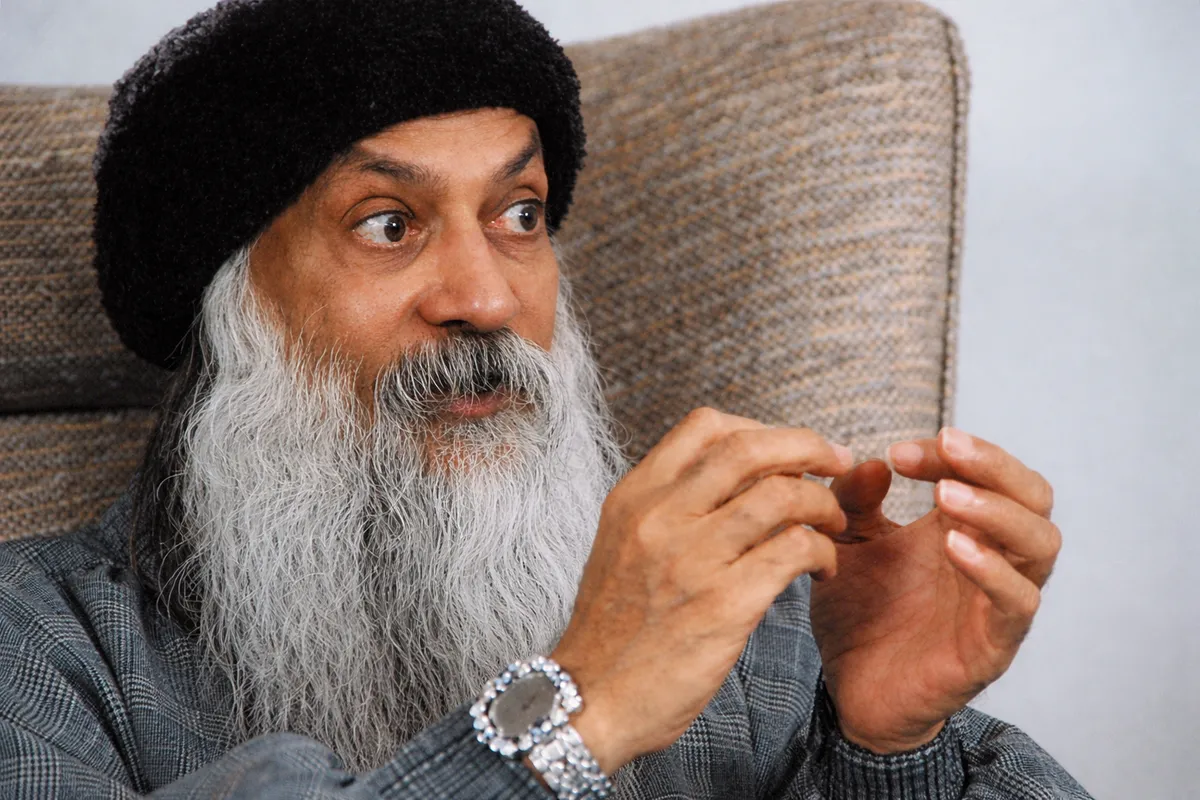
Osho's perspective on Burning
When Osho Spoke About Burning
Passages from the discourses where this theme comes alive.
Osho, I have just one prayer: that in the fire you have, I may be burned up completely and be lost.
Jesus has said: Do not try to save yourself, otherwise you will lose yourself. Jesus has said: Blessed are those who lose themselves, because then they can never be lost; they become available to the immortal. Only one thing here is stable; looked at from one side its name is meditation, from the other its name is love. Everything else is unstable. In this world only one thing is stable. If you look with the eyes of a devotee, its name is love; if you look with the eyes of the knower, its name is meditation, witnessing. But it is one and the same happening. Where meditation happens, the stream of love begins to flow; and where the stream of love flows, meditation happens. They come together, two sides of the same coin. I am not the eternal, nor are you; the existence of the life-breath is truth, of the…
तीसरा प्रश्न: ओशो, बस, एक प्रार्थना है कि आपके पास जो आग है, उसमें पूरी-पूरी जल जाऊं और खो जाऊं।
जीसस ने कहा है: अपने को बचाना मत, अन्यथा खो दोगे। जीसस ने कहा है: धन्यभागी हैं वे जो अपने को खो देते हैं, क्योंकि फिर वे कभी भी खो न सकेंगे; वे अमृत को उपलब्ध हो जाते हैं।
Question: The fourth question: Osho, it seems to me that I am an unripe fruit...? There is no question of “seems”—you certainly are! Otherwise you would have fallen long ago. Ripe fruits don’t hang on trees; ripe fruits fall. Falling is the only proof that the fruit has ripened—no other proof. Don’t think that turning yellow means ripeness; falling does. The Upanishads say: “tena tyaktena bhunjithah.” They alone have truly enjoyed who have renounced—because renunciation shows they have fully tasted and understood that enjoyment is futile. The day enjoyment ripens, renunciation happens by itself. The day the fruit ripens, it falls. “‘It seems…’” Drop this talk of seeming; know for certain: I am an unripe fruit. Take this perception as truth, and the race to ripen will begin; the athato moment—the “now, therefore”—will soon come near. Only when a person ripens is he a whole person.
प्रतीत होने का सवाल ही नहीं, होओगे ही! नहीं तो कभी के गिर गए होते। पके फल वृक्षों से थोड़े ही लटके रहे जाते हैं। पके फल तो गिर जाते हैं। गिरना ही सबूत है कि फल पक गया, और कोई सबूत नहीं। पीले हो जाने से कोई पक गया, ऐसा मत समझ लेना--गिर जाने से...। उपनिषद कहते हैं: ‘तेन त्यक्तेन भुंजीथाः।’ उन्होंने ही भोगा, जिन्होंने त्यागा। क्योंकि त्याग से ही पता चलता है कि ठीक से भोगा, समझ गए कि भोग बेकार है। जिस दिन भोग पक जाता है उस दिन त्याग अपने आप हो जाता है। जिस दिन फल पक जाता है उस दिन गिर जाता है। ‘ऐसा प्रतीत होता है...।’ प्रतीत होने की बात ही छोड़ दो; ऐसा जानो कि है, कि मैं एक अधपका फल हूं, निश्चित। इस प्रतीति को सत्य समझो, तो पकने की दौड़ शुरू होगी; तो ‘अथातो’ का क्षण शीघ्र ही पास आ जाएगा।
Is the fruit his alone? No—you don’t even understand what “fruit” means! The very meaning of fruit is this—the fruit is the burning. Here, this… this… the cause was your putting your hand in; the effect was your hand getting burned. But when this incident occurred, its dry samskaras will be left behind, because the incident happened to you. And if it didn’t happen to you, your hand is not burned. There is only the news that this person put his hand in—no more than that. This I call conditioning, I call it samskara; I don’t call it the fruit. The fruit was the burning that you have already unde
So each of us carries along only the reports of having undergone our respective fruits. And those reports do affect us. They affect us in the sense that they suggest to us the path of least resistance. A man who has committed murder repeatedly over the last ten lives has a strong likelihood of committing murder in this one too. The reason is that his tendency, his feeling, his samskara of killing, cultivated over ten births, has kept growing deeper. And to him that seems the simplest: if there’s a quarrel with someone, the first thing that occurs is, “Kill him.” No other option occurs to him. This is the nearest path; a dry groove has been etched there—water catches it and flows.
प्रश्न: फल तो उसी का है? नहीं, तुम फल का मतलब ही नहीं समझते न! फल का मतलब ही यह होता है--फल का मतलब है जलन। यह तो इसको हम, इसको...कॉ़ज तो था आपका हाथ डालना, इफेक्ट था आपके हाथ का जलना; लेकिन यह घटना घटी तो इस घटना के सूखे संस्कार पीछे रह जाएंगे, क्योंकि यह घटना आपको घटी। और आपको नहीं घटी तो आपका हाथ जला हुआ नहीं है। यह सिर्फ खबर है इस बात की कि इस आदमी ने हाथ डाला था, इस बात की भर खबर है। इसको मैं कंडीशनिंग कहता हूं, इसको संस्कार कहता हूं, फल नहीं कहता। फल तो जलन थी जो भोग लिया तुमने।
तो हम प्रत्येक व्यक्ति अपने-अपने फलों को भोगने की खबरें भर लिए हुए हैं अपने साथ। और वे खबरें भी हमें प्रभावित करती हैं। प्रभावित करती हैं इस अर्थों में कि वे हमें लीस्ट रेजिस्टेंस के मार्ग सुझाती हैं। जिस आदमी ने पिछले दस जन्मों में हत्या की है बार-बार, उसकी बहुत संभावना इस जन्म में भी हत्या करने की है। उसका कारण यह है कि दस जन्मों से हत्या करने की उसकी जो वृत्ति है, जो भाव है, जो संस्कार है, वह निरंतर गहरा होता चला गया है। और उसको सरल यही दिखाई पड़ता है, अगर किसी से झगड़ा हो तो पहली बात यही सूझती है कि मार डालो। पहली, दूसरी बात नहीं सूझती उसको। यह निकटतम का रास्ता है जिस पर सूखी रेखा बनी है, पानी पकड़ कर बह जाता है।
Osho, this aphorism from the Mahabharata seems to match your vision exactly—“muhurtam jvalitaṁ śreyaḥ, na tu dhūmāyitaṁ ciram.” “It is better to blaze for a moment than to smoulder for a long time.” Please be gracious and explain how this is possible.
So you may worship Buddha’s statue or read the Quran in the morning or go to church—it makes no difference; you do not trust because your life offers no evidence. Your life is smoke—and Krishnamurti speaks of a smokeless flame! You have not known even a smoky flame; only smoke. Wet wood smokes. The wetter the wood, the more the smoke. Remember: smoke is not part of the fire. People think smoke rises from fire. It does not. If the wood is utterly dry—with not a trace of moisture—there is no smoke. Smoke is from the water in the wood. Buddha rightly said: as long as your mind is wet with desire, there will be smoke. The day you are free of craving, of imagining, of the mind’s restless scrambling—when you are dry, like seasoned wood—then only flame will arise: a blazing, smokeless flame. That flame is life’s supreme wealth,…
Profound Quotes on Burning
Explore our structured collection of meaning-mapped quotes regarding Burning.