
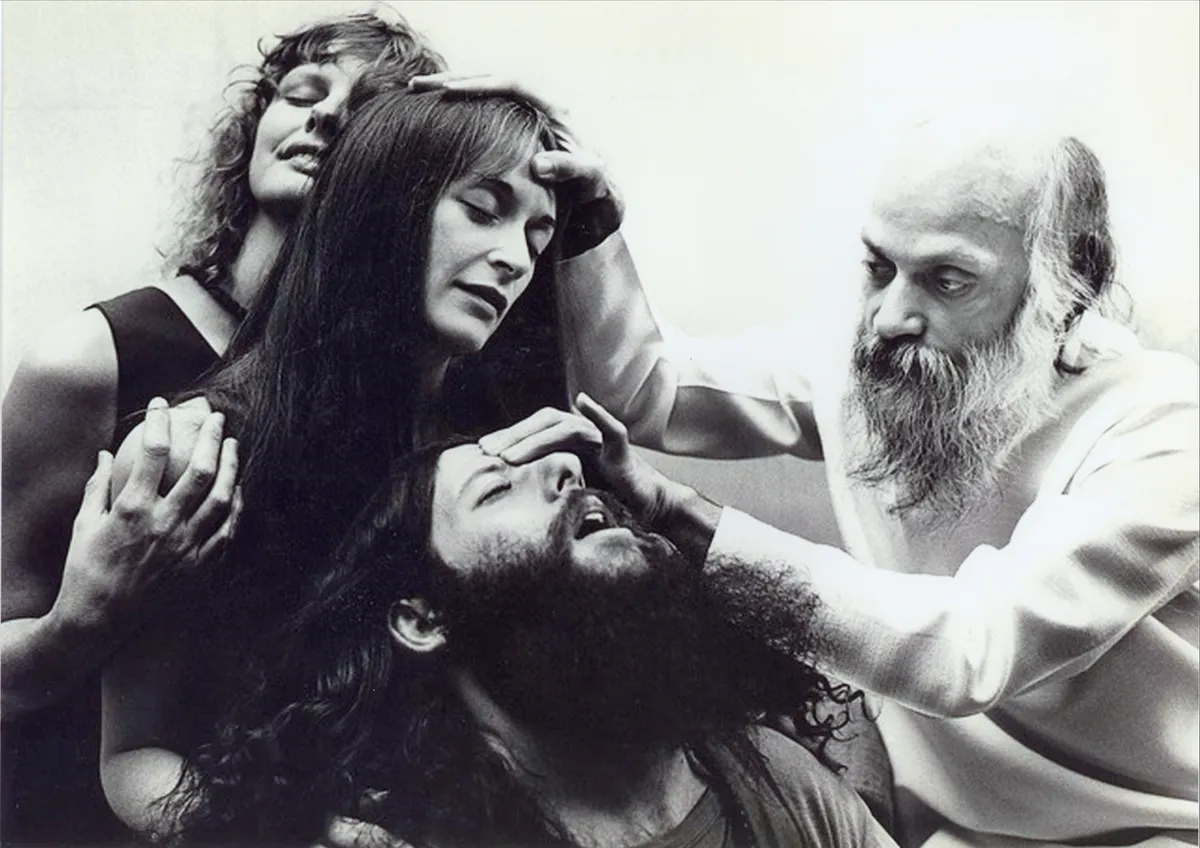
Osho refused every attempt to make truth an object — something provable, teachable, or containable in scripture. Truth in his discourses is an experience beyond mind, as private and as certain as love: no logic can establish it, no argument can shake it, and no formulation survives contact with it. What can be transmitted is at most a thirst.
The four passages here mark the corners of that vision — its subjectivity, its plurality of expressions, its price, and its endlessness — each linked into the discourse where Osho develops it.
Understanding Osho's Vision of Truth
The threads that run through his talks on truth. The short notes are Osho Live's; the quoted passages are his own words, checked against the talk.
No Objective Criterion
Asked for the criterion of truth, Osho answered that there is none and can be none — truth is subjective, like love, and science will always be silent about it.
Sahabsadev Hasan, truth is not an experience of the mind; hence no logic can prove it or disprove it. No argument can convince you about it or unconvince you about it. Truth is an experience beyond mind, so there is no objective criterion possible. That's why science never talks about it, because science can only talk about things which can be objectively proved. Truth is a subjective experience, just like love.
Truth across the years
When Osho spoke about truth: talks where it comes up at least 5 times, counted from 6,627 dated talks on Osho Live.
Where he speaks of it most: Es Dhammo Sanantano · Tao Upanishad · Maha Geeta
| Year | Talks about it | Dated talks that year |
|---|---|---|
| 1964 | 12 | 13 |
| 1965 | 15 | 19 |
| 1966 | 2 | 7 |
| 1967 | 28 | 33 |
| 1968 | 13 | 30 |
| 1969 | 81 | 110 |
| 1970 | 71 | 131 |
| 1971 | 61 | 111 |
| 1972 | 80 | 223 |
| 1973 | 76 | 205 |
| 1974 | 139 | 271 |
| 1975 | 127 | 303 |
| 1976 | 240 | 700 |
| 1977 | 245 | 679 |
| 1978 | 292 | 702 |
| 1979 | 322 | 683 |
| 1980 | 338 | 674 |
| 1981 | 60 | 122 |
| 1984 | 26 | 63 |
| 1985 | 94 | 356 |
| 1986 | 129 | 369 |
| 1987 | 153 | 486 |
| 1988 | 69 | 276 |
| 1989 | 40 | 61 |
More in his words
One Truth, Many Mirrors
Why so many religions if truth is one? Because truth reflects in the eyes of the one who sees it, Osho said — Christianity is truth via Christ, Buddhism truth via Buddha.
Truth is one, but interpretations are many and can be millions. Truth is one, but the people who see truth are different. Their eyes give different angles. Christ has his own unique personality, as Krishna has. When Christ looks at the truth the truth reflects in his eyes; that becomes Christianity. When Krishna looks at the truth, truth reflects in his eyes, and that becomes Hinduism. Hinduism is not direct truth. Christianity is not direct truth. They have come via unique persons, and the unique person's uniqueness is always reflected in it. When Buddha comes to truth, truth becomes Buddhist, has to become; it takes the color of Buddha.
The Price Is Yourself
Is there an easy way to truth? Osho's early talks already carry the answer: the fee is everything you think you are.
It is the law of life that we have to pay price of everything. Nothing is free. And the more valuable an object, the more we have to pay for it. The price for knowing the Truth is our own self -- yes, nothing less than our own self. Lose yourself and find the Truth. In other words, you find yourself when you lose yourself.
A Search Without End
Where does the search for truth end? It doesn't, Osho said — a truth with a boundary would not be truth.
The very meaning of truth is: the infinite. The search for truth has no end. The search for truth has a beginning, but no end. The journey begins, but it is never finished. It cannot be finished. Because if the journey were to be completed, it would mean that truth is also limited. You have reached the last boundary—then what lies beyond it? No, truth is boundless. This is what we have said again and again in many ways—the divine is infinite, limitless, immeasurable, expansive, vast. If you enter the ocean, it is true that you have entered the ocean; but you have not attained the whole ocean—so much of the ocean still remains. You go on swimming, keep on swimming—still the ocean remains, and remains; the more you cross, the more remains.
From the discourses
Passages where Osho speaks on truth, each linked to the exact place in the talk.
Osho, what is the first experience of samadhi like?
You will know only when it happens. It cannot be said; at most a few hints can be given. It is as if, in the dark, a lamp is suddenly lit. Or as if a dying patient, right at the edge of death, suddenly finds a medicine that works; life’s wave, life’s thrill spreads again—so it is. As if a corpse becomes alive—such is the first experience of samadhi. It is the taste of nectar. The experience of the ultimate music. But it will be only when it happens; and only then will you understand. You will not understand by my saying it. It is as with love. How can anyone explain it? To someone who has never loved, never known love, no matter how many explanations you offer—he will hear it all and still ask, “I haven’t understood; please explain a little more.” It is like explaining light to…
तीसरा प्रश्न: ओशो, समाधि का पहला अनुभव कैसा होता है?
होगा तो ही जानोगे। कहा जा सके, ऐसा नहीं है। कुछ-कुछ इशारे किये जा सकते हैं। जैसे अंधेरे में अचानक दीया जल जाये, ऐसा होता है। या जैसे बीमार मरता हो और अचानक कोई दवा लग जाये...मरते-मरते कोई दवा लग जाये; और जीवन की लहर, जीवन की पुलक फिर फैल जाये--ऐसा होता है। जैसे कोई मुर्दा जिंदा हो जाये--ऐसा होता है समाधि का पहला अनुभव। अमृत का अनुभव है। परम संगीत का अनुभव है। पर होगा तो ही होगा। और होगा तो ही तुम समझ पाओगे; मेरे कहने से समझ में न आ सकेगा। प्रेम में जैसा होता है। अब कोई किसी को कैसे समझाये? …
Question: BELOVED OSHO, WHAT IS THE CRITERION OF THE TRUTH? Sahabsadev Hasan, truth is not an experience of the mind; hence no logic can prove it or disprove it. No argument can convince you about it or unconvince you about it. Truth is an experience beyond mind, so there is no objective criterion possible. That's why science never talks about it, because science can only talk about things which can be objectively proved. Truth is a subjective experience, just like love. What is the criterion of love? Can you prove when you fall in love? Can you prove that really you have fallen in love? Is there a way to prove it? Is there any argument, any logic that will support you -- any eyewitnesses? All that you can say is, "I know for certain that my heart is beating differently" -- but that is something inner to you.
A few small questions: Osho, Buddha said the journey to truth is solitary. Then why did he create the vast Sangha?
So that many people could set out together, each alone, on the journey. The Sangha was not created to go together. No one can enter samadhi together. One has to go alone. The journey always ends in aloneness. But in the beginning, if there is company, great reassurance, great courage arises. When you meditate alone, trust doesn’t come that anything will happen. You have lost trust in yourself. Meditate with ten thousand people: you may not trust yourself, but you begin to trust the crowd of nine thousand nine hundred and ninety-nine. Each of them is in the same condition. They too don’t trust themselves. And why would they? The total earning of a whole life is rubbish. No real experience has come. Their very faith is lost that “I can still find peace.” Impossible! Even if joy happens to them, they will think, “This is some fantasy, or someone…
थोड़े से छोटे-छोटे प्रश्न: ओशो, बुद्ध ने कहा कि अकेले ही है सत्य की यात्रा। फिर विराटतम संघ क्यों बनाया?
… साथ जाने के लिए संघ नहीं बनाया। साथ तो कोई जा ही नहीं सकता समाधि में। अकेले-अकेले ही जाना होता है। यात्रा का अंत तो सदा अकेले पर होता है। लेकिन प्रारंभ में अगर साथ हो, तो बड़ा ढाढ़स, बड़ा साहस मिल जाता है। तुम अकेले ध्यान करो, तो भरोसा नहीं आता कि कुछ होगा। तुम्हें अपने पर भरोसा खो गया है। तुम दस हजार आदमियों के साथ ध्यान करो, तुम्हें अपने पर तो भरोसा नहीं है, यह नौ हजार नौ सौ निन्यानबे लोगों की भीड़ पर तुम्हें भरोसा आ जाता है। इनमें से भी प्रत्येक की यही हालत है। इनको अपने पर भरोसा नहीं है। हो भी क्या अपने पर भरोसा! जिंदगी भर की कुल कमाई कूड़ा-करकट है। कुछ अनुभव तो आया नहीं। इनकी आस्था ही खो गयी है कि हमें, और शांति मिल सकती है। असंभव! …
A friend has asked, Osho, can God and Truth be available to everyone? Because people’s intelligence differs. And another person has asked: some people seem to have no intelligence at all—can they also find God? People are ordinary and extraordinary; some are intelligent, some less intelligent. So can everyone find God?
Certainly, God can be available to all. Why? God is not something like poetry, mathematics, painting, or anything of that sort. One man is talented and paints; another is gifted in mathematics; a third in poetry; a fourth in science; a fifth in engineering; others in other directions. These are our particular talents. But God is not a matter of talent—God is our very nature. Just as we all breathe, and no one asks whether everyone can breathe. The intelligent and the unintelligent breathe—how is that possible? The intelligent love, and the unintelligent also love—how is that possible? As love is the tone of everyone’s life-breath, as breathing is part of everyone’s life—these are outer things; God is the very center of everyone’s life. Whether we know it or not, He is. The life within us all is what I call God. So He is available to all—that is the…
एक मित्र ने पूछा है कि ओशो, क्या परमात्मा और सत्य सभी को मिल सकता है? क्योंकि सभी में तो बुद्धि अलग-अलग है। और एक दूसरा प्रश्न किसी ने पूछा है कि कुछ लोगों में तो बुद्धि बिलकुल ही नहीं है, उनको भी परमात्मा मिल सकता है? और लोग साधारण हैं, कुछ लोग असाधारण हैं, कुछ बुद्धिमान हैं, कुछ कम बुद्धिमान हैं, तो क्या सभी को परमात्मा मिल सकता है?
निश्चित ही, सभी को परमात्मा मिल सकता है। क्यों? परमात्मा कोई ऐसी बात नहीं है जैसे काव्य, गणित, पेंटिंग या कुछ और। एक आदमी टेलेंटेड है, प्रतिभाशाली है, चित्र बनाता है; दूसरा आदमी प्रतिभाशाली है गणित में; तीसरा आदमी प्रतिभाशाली है काव्य में; चौथा आदमी विज्ञान में; पांचवां आदमी इंजीनियरिंग में; कोई और किसी दिशा में। ये सारी हमारी विशिष्ट-विशिष्ट प्रतिभाएं हैं। लेकिन परमात्मा कोई प्रतिभा की बात नहीं है, परमात्मा तो वैसा है--हमारा स्वरूप। जैसे हम सब श्वास लेते हैं और कोई यह नहीं कहता कि क्या सभी लोगों को श्वास लेना संभव है? बुद्धिमान भी, गैर-बुद्धिमान भी श्वास ले रहे हैं और बुद्धिमान भी श्वास ले रहे हैं, यह कैसे संभव है? और बुद्धिमान भी प्रेम कर रहे हैं और गैर-बुद्धिमान भी प्रेम कर रहे हैं, यह कैसे संभव है? जैसे प्रेम सबके प्राणों का स्वर है, जैसे श्वास सबके जीवन का अंग है, तो ये तो ऊपरी चीजें हैं, परमात्मा तो सबके जीवन का केंद्र है। हम उसे जानें या न जानें, लेकिन वह है। …
Question: And the last question: Osho, where does the search for truth end? The very meaning of truth is: the infinite. The search for truth has no end. The search for truth has a beginning, but no end. The journey begins, but it is never finished. It cannot be finished. Because if the journey were to be completed, it would mean that truth is also limited. You have reached the last boundary—then what lies beyond it? No, truth is boundless. This is what we have said again and again in many ways—the divine is infinite, limitless, immeasurable, expansive, vast. If you enter the ocean, it is true that you have entered the ocean; but you have not attained the whole ocean—so much of the ocean still remains. You go on swimming, keep on swimming—still the ocean remains, and remains; the more you cross, the more remains.
Question: Third question: Osho, I am a poet; isn’t that enough to attain truth? Dinesh! Being a poet is beautiful, even necessary—but not sufficient. One must also be a rishi, a seer. Above the poet is the seer. In language the two words may seem to overlap, but existentially there is a great difference. The poet sees as if in a dream; the seer sees with eyes open, awake. The seer is a witness; the poet is imaginative. In the poet’s imagination, sometimes reflections of truth appear, as when the full moon is in the sky and its reflection forms in the lake. The poet is like the moon’s reflection in the lake, while the seer has lifted his eyes and seen the moon in the sky. The poet keeps singing of the reflection and gets entangled in it.
If truth cannot be expressed in words, then why have all the buddhas used words?
A parable: THE GREAT MYSTIC, Rabia of Basra, was immensely beautiful. And a beauty not of this world. Once a rich young man from Iran comes to Basra. He asks people, "Is there anything that is out of the way, something special here?" "Yes," they all tell him. "We have the most beautiful woman of the world!" The young man naturally becomes interested and he asks, "Where can I find her?" And they all laugh and say, "Well, where else?... in a brothel!" That repulses the rich young man, but finally he decides to go. And when he gets there, the matron asks for an exorbitant fee. He pays the fee and is ushered in. There, in a silent and simple room, a figure is praying. What beauty she has! He has never seen such beauty and grace, not even in his dreams. Just to be there is a benediction,…
Truth is one, you say. Then why are there so many religions?
Truth is one, but interpretations are many and can be millions. Truth is one, but the people who see truth are different. Their eyes give different angles. Christ has his own unique personality, as Krishna has. When Christ looks at the truth the truth reflects in his eyes; that becomes Christianity. When Krishna looks at the truth, truth reflects in his eyes, and that becomes Hinduism. Hinduism is not direct truth. Christianity is not direct truth. They have come via unique persons, and the unique person's uniqueness is always reflected in it. When Buddha comes to truth, truth becomes Buddhist, has to become; it takes the color of Buddha. When you will come to see the truth, there will be a meeting of you and the truth. The truth will transform you and you will transform the truth, and the ultimate result will be a cross-breeding between you and truth.…
A monk asked, is there no easy and convenient way to attain the truth?
It is the law of life that we have to pay price of everything. Nothing is free. And the more valuable an object, the more we have to pay for it. The price for knowing the Truth is our own self -- yes, nothing less than our own self. Lose yourself and find the Truth. In other words, you find yourself when you lose yourself. If you do not lose yourself, you neither gain the Truth, nor yourself. All this may sound complicated, but it can be sorted out by deep contemplation. Haven't you, at times, felt, that whom you consider yourself is not your true self? No, if the 'I' we so often refer to in our daily life, were our true self, there was no question of searching for the Truth. Only because that 'I' is not true, there is the thirst for the Truth. Within ourselves, on…
Beloved Osho, you spoke the other night about honest truth. Mystics have often spoken of the "ultimate truth." can the truth be anything other than ultimate?
Mahavira says that truth itself is relative: he has no ultimate truth. Buddha has no ultimate truth. Again the difficulty is that Mahavira and Buddha can be misunderstood when they say that there is no ultimate truth but that every truth is relative: it can be one thing in one situation, it can be another thing in another situation, and because it is related to situations it cannot have any ultimacy. This goes against all the great mystics. Only Mahavira and Buddha, two people... But I know both, and I understand both better than their own followers, because none of their followers have been able to make any sense out of it: either all the mystics are wrong, or Buddha and Mahavira are wrong! I say nobody is wrong. What Mahavira says is that truth has seven aspects, and Buddha says that truth has four aspects. They are really referring…
Question: First question: Osho, truth cannot be spoken—then why do saints speak? Precisely to bring you news of that which cannot be said. So that you do not take only what can be said as the whole of life and come to an end there. There is the unsaid; there is that which can never be said—and that is the essence. The small can be said; how to say the vast! Words are so tiny—how can the limitless be contained within the narrow bounds of words! One can point; one cannot fully express. Saints speak so that you do not end your journey in words alone. Words are very small. Language does not travel far; the true reach is of silence. Words rise from the throat and reach the ear; there they remain. Silence travels far—into the infinite.
इसीलिए कि उसकी खबर तुम तक पहुंचा दें, जो कहा नहीं जा सकता है। इसीलिए कि जो कहा जा सकता है, उसी को जीवन मान कर समाप्त मत हो जाना। अनकहा भी है; न कहा जा सके, वह भी है--और वही सार है। क्षुद्र कहा जा सकता है; विराट कैसे कहा जाए! शब्द इतने छोटे हैं; शब्दों की छोटी सी सीमा में कैसे असीम समाए! इशारा किया जा सकता है--अभिव्यक्ति नहीं की जा सकती।
Have you already told us the whole truth, or are there still a few more surprises waiting for your sannyasins?
The whole truth cannot be told, so there will always be surprises waiting for you. The whole truth is a very big mystery, far bigger than is possible to express. It has so many dimensions, so many aspects; anybody who thinks he has told the whole truth does not know truth. I will tell you two stories -- one is very famous -- from PANCHTANTRA, one of the ancientmost collections of parables in the East. Aesop's fables in the West are all stolen from PANCHTANTRA; nothing is new in them. PANCHTANTRA is at least two thousand years older than Aesop's fables. In fact, there has never been any such man as Aesop. Somehow, because Gautam Buddha was continuously quoting from the parables of PANCHTANTRA... There have been many names given in love to Gautam Buddha because of his qualities; one is Bodhisattva. Moving from one language to another till it…
Questions put to Osho about truth
Each opens the talk at the moment the question was asked.
- Osho, what is the first experience of samadhi like? Mare He Jogi Maro · Discourse 2 · 1979-11-12
- A few small questions: Osho, Buddha said the journey to truth is solitary. Then why did he create the vast Sangha? Es Dhammo Sanantano · Discourse 2 · 1975-11-22
- A friend has asked, Osho, can God and Truth be available to everyone? Because people’s intelligence differs. And another person has asked: some people seem to have no intelligence at... Rom Rom Ras Peejiye · Discourse 4 · 1967-04-14
- If truth cannot be expressed in words, then why have all the buddhas used words? Walk Without Feet Fly Without Wings And Think Without Mind · Discourse 8 · 1978-01-08
- Truth is one, you say. Then why are there so many religions? The Wisdom Of The Sands Vol 1 · Discourse 3 · 1978-02-23
- A monk asked, is there no easy and convenient way to attain the truth? Lead Kindly Light · Discourse 1
- Beloved Osho, you spoke the other night about honest truth. Mystics have often spoken of the "ultimate truth." can the truth be anything other than ultimate? Beyond Psychology · Discourse 22 · 1986-04-23
- Have you already told us the whole truth, or are there still a few more surprises waiting for your sannyasins? Socrates Poisoned Again After 25 Centuries · Discourse 24 · 1986-03-03
Frequently asked
Short answers by Osho Live, based on the passages above.
Can truth be expressed in words, according to Osho?
No — and he was candid about the paradox of saying so in millions of words. Words can point, seduce, and awaken thirst, but the essential remains unsaid. He compared the buddhas' speech to fingers pointing at the moon: useful only if you look past them.
Why did Osho say truth cannot be borrowed?
Because a borrowed truth is a belief, and belief is the enemy of knowing. Truth must be realized firsthand, the way love or taste must be. This is why he attacked scripture-worship and tradition: they hand you conclusions and rob you of the journey that alone makes them true.
Is truth relative or ultimate in Osho's teaching?
Both framings appear, deliberately. He honored Mahavira's insistence that every stated truth is partial and situational, while affirming that the experience itself — silent, subjective, beyond mind — is absolute. Statements about truth are relative; the taste of it is not.