
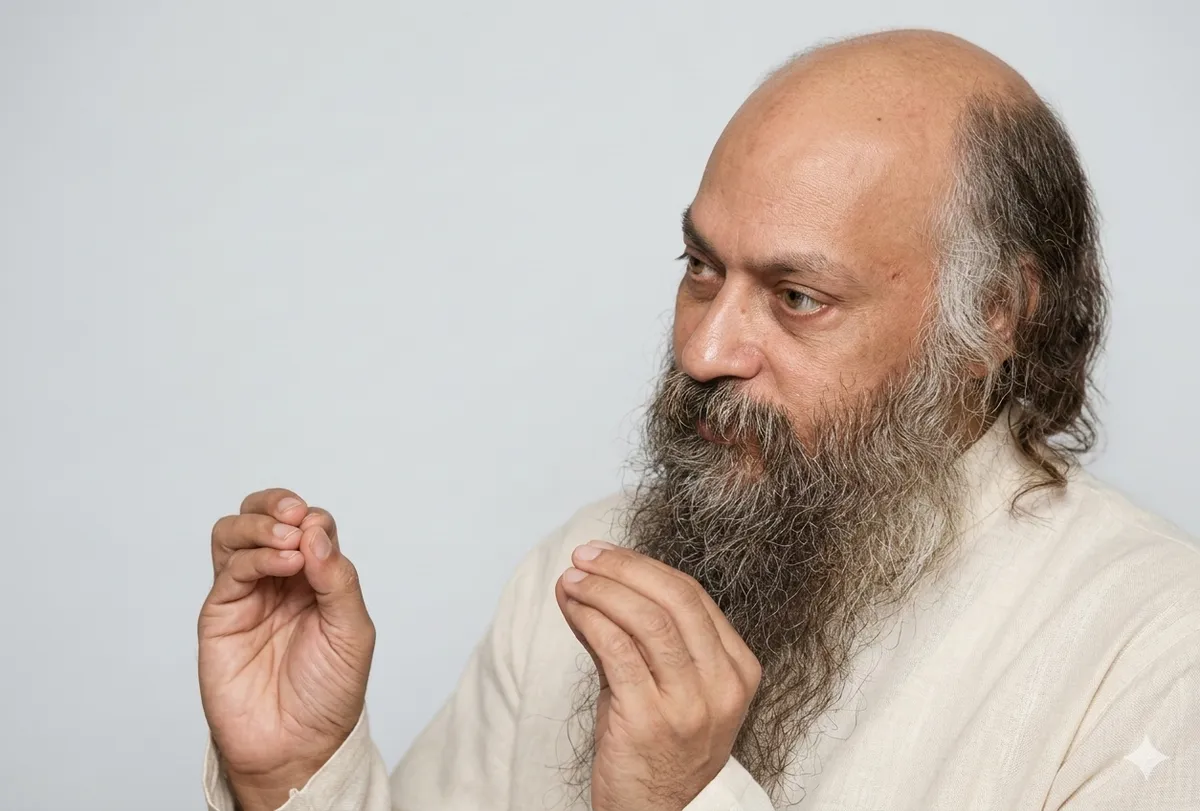
Osho's perspective on Thoughts
When Osho Spoke About Thoughts
Passages from the discourses where this theme comes alive.
Why is it thought that thoughts interfere in knowing the truth?
And then there are a thousand and one functions. On each step of the journey there are problems -- because this journey is not like a plain highway. At each point there are diversions, at each point there are by-paths. It is a very zig-zag journey. It is almost a riddle. It is a labyrinth. Unless there is somebody who has gone the whole way and knows the way, there is a greater possibility that you will be lost somewhere, that you will take a wrong route. From each step the wrong route is available. And of a hundred routes, one is right, ninety-nine are wrong. This is the situation. You will need somebody to help you at each point of the journey. But as you grow, trust will also grow. When you take the first step with the Master you will see something has happened. Then more trust naturally…
A friend has asked: Osho, you said about a wayward son that one should let him pass through his experiences, and he will learn on his own. But even after experiencing, he still prefers the same thing—someone is asking about his wayward son—no matter how much suffering he has to endure, even if death itself should come, still he does the same. After stumbling again and again, he repeats it. What can be done? How to reform him?
You will not be able to reform him. If life cannot reform him, if even death cannot reform him, what will you be able to do? If what you say is true—that again and again, even after suffering, he does the same thing; even if death comes, he will still do the same thing, and he does not change—then take your hands off. You will not be able to reform him. You cannot be stronger than death. And one who does not learn from suffering—what will he learn from you? Do not call him a wayward son. You have found yourself a Jadabharata. Because those whom suffering does not reform, whom even death does not reform—these are great, arrived masters; they are in the ultimate state. Do not even try to reform such a one. And why are you so eager to reform another? It is enough to reform yourself.…
एक मित्र ने पूछा है कि ओशो, आपने कुपुत्र के बारे में बताया कि उसको अनुभवों में से गुजरने देना चाहिए, तो वह खुद सीख जाएगा। लेकिन अनुभव लेने के बाद भी वह वही पसंद करता है--कोई अपने कुपुत्र के संबंध में पूछ रहे हैं--चाहे कितना ही दुख झेलना पड़े, चाहे मौत भी क्यों न आ जाए, फिर भी वह वही करता है। बार-बार ठोकर खाकर भी वही दोहराता है। उसका क्या उपाय किया जाए? उसको सुधारने का क्या तरीका है?
आप न सुधार पाएंगे। जिसको जिंदगी नहीं सुधार पा रही, मौत नहीं सुधार पा रही, उसको आप क्या सुधार पाएंगे? अगर आपकी बात सच है कि बार-बार दुख पाकर भी वह वही करता है, मौत भी आ जाए तो भी वही करता है, और सुधरता नहीं, तो आप हाथ अलग कर लें। आपसे नहीं सुधर पाएगा। आप मौत से ज्यादा मजबूत नहीं हो सकते। और जो दुख से नहीं सीख पा रहा है, वह आपसे क्या सीख पाएगा? कुपुत्र मत कहिए उसको। आपको कोई जड़भरत मिल गया है। क्योंकि जिसको दुख नहीं सुधारते, मौत नहीं सुधारती, वे तो बड़े पहुंचे हुए महात्मा हैं, वे तो परम अवस्था में हैं। उनको आप सुधारने की कोशिश ही मत करिए।
You also ask us not to hold on to thoughts. Does this apply to good thoughts as well?
If you want to know your real being you must rid yourself of both good and evil and become empty, without content. Thoughts, both of good and of evil, are all acquired things. They come from outside: they pour in from the outside. Your real being is hidden under there, under this load of chains. It is necessary to break these chains. It makes no difference whether the chains are of iron or of gold. Whatsoever comes from without is an acquired thing, an acquisition -- but inside us there is a state of pure consciousness where no outside impressions can enter. The soul comes into its own only in the absence of all one's outer trappings, of all one's outer conditionings. To discover your soul you must have an unconditioned mind. But we are full of thoughts and those who are religious are even fuller, always adding to the…
It has been asked: It has been asked, Osho, you tell us to think—yet what will come from thinking alone? As I keep thinking, I get drowned in thoughts themselves, and my conduct does not change. My conduct remains exactly the same. So please tell me, how is conduct to be changed?
Commonly it is said, “What value is there in thought? The real value is in conduct.” This is utterly false and futile. It is false and futile because conduct, deep down, is nothing but the expression of thought. Where there is no seed of thought, there can be no plant of conduct. Yes, it is possible to throw a false conduct over oneself from the outside. But false conduct has no value whatsoever, except that it deceives others and destroys one’s own life. The question asked is: “What will happen by thought alone?” This is why I ask, and why the question arises—if I were to pray to you, I would say: as yet no thought has been born in you. You are taking others’ thoughts to be your own. Hence the problem of trying to bring thought and conduct into harmony. If the thought were truly yours, it would…
पूछा है: पूछा है कि ओशो, आप कहते हैं विचार करने को, लेकिन अकेले विचार करने से क्या होगा? मैं तो विचार करते-करते विचारों में ही डूब जाता हूं और आचरण तो बदल नहीं पाता। आचरण वही का वही रह जाता है। तो यह बताइए आचरण कैसे बदले?
सामान्यतः यह कहा जाता है कि विचार का क्या मूल्य है, मूल्य तो है आचरण का। यह बात एकदम ही झूठी और व्यर्थ है। यह इसलिए झूठी और व्यर्थ है कि आचरण तो बहुत गहरे में विचार की ही अभिव्यक्ति है। जहां विचार का बीज नहीं है, वहां आचरण का पौधा भी नहीं हो सकता है। हां, यह हो सकता है कि झूठा आचरण ऊपर से ओढ़ लिया जाए। लेकिन झूठे आचरण का कोई भी मूल्य नहीं है सिवाय इसके कि उससे दूसरों को धोखा दिया जाता है और खुद का जीवन नष्ट होता है। यह जो पूछा है कि ‘अकेले विचार से क्या होगा?’ यह इसलिए पूछा है और इसलिए प्रश्न उठता है--अगर मैं आपसे प्रार्थना करूं, तो मैं यह कहूंगा: अभी आपके भीतर विचार का जन्म ही नहीं हुआ। आप दूसरों के विचारों को अपना विचार समझ रहे हैं। …
How can one control thoughts?
practiceHow can you stop thinking?
practiceHow do we drop thoughts?
practiceWhat is the nature of thoughts?
definitionProfound Quotes on Thoughts
Explore our structured collection of meaning-mapped quotes regarding Thoughts.