
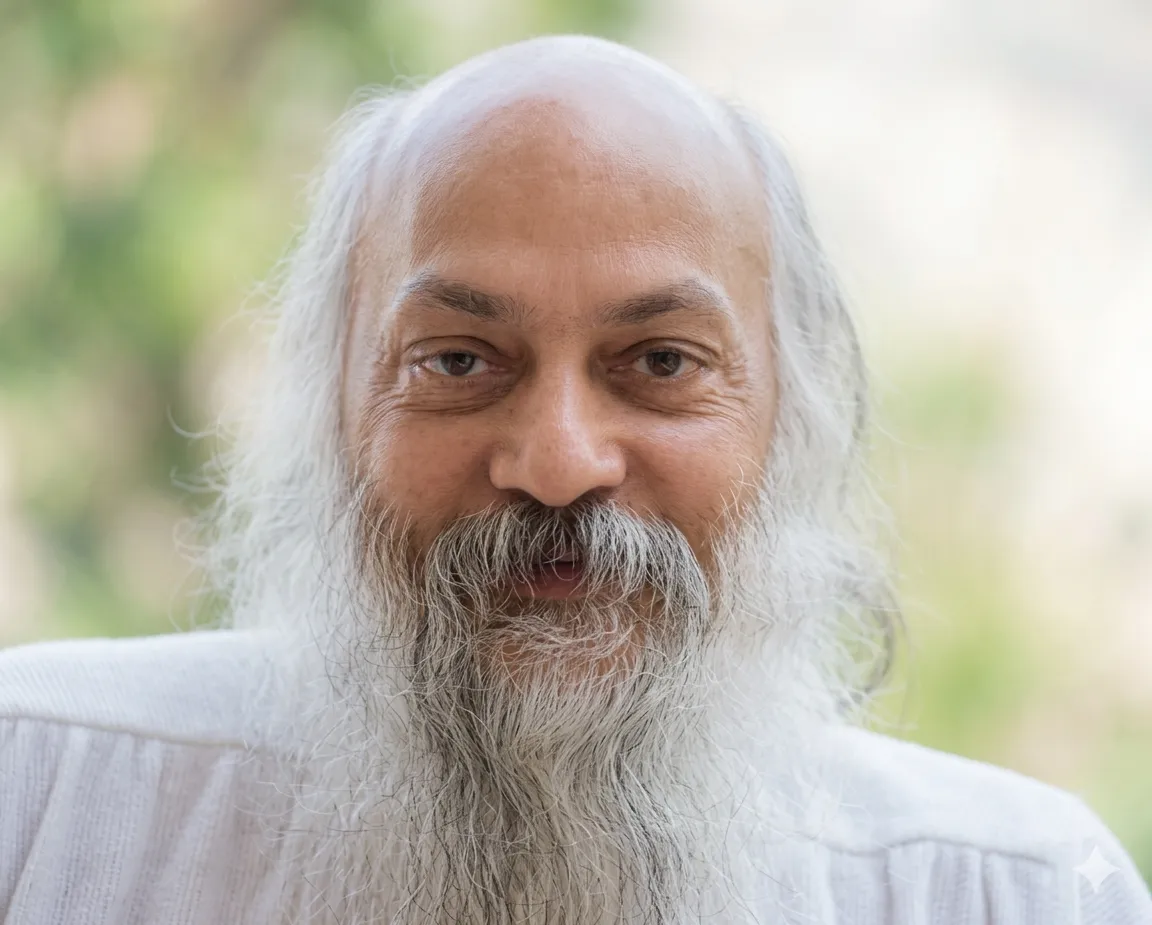
Osho's perspective on Change
When Osho Spoke About Change
Passages from the discourses where this theme comes alive.
Why does one cling to the old? Why is one afraid of the new?
There is a natural reason in it. With the old one is efficient, with the new one is awkward. With the old you know what to do, with the new you will have to learn from ABC. With the new you start feeling ignorant. With the old you are knowledgeable: you have done something again and again, you can do it mechanically, you need not have any awareness, With the new you will have to be alert, aware, otherwise something may go wrong. Have you not watched it? When you learn driving, you are so alert. When you have learned it, you forget about it. You sing a song, you listen to the radio, you talk to the friend or you think a thousand and one thoughts, and driving continues as a mechanical thing, robot-like -- you are not needed. The old becomes mechanical, habitual. That's why with the new…
Osho, for that change to happen, do certain happenings occur somewhere in a person’s life? Do they come—right there, at the right moment?
Yes, there are happenings—certainly there are. In fact, even if you keep on becoming worse, the moment will arrive from which you will turn back. Wherever you go—everything that goes, returns; everything has a limit. But those who do not go to the limit never return. That is why I say: if a man drinks, I tell him, don’t go on drinking just a little—because then you may never be able to come back! If you must drink, then drink—and go to the very limit that seems to be the last to you. And surely you will return. For returning, the circle has to be completed. Yes, we can go to some boundary—and from there we can return. That too is a way of returning. No one ever returns from the middle. And one who returns from the middle can again fall back, because the one who turns back from…
Beloved Osho, is it possible that as modern intelligent people become more and more accustomed to change as part of their daily lives, they will also become more open to your radically innovative approach to life?
That was the reasoning of the pope when he said to Galileo, "You should change in your book where you have written that the earth goes around the sun. It should be changed because according to the Bible the sun goes around the earth." And Galileo said, "Just a small statement: what difference does it make to you?" And the pope said, "It is not a question of a small statement. If one statement in the Bible is proved wrong, then suspicion arises in the believers -- that if one statement is wrong then what guarantee is there about other statements? And if God can write one statement wrong, then he is not infallible. You have to change it. It is not a question of factuality, of science. The question is the whole prestige of the Christian religion." -- On that small statement, which has nothing to do with Christianity,…
Osho, why am I afraid of your neo-sannyas? I do not feel even a little afraid of the old-style sannyas.
Does any Jain read the Gita? Could a Jain really understand it? Impossible. He would find himself opposed at every turn; anger would arise at every step. He would find arguments against Krishna immediately. For Krishna tells Arjuna, “Do whatsoever God wills.” The Jain will say, “And if God is making him renounce, why are you making him fight? How can you decide what God wants?” If Arjuna were truly a Jain, he would have thrown down the Gandiva bow and said, “All right. Now I shall do only what God makes me do. God says, ‘Take the peacock-feather whisk and the begging bowl; sit under a tree; do tapas.’ It is the voice of my inner self!” You know this “voice of conscience.” Delhi politicians have popularized—or polluted—the phrase. Whenever they need to come or go, suddenly their “inner voice” is heard! Krishna deluded him—that is how Jains will…
पहला प्रश्न: ओशो, मैं आपके नव-संन्यास से भयभीत क्यों हूं? वैसे पुराने ढंग के संन्यास से मुझे जरा भी भय नहीं लगता है।
… कोई जैन गीता पढ़ सकता है? अगर पढ़े भी, तो भी समझ सकता है? असंभव! क्योंकि जगह-जगह उसे विरोध खड़ा हो जाएगा। जगह-जगह उसका क्रोध जग जाएगा। और तुम यह खयाल रखना कि वह वहीं से तर्क खोज लेगा कृष्ण के विपरीत। क्योंकि कृष्ण कहते हैं अर्जुन से कि जो परमात्मा करवाए वही कर। जैन कहेगा, और परमात्मा अगर संन्यास ही दिलवा रहा हो तो तुम क्यों युद्ध करवा रहे हो? तुम कैसे निर्णायक हो कि परमात्मा क्या करवाना चाहता है? अर्जुन अगर सच में ही जैन होता तो फेंक कर गांडीव नीचे उतर गया होता। वह कहता कि ठीक है, अब परमात्मा जो करवाएगा वही करेंगे। …
Profound Quotes on Change
Explore our structured collection of meaning-mapped quotes regarding Change.