
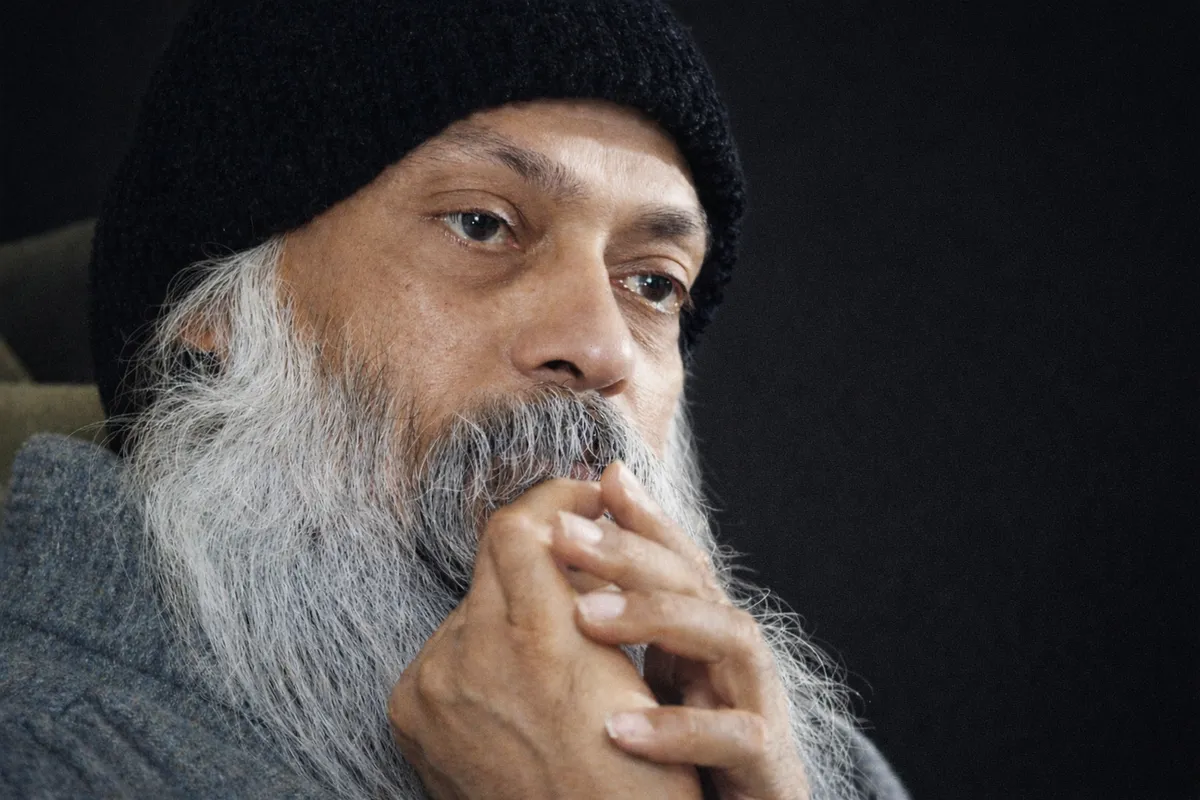
Not hurting is just avoiding harm; love goes out to make others happy; compassion feels others’ pain as also ours; pity looks down on people and “helps” in a hurtful, superior way.
From the Discourses
Passages where Osho speaks to this question — each links to the complete discourse.
Another friend has asked: How do you differentiate among compassion, nonviolence, pity, and love? Don’t they all mean the same?
Pity does not bring revolution; that is why revolution has not come to India. Pity rather blocks revolution. Because pity gives a beggar two coins, but it does not go in search of why beggars are produced in the first place. And when the beggar gets two coins, he too feels relief. He too does not reach that limit where he grabs the donor by the neck and says, “We will not take this charity. First you pick our pockets and then you give us alms. First you make us beggars and then you arrive to give us charity. First you suck our blood and then you build hospitals for us where ‘blood donation’ is conducted. What kind of net is this?” No, pity does not allow even this to happen. Pity becomes a consolation. And the poor feel that the rich are so “pitiful.” Nothing has shielded the rich…
एक और मित्र ने पूछा है कि आप करुणा, अहिंसा, दया, प्रेम इन सबमें क्या फर्क करते हैं? ये तो सब एक ही अर्थ रखते हैं?
दया क्रांति नहीं लाती, इसलिए भारत में क्रांति नहीं आ सकी। दया बल्कि क्रांति को रोकती है। क्योंकि दया भिखमंगे को दो पैसे दे देती है, लेकिन भिखमंगा क्यों पैदा होता है, इसकी तलाश में नहीं जाती। और भिखमंगे को दो पैसे मिल जाते हैं, तो भिखमंगा भी राहत अनुभव करता है। वह भी उस सीमा पर नहीं पहुंच पाता कि दान देने वाले की गर्दन पकड़ ले और कहे कि यह दान नहीं लेंगे; क्योंकि पहले हमारी जेब काटते हो और फिर हमको दान देते हो। वह कहेगा कि पहले हमें भिखमंगा बना देते हो और फिर दान देने आ जाते हो। वह कहेगा किपहले तो हमें चूस लेते हो हमारे खून को और फिर हमारे लिए अस्पतालें बना देते हो, जिनमें खून का दान चल रहा है। यह जाल कैसा है?
Osho, what is the fundamental anguish of human life?
There is only one anguish: that a human being cannot become what he was born to be. There is only one anguish: that the seed remains a seed and does not bloom like a flower; that it cannot scatter its fragrance to the infinite winds; cannot converse with the moon and stars; cannot offer its colors to the sky; cannot be expressed. If the poem within the poet cannot be revealed—anguish. If the painter cannot paint—anguish. If the dancer cannot dance—if chains lie on his feet—anguish. Anguish means only this: that what we are meant to be—our innate nature and destiny—does not come to fruition, and we are forced to be something else. Then anguish is born. Then melancholy gathers over life. And all those countless people you see burdened with sorrow, living in a kind of hell—the reason is only this: each has come carrying the seed of becoming…
चौथा प्रश्न: ओशो, मनुष्य जीवन का मूल संताप क्या है?
एक ही संताप है कि मनुष्य वह न हो पाए जो होने को पैदा हुआ है। एक ही संताप है, कि बीज बीज रह जाए, फूल की तरह खिल न पाए। बिखेर न सके अपनी सुवास को अनंत-अनंत हवाओं में; कर न सके गुफ्तगू चांद-तारों से; निवेदन न कर पाए अपने रंगों का आकाश के प्रति; अभिव्यक्त न हो पाए--एक ही संताप है। कवि के भीतर की कविता प्रकट न हो सके--तो संताप। चित्रकार चित्र न बना सके--तो संताप। नर्तक नाच न सके, पैरों में जंजीरें पड़ी हों--तो संताप। संताप का एक ही अर्थ होता है: जो हम होने को हैं, जो हमारी सहज प्रकृति और नियति है, वह न हो पाए और हमें अन्यथा होने को मजबूर होना पड़े, तो संताप पैदा होता है। तो जीवन में विषाद घिरता है।
Osho, we’ve run into a big difficulty! The difficulty is that, until now, we believed that sympathy is a part of nonviolence. We had held this for a long time. But while speaking of ahimsa under the Panch Mahavrat, you said that there is hidden violence in sympathy, because in it the “other” is present. Then you took it further, and, while giving the example of samānubhūti (empathy), you mentioned Paramhansa Ramakrishna—saying that when a farmer was being whipped, the marks of those lashes showed up on Ramakrishna’s back.
So, between sympathy and empathy, in reference to the tendency toward violence, please explain their subtle difference. And please also tell us whether what you called empathy is a mental event or something of the spiritual plane. Sympathy is commonly thought to be something very valuable and precious—but it isn’t. Sympathy means: someone is unhappy and you express sorrow with him; you become sorrowful. Sympathy means co-experiencing—experiencing alongside another. But the person who experiences sorrow in another’s sorrow never experiences joy in another’s joy. If someone’s big house goes up in flames, you express sorrow; but if someone builds a big house, you do not express joy. This needs to be understood. What does it mean? It means sympathy is a deception. Sympathy could only be true if you felt sorrow in another’s sorrow and joy in another’s joy. But while we can manage, or at least display, sorrow in…
ओशो, हम एक बड़ी मुसीबत में पड़ गए हैं! और वह मुसीबत हमारे लिए यह है कि अभी तक हमारी यह धारणा रही थी कि सहानुभूति, सिम्पैथी यह एक अहिंसा का अंग है। और हम बहुत दिनों से बराबर इसे मानते रहे थे। लेकिन पंच-महाव्रत के अंतर्गत आपने अहिंसा के संदर्भ में बताया कि सहानुभूति में हिंसा छिपी है, क्योंकि इसमें दूसरा मौजूद है। फिर आपने इस चीज को और आगे बढ़ाया और आपने समानुभूति का उदाहरण देते हुए परमहंस स्वामी रामकृष्ण का जिक्र किया। और जिसमें आपने यह भी बताया कि एक किसान पर जब कोड़े लग रहे थे, उस समय उस कोड़े के निशान रामकृष्ण परमहंस की पीठ पर दिखाई पड़ रहे थे।
तो ये सहानुभूति और समानुभूति ये दो चीजें हिंसा-वृत्ति के संदर्भ में इनमें क्या सूक्ष्म भिन्नता है, यह बताने की कृपा करें। और साथ ही साथ यह बताने की कृपा भी करें कि जिसे आपने समानुभूति का नाम दिया है, वह भी मानसिक घटना है या आध्यात्मिक तल की चीज है? सहानुभूति, सिम्पैथी साधारणतः बड़ी मूल्यवान और कीमती चीज समझी जाती रही है--है नहीं। सहानुभूति का अर्थ है, कोई आदमी दुखी है और आप उसके दुख में दुख प्रकट करते हैं; दुखी होते हैं। सहानुभूति का अर्थ है, सह-अनुभूति; दूसरे के साथ-साथ अनुभव करना। लेकिन जो आदमी दूसरे के दुख में दुख अनुभव करता है, वह आदमी दूसरे के सुख में कभी सुख अनुभव नहीं कर पाता है! अगर किसी के बड़े मकान में आग लग जाए, तो आप दुख प्रकट करते हैं; लेकिन किसी का बड़ा मकान बन जाए, तो सुख नहीं प्रकट कर पाते हैं! इस बात को समझ लेना जरूरी है। इसका मतलब क्या हुआ? इसका मतलब यह हुआ कि सहानुभूति एक धोखा है। सहानुभूति तभी सच्ची हो सकती है, जब दूसरे के दुख में दुख अनुभव हो और दूसरे के सुख में सुख अनुभव हो।
Osho, yesterday you said that jealousy is included in respect. I have immense respect for you, but the jealousy inherent in it keeps poisoning it, and I feel guilt and pain. Does reverence transcend this poison-laced respect?
It needs a little explaining—it's a delicate point. Whenever you respect someone, you do so because you see in that person something you do not have. You respect because you glimpse in the other something you would also like to possess. A beggar respects an emperor because he, too, longs to be an emperor. So on the one hand he respects, and inside he also envies. Because he is not yet an emperor but wants to be. You have attained what he wants to attain. He respects you as skillful, successful: “I stand far back in the line; you have gone ahead to where I should have been.” So you are powerful, clever, intelligent, strong—he respects you. But inside a fire of jealousy also burns—if he gets the chance, he would like to be in your place and push you aside. And if the beggar gets that chance, he will…
तीसरा प्रश्न: ओशो, आपने कल कहा, आदर में ईर्ष्या सम्मिलित है। आपके प्रति मुझमें अपार आदर है, लेकिन उसमें निहित ईर्ष्या उसमें जहर घोलती रहती है और मैं ग्लानि और पीड़ा का अनुभव करता हूं। क्या श्रद्धा इस विष-भरे आदर का अतिक्रमण करती है?
भिखारी सम्राट का आदर करता है, क्योंकि उसकी भी आकांक्षा है कि सम्राट हो। तो एक तरफ आदर भी करता है, भीतर ईर्ष्या भी करता है। क्योंकि सम्राट अभी वह है नहीं, सम्राट होना चाहता है। तुम हो गए हो, तुमने वह पा लिया है जो वह पाना चाहता है। इसलिए तुम्हें आदर भी करता है कि तुम कुशल हो, सफल हो, मैं पंक्ति में बहुत पीछे खड़ा हूं, तुम आगे पहुंच गए हो, तुम उस जगह पहुंच गए हो जहां मुझे होना चाहिए था। इसलिए तुम शक्तिशाली हो, होशियार हो, बुद्धिमान हो, बलशाली हो, तुम्हारा आदर करता हूं। लेकिन एक भीतर ईर्ष्या की आग भी जलती है--अगर मुझे मौका मिले तो उस जगह मैं होना चाहूंगा, तुम्हें हटाना चाहूंगा। और जब मौका मिल जाएगा इस भिखारी को तो यह सम्राट को हटा कर धक्का दे देगा, सिंहासन पर बैठ जाएगा।
Osho, you have said that in liberated souls compassion remains, and that compassion is the subtlest form of desire. In desire there is always conflict, always two—two mutually opposed. In that case, what is the opposing element of compassion that still remains in liberated souls?
First, not that compassion is a subtle form of desire; compassion is desire’s ultimate form. There is a difference. By “ultimate form” I mean the bridge between desire and desirelessness. If you wish, you can call compassion the final form of desire, or you can call it the first form of desirelessness. It is the link in-between where desire ends and desirelessness begins. Compassion is not a subtle form of desire. If it were, there would be duality in compassion too. Desire is always dual. No one can be free of duality within desire. Therefore there is suffering in desire, because wherever there is duality, there is suffering. So however pleasurable desire may seem, its painful counterpart will always be standing right behind it; it cannot be avoided. Thus every desire, at a certain limit, turns into its opposite. The opposite of each desire is present instantaneously; it is never…
प्रश्न: ओशो, मुक्त आत्माओं में करुणा शेष रह जाती है और करुणा भी वासना का ही एक सूक्ष्मतम रूप है--ऐसा आपने कहा। वासना में सदा द्वंद्व रहता है, सदा दो रहते हैं, परस्पर-विरोधी दो। ऐसी स्थिति में करुणा का विरोधी कौन सा तत्व है जो मुक्त आत्माओं में शेष रह जाता है?
पहली बात तो यह कि करुणा वासना का सूक्ष्म रूप है, ऐसा नहीं, करुणा वासना का अंतिम रूप है। इन दोनों में भेद है। अंतिम रूप का मतलब मेरा यह है कि वासना और निर्वासना के बीच जो सेतु है। चाहें तो हम करुणा को वासना का अंतिम रूप कह सकते हैं और चाहें तो करुणा को निर्वासना का प्रथम रूप कह सकते हैं। वह बीच की कड़ी है जहां वासना समाप्त होती है और निर्वासना शुरू होती है। करुणा सूक्ष्म रूप नहीं है वासना का। अगर सूक्ष्म रूप हो तो करुणा में भी द्वंद्व होगा। वासना में सदा द्वंद्व है। वासना में निर्द्वंद्व कभी भी कोई नहीं हो सकता। इसलिए वासना में दुख है, क्योंकि जहां द्वंद्व है, वहां दुख है। तो वासना चाहे कितनी ही सुखद हो, उसके पीछे उसका दुखद रूप खड़ा ही रहेगा, वह जा ही नहीं सकता।