
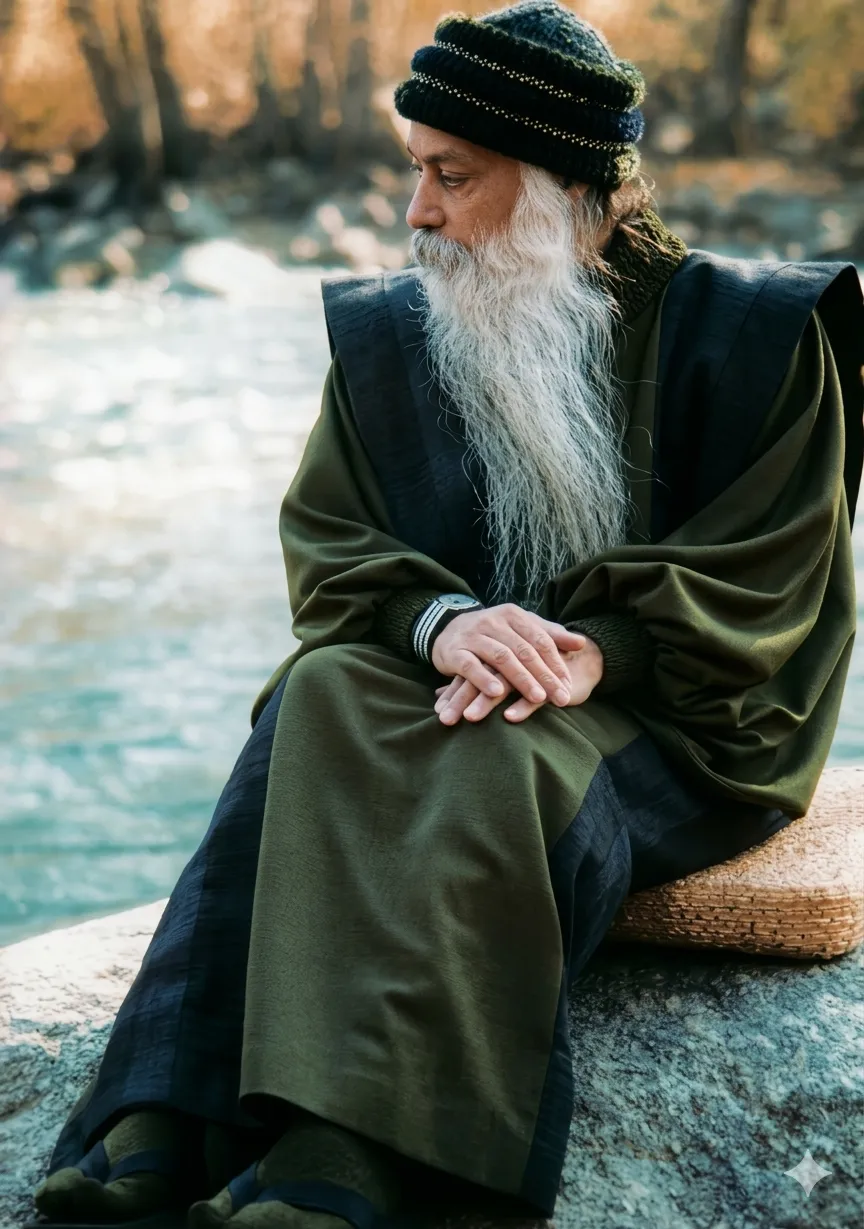
Osho's perspective on Sadhana
When Osho Spoke About Sadhana
Passages from the discourses where this theme comes alive.
Another friend has asked in this connection: you say that revolution can only be nonviolent. But he says that revolution is always violent; a nonviolent revolution never happens.
In Russia, those who gained power were good men; before a revolution, everyone looks good. After power comes into hand, then it is revealed who is truly good and who is not. There is even the possibility that Stalin poisoned Lenin. And there is the possibility that one by one, all who had led the revolution were eliminated. Trotsky was killed in Mexico. Those who made the revolution were picked off by Stalin, one after another—because now the game of power had begun. In India, many fine, innocent-looking people made revolution with Gandhi—white as freshly washed garments they appeared. But once power came into their hands, we saw they had changed; they proved to be different men. Only their clothes were white; within, they were not. What happened the moment power was in their grasp? The real man inside showed himself. As long as there is no power, the real…
एक दूसरे मित्र ने इसी संबंध में पूछा है कि आप कहते हैं कि क्रांति अहिंसक ही हो सकती है। लेकिन उन मित्र ने पूछा है कि क्रांति तो सदा हिंसक होती है, अहिंसक क्रांति तो कभी नहीं होती।
रूस में जिन लोगों के हाथ में ताकत आई, वे लोग अच्छे थे; क्रांति के पहले सभी लोग अच्छे होते हैं, क्रांति के बाद जब ताकत हाथ में आती है, तब पता चलता है कि कौन आदमी अच्छा है, कौन आदमी बुरा है? संभावना इस बात की है कि स्टैलिन ने ही लेनिन को जहर देकर मारा। और इस बात की संभावना है कि जितने लोग क्रांति के अग्रणी थे, धीरे-धीरे करके एक-एक मारे गए। मैक्सिको में जाकर ट्राटस्की की हत्या की गई। जिन लोगों ने क्रांति की थी, स्टैलिन ने चुन-चुन कर एक-एक को मारा। क्योंकि अब सत्ता का खिलवाड़ शुरू हो गया। हिंदुस्तान में कितने अच्छे लोगों ने गांधी के साथ क्रांति की थी; कितने अच्छे और भोले लोग मालूम पड़ते थे, एकदम सफेद धुले हुए मालूम पड़ते थे। फिर जब सत्ता हाथ में आई, तो पता चला कि वे लोग बदल गए, वे दूसरे आदमी साबित हुए। वे कपड़े ही सफेद थे, वे आदमी भीतर सफेद नहीं थे।
Osho, is sadhana only necessary so long as there is lust and desire?
Have you seen a tightrope walker? The whole time he sways left to right and right to left. When he leans left, a moment comes when a little more and he will fall; instantly he leans right, to correct the excess. Then on the right the same brink appears; again he leans left. In this way, by swaying, he manages to stay on the rope. But once he climbs down, will he keep swaying? He sits. Why would he lean then? He stands firmly; ground has been found. He is no longer on a rope. Moving in the world is like walking a tightrope. Every moment you must lean: now love, now hate; now sympathy, now anger—left and right. Lovers come to me and ask, “How can it happen that we never get angry with the one we love?” I say, it cannot be so—unless you climb down from the…
पहला प्रश्न: ओशो, जब तक वासना है, कामना है, क्या तभी तक साधना है?
तुमने कभी किसी नट को देखा रस्सी पर चलते? पूरे समय बाएं से दाएं, दाएं से बाएं होता रहता है। जब बाएं झुकता है तो एक घड़ी आ जाती है कि अगर और थोड़ा झुका तो गिरेगा; तत्क्षण दाएं झुक जाता है, ताकि बाएं की अति से जो भूल हुई जा रही थी, वह दाएं झुकने से पूरी हो जाए। लेकिन तब फिर दाएं में ऐसी घड़ी आ जाती है कि अब जरा और झुका कि गिरा; फिर तत्क्षण बाएं झुक जाता है, ताकि जो अति हो रही थी, उसका संतुलन हो जाए। ऐसे झुकता है दाएं से बाएं, बाएं से दाएं, और इसी भांति किसी तरह अपने को रस्सी पर बनाए रखता है। लेकिन जब नीचे उतर आया, फिर थोड़े ही दाएं-बाएं झुकता रहेगा! फिर तो बैठ जाएगा; फिर तो झुकेगा ही क्यों? फिर तो खड़ा हो जाएगा, भूमि मिल गई। अब कोई रस्सी पर थोड़े ही चल रहा है। संसार में चलना तनी हुई रस्सी पर चलने जैसा है। प्रतिक्षण तुम्हें झुकना ही पड़ेगा। अभी प्रेम, अभी घृणा; अभी सहानुभूति, अभी क्रोध; यह दाएं-बाएं है। …
Osho, if there were only one single method of sadhana in your ashram, wouldn’t it be more convenient for seekers?
These are two styles: either you support yourself—and then there is no need of another. Fine; the matter is finished. Support was the whole issue, and you supported yourself. Have you noticed: a mother’s love is strongest for the child who is the weakest. This is exactly the opposite of economics. But economics and the scripture of love are opposite. According to economics, love should be for the strongest, the most intelligent, the most skilled. No—mother knows the strong, the intelligent, the skilled will manage for themselves. They have no need. It is the weak who are less intelligent, who are more likely to stray, who may fall—the mother takes care of them. It often happens that the sick child becomes dearest to the mother—more than the healthy ones. The experience of God comes to those who stagger in helplessness. That is why in the religions of Buddha and Mahavira…
Osho, is sadhana a natural development, or is it a leap beyond nature’s evolutionary process and its transcendence? If sadhana is not an overstepping leap beyond natural growth, then will the whole of humanity, within the cosmic process, arrive on its own at spiritual heights? And if evolution always moves forward, why did the great ancient spiritual cultures recede from the evolutionary current?
There are many strands here. First: the moment we separate man from existence and look at him as apart, these questions begin to arise. For example, heat water to one hundred degrees and, at that point, it “leaps” and becomes steam. Water becoming steam is a natural event. Its heating is also natural, not unnatural. Heating is natural; the leap into steam is natural. If nature did not contain the law that at one hundred degrees water can jump into steam, water would have no way to become steam. If nature did not contain the potential to heat to one hundred degrees, water would have no power to reach that heat. Even so, if water had consciousness, it could save itself from fire—or it could put itself on the fire. That too would be a natural happening: to save itself or to offer itself—both. My point is: in this universe…
ओशो, साधना प्राकृतिक विकास है अथवा प्रकृति के विकास-क्रम से बाहर छलांग व उसका अतिक्रमण है? यदि साधना सहज विकास का अतिक्रमण व छलांग नहीं है, तो क्या सृष्टि के विकास-क्रम में सारी मनुष्य-जाति आप ही आप आध्यात्मिक ऊंचाइयों को पहुंच सकती है? यदि विकास-क्रम आगे ही आगे बढ़ता है, तो प्राचीन श्रेष्ठतम आध्यात्मिक संस्कृतियां क्यों विकास-क्रम से पीछे हट गईं?
इसमें बहुत-सी बातें हैं। पहली बात तो यह कि जैसे ही हम मनुष्य को जगत से तोड़कर देखते हैं अलग, वैसे ही ये सवाल उठने शुरू हो जाते हैं। उदाहरण के लिए, हम पानी को सौ डिग्री तक गरम करें, तो सौ डिग्री पर पानी छलांग लगाकर भाप बन जाता है। पानी का भाप बनना एक प्राकृतिक घटना है। पानी का गरम होना भी एक प्राकृतिक घटना है, अप्राकृतिक घटना नहीं है। पानी का गरम होना भी प्राकृतिक घटना है, पानी का छलांग लगाकर भाप बनना भी प्राकृतिक घटना है। अगर प्रकृति में यह नियम न होता कि सौ डिग्री पर पानी छलांग लगाकर भाप बन सकता है, तो पानी के पास कोई उपाय न था कि वह भाप बन जाए। अगर प्रकृति में यह उपाय न होता कि सौ डिग्री तक गरम हो सके, तो भी पानी की कोई सामर्थ्य न थी कि वह सौ डिग्री तक गरम हो जाए। फिर भी पानी के पास अगर चेतना है, तो पानी अपने को आग से बचा सकता है। और पानी के पास अगर चेतना है, तो वह अपने को आग पर चढ़ा सकता है। और यह भी प्राकृतिक घटना है कि वह अपने को बचाना चाहे या चढ़ाना चाहे--दोनों। …
Is action without attachment a practice of sadhana or the effortless flowering of attainment?
definitionWhat are Krishna's upasana and sadhana?
definitionWhom are we to meditate upon in sadhana?
definitionProfound Quotes on Sadhana
Explore our structured collection of meaning-mapped quotes regarding Sadhana.