
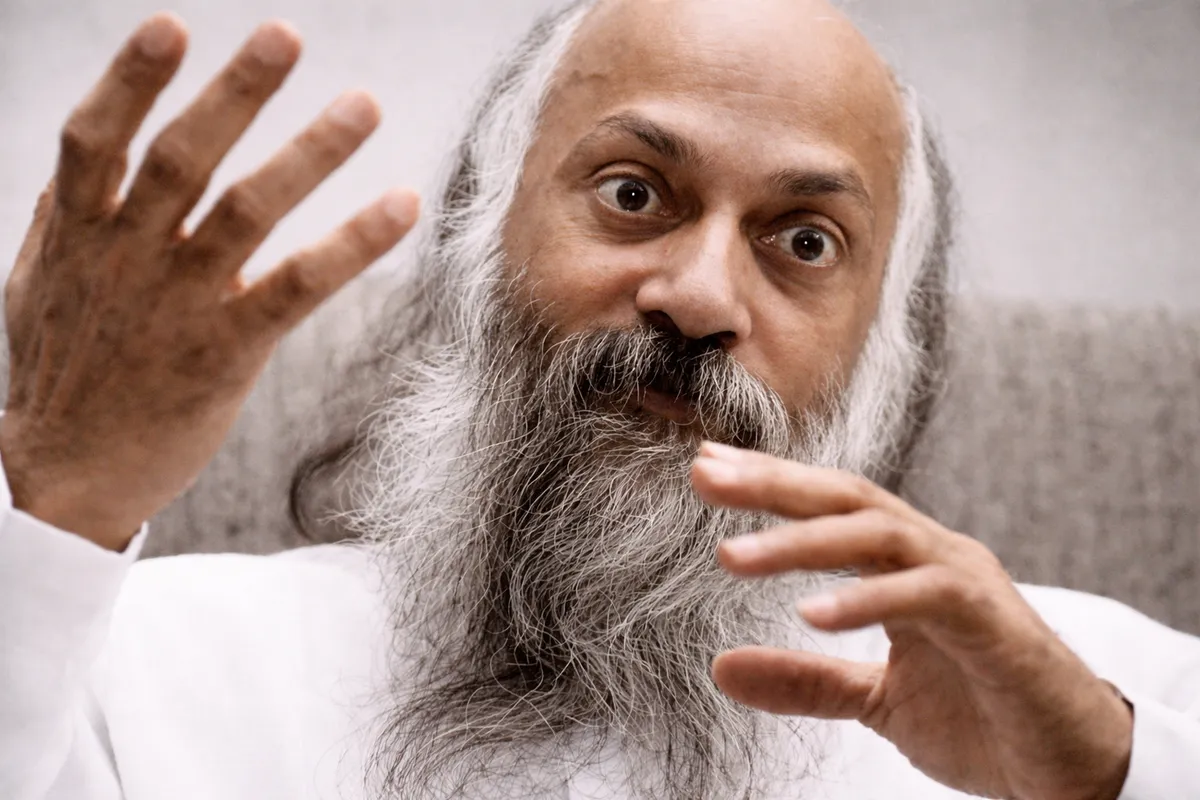
Use spiritual practice like medicine: take it when you’re sick with desire, and stop when you’re well, or it will make you sick again.
From the Discourses
Passages where Osho speaks to this question — each links to the complete discourse.
Osho, is sadhana only necessary so long as there is lust and desire?
Have you seen a tightrope walker? The whole time he sways left to right and right to left. When he leans left, a moment comes when a little more and he will fall; instantly he leans right, to correct the excess. Then on the right the same brink appears; again he leans left. In this way, by swaying, he manages to stay on the rope. But once he climbs down, will he keep swaying? He sits. Why would he lean then? He stands firmly; ground has been found. He is no longer on a rope. Moving in the world is like walking a tightrope. Every moment you must lean: now love, now hate; now sympathy, now anger—left and right. Lovers come to me and ask, “How can it happen that we never get angry with the one we love?” I say, it cannot be so—unless you climb down from the…
पहला प्रश्न: ओशो, जब तक वासना है, कामना है, क्या तभी तक साधना है?
तुमने कभी किसी नट को देखा रस्सी पर चलते? पूरे समय बाएं से दाएं, दाएं से बाएं होता रहता है। जब बाएं झुकता है तो एक घड़ी आ जाती है कि अगर और थोड़ा झुका तो गिरेगा; तत्क्षण दाएं झुक जाता है, ताकि बाएं की अति से जो भूल हुई जा रही थी, वह दाएं झुकने से पूरी हो जाए। लेकिन तब फिर दाएं में ऐसी घड़ी आ जाती है कि अब जरा और झुका कि गिरा; फिर तत्क्षण बाएं झुक जाता है, ताकि जो अति हो रही थी, उसका संतुलन हो जाए। ऐसे झुकता है दाएं से बाएं, बाएं से दाएं, और इसी भांति किसी तरह अपने को रस्सी पर बनाए रखता है। लेकिन जब नीचे उतर आया, फिर थोड़े ही दाएं-बाएं झुकता रहेगा! फिर तो बैठ जाएगा; फिर तो झुकेगा ही क्यों? फिर तो खड़ा हो जाएगा, भूमि मिल गई। अब कोई रस्सी पर थोड़े ही चल रहा है। संसार में चलना तनी हुई रस्सी पर चलने जैसा है। प्रतिक्षण तुम्हें झुकना ही पड़ेगा। अभी प्रेम, अभी घृणा; अभी सहानुभूति, अभी क्रोध; यह दाएं-बाएं है। …
Osho, in the Dwarka camp you said that meditation and samadhi are a voluntary, conscious entry into the state of death, through which the illusion of death dissolves. Then the question arises: to whom does the illusion of death occur? Does it occur to the body or to consciousness? Since the body is only an instrument, it cannot have delusive awareness; and there is no reason for consciousness to be deluded. Then what is the cause and basis of this event of delusion?
They sent word. She came very annoyed. “It’s his same old habit,” she said. “He’s grown old but hasn’t dropped it. Even at death he will create mischief.” She came with a stick, banged it on the ground and said, “Stop this devilry! If you must die, die properly!” The man laughed, came down, and said, “I was only playing a little—wanted to see what they would do. Now I will die properly, conventionally.” Then he lay down and died. His sister left, saying, “Fine, now finish the rites. There is a right way for everything; do things properly.” Our illusion about death is a social delusion. It can be broken. There are methods and arrangements to break it. And even if no one else breaks it for you, anyone who has done a little meditation will break it himself at the time of death. No outside help is needed.…
ओशो, द्वारका शिविर में आपने कहा है कि ध्यान व समाधि स्वेच्छा से सचेतन मृत्यु की स्थिति में प्रवेश है, जिससे मृत्यु का भ्रम विसर्जित हो जाता है। तो प्रश्न उठता है कि मृत्यु का भ्रम किसको होता है? शरीर को होता है या चेतना को होता है? शरीर चूंकि उपकरण-मात्र है, इसलिए शरीर को भ्रमरूपी बोध नहीं हो सकता है; और चेतना के भ्रमित होने का कोई कारण नहीं है। फिर भ्रम की घटना का कारण, आधार क्या है?
उसको खबर भेजी गई तो वह बहुत नाराज हुई। उसने कहा, उसकी सदा की यही आदत है। बूढ़ा हो गया, लेकिन उसकी आदत नहीं छूटी। मरते वक्त भी वह उपद्रव करेगा ही। वह अपनी लकड़ी उठाकर आई। वह नब्बे वर्ष की बूढ़ी थी। और उसने आकर जोर से लकड़ी पटकी और कहा कि बंद करो यह शैतानी! मरना है तो ढंग से मरो! वह आदमी हंसा, नीचे उतर आया। और उसने कहा कि मैं जरा खेल ही कर रहा था; मैंने कहा कि देखें, ये लोग क्या करते हैं। अब मैं ठीक लेटकर मर जाता हूं, कन्वेंशनली। तो वह लेटकर मर गया। और उसकी बहन चली गई कि अब ठीक है, उसको निपटा दो। फिर उसने लौटकर नहीं देखा पीछे। उसने कहा, ठीक है, अब निपटा दो। हर चीज का एक ढंग होता है, उसकी बहन ने कहा, ढंग से काम करो। जो भी काम करना है, व्यवस्था से करो। हमारी मृत्यु का भ्रम हमारी सामाजिक भ्रांति है। इसे तोड़ा जा सकता है। इसे तोड़ने की विधि और व्यवस्था है। और अगर कोई भी न तोड़ रहा हो तो मरते वक्त प्रत्येक व्यक्ति, जिसने थोड़ा-बहुत भी ध्यान साधा है, वह खुद ही तोड़ लेता है। कोई जरूरत नहीं रहती है। …
Osho, in yesterday’s sutra you said that scientists claim if any sense is not used for three years it becomes nonfunctional. And yet we do not use the sex sense for twenty or twenty‑five years and still we do not find ourselves free of sexual desire. Not only us—even so‑called sadhus and sannyasins seem tormented by sexuality after years of practice. Does this principle not apply to the sex sense?
On this, two or three things need to be understood. First: the sex sense is not like your other senses. In truth, the sex sense is the center—the ground-source—of all your senses. The other senses lie on the surface, at the periphery; the sex sense is deep within, at the root. If you cut off a tree’s branches, the tree does not die; new branches sprout. But if you cut the roots, the tree dies—those green branches, too, wither and fall away. The eyes are on the surface, the hands on the surface, the ears on the surface; the sex sense is very deep. So if you do not use the eyes for three years, they will atrophy. If you do not use the ears, you will become deaf. If you do not move the hand, it will become paralyzed. If you do not use the legs, they will stiffen…
दूसरा प्रश्न: ओशो, कल के सूत्र में आपने कहा कि वैज्ञानिक कहते हैं कि किसी भी इंद्रिय का यदि तीन साल तक उपयोग न किया जाए, तो वह इंद्रिय क्रियाशील नहीं रह जाती। और हम कामेंद्रिय का उपयोग बीस-पच्चीस वर्षों तक भी नहीं करते, फिर भी हम खुद को कामवासना से मुक्त नहीं पाते। हम तो क्या, तथाकथित साधु-संन्यासी कई वर्षों की साधना के बाद भी कामवासना से पीड़ित दिखाई पड़ते हैं। क्या यह सिद्धांत काम-इंद्रिय पर लागू नहीं होता?
पहली बात, काम-इंद्रिय आपकी और इंद्रियों जैसी ही इंद्रिय नहीं है। सच तो यह है कि काम-इंद्रिय आपकी सभी इंद्रियों का केंद्र है, आधार-स्रोत है। तो और इंद्रियां ऊपर-ऊपर हैं, परिधि पर हैं। कामेंद्रिय गहन अंतर में है, गहरे में है, जड़ में है। वृक्ष की शाखाओं को हम काट दें, तो वृक्ष नहीं मरता; नई शाखाएं निकल आती हैं। वृक्ष की जड़ों को हम काट दें, वृक्ष मर जाता है। पुरानी शाखाएं भी जो हरी थीं, वे भी सूखकर समाप्त हो जाती हैं। आंख ऊपर है, हाथ ऊपर है, कान ऊपर हैं, कामेंद्रिय बहुत गहरे में है। इसलिए अगर आप आंख का उपयोग तीन वर्ष तक न करें, तो आंखें क्षीण हो जाएंगी। कान का उपयोग न करें, तो आप बहरे हो जाएंगे। हाथ को न चलाएं, तो हाथ पंगु हो जाएगा। …
Osho, the witness, the seer, consciousness is always separate—virginal and unbound. And the whole play of life is nothing but the movement of the gunas within themselves. In such a situation, if a person’s qualities of sattva, rajas, and tamas are calmed in a scientific or chemical way, or if a person is made sattvic, will he then attain that ever-free witness? If the witness is forever free and present, then by chemically altering the three gunas will it not be revealed? Would the person not then become religious? What is the fundamental difference between solving the problem arising from the
Sadhana means we are dissolving the current itself, not breaking the bulb. There is no point in breaking the bulb. In fact, the bulb is useful; it tells you whether the current is flowing or not, whether there is current or not. Your anger within tells you you are still sunk in ignorance. Lust tells you your life energies have not yet become aware. If we remove these elements, anger will stop manifesting and you will also stop knowing that you are in deep ignorance. It is as if a man is sick and we snatch away the symptoms of his disease so that he doesn’t even come to know he is ill. And keep in mind, anger is an opportunity. Only the unwise say anger is simply bad; I do not say so. Anger is an opportunity; you can use it badly or well. Anger is a chance. In…
पहला प्रश्न: ओशो, साक्षी, द्रष्टा, चैतन्य सदा ही अलग कुंवारा और अनबंधा है। और सारी जीवन-लीला गुणों का ही स्वयं में वर्तन है। ऐसी स्थिति में व्यक्ति से सत्व, रज, तम के गुणों को वैज्ञानिक या रासायनिक ढंग से शांत कर दिया जाए या व्यक्ति को सात्विक बना दिया जाए, तो क्या वह उस हमेशा से मुक्त साक्षी को उपलब्ध हो जाएगा? यदि साक्षी सदा ही मुक्त एवं उपस्थित है, तो त्रिगुणों को रासायनिक ढंग से बदल देने पर वह क्या प्रकट न हो जाएगा? क्या व्यक्ति तब धार्मिक नहीं हो जाएगा? त्रिगुणों से उत्पन्न समस्या को रासायनिक ढंग से हल करने में या साधना के माध्यम से हल करने में क्या मौलिक भिन्नता है?
साधना का अर्थ है कि हम बिजली की धारा को ही विलीन कर रहे हैं, बल्ब को नहीं तोड़ रहे हैं। बल्ब को तोड़ने का कोई अर्थ ही नहीं है। बल्कि बल्ब तो उपयोगी है। क्योंकि वह बताता है, धारा बह रही है या नहीं; धारा है या नहीं। आपके भीतर क्रोध यह बताता है कि अभी आप अज्ञान में डूबे हैं। वासना बताती है कि अभी आपके प्राण जागरूक नहीं हुए हैं। अगर ये तत्व हमने अलग कर लिए, तो क्रोध प्रकट होना बंद हो जाएगा और आपको यह पता चलना भी बंद हो जाएगा कि आप गहन अज्ञान में पड़े हैं। यह तो ऐसा हुआ, जैसे कोई आदमी बीमार हो और हम उसके बीमारी के लक्षण छीन लें, तो उसे यह भी पता न चले कि वह बीमार है। और यह भी खयाल में रहे कि क्रोध एक अवसर है। क्रोध सिर्फ बुरा है, ऐसा नासमझ कहते हैं; मैं नहीं कहता। …
Osho, if the mind is dreamlike, then whatever is done through the mind will also be dreamlike, won’t it! Then is sadhana also dreamlike, and sannyas too?
Exactly so. Sadhana is a dream, and sannyas too. But there are differences between dream and dream. A thorn gets lodged in your foot; you use another thorn to remove the first. The second is also a thorn—remember that. One thorn is already stuck, so you take it out with another. Don’t imagine the second thorn is not a thorn—otherwise you’ll make a great mistake. And when the first thorn is out, what do you do? You throw away both thorns. You don’t wrap up the second thorn and put it in a safe, you don’t worship it. The world is a thorn. Sannyas is also a thorn. With one thorn you remove the other. Then both are useless. In the ultimate state, even sannyas is not. That Brahmin who asked Buddha, “Are you a deva, a gandharva, a human being?” forgot one thing; he should have asked, “Are you…
आखिरी प्रश्न: ओशो, मन यदि स्वप्नवत है, तो फिर मन से जो भी किया जाए वह भी तो स्वप्नवत ही होगा न! तब क्या साधना भी स्वप्नवत ही है और संन्यास भी?
एक कांटा लग जाता है पैर में तो दूसरे कांटे से हम पहले कांटे को निकालते हैं। दूसरा भी कांटा है, ध्यान रखना। मगर एक लग गया है कांटा तो दूसरे कांटे से निकालते हैं। दूसरा कांटा नहीं है, ऐसा मत सोच लेना, नहीं तो बड़ी भूल हो जाएगी। फिर जब पहला कांटा निकल गया तो क्या करते हो? दोनों कांटे फेंक देते हो। यह थोड़े ही है कि दूसरे कांटे को सम्हालकर रख लेते हो, कि इसको तिजोड़ी में बंद रखते हो, कि इसकी पूजा करते हो।