
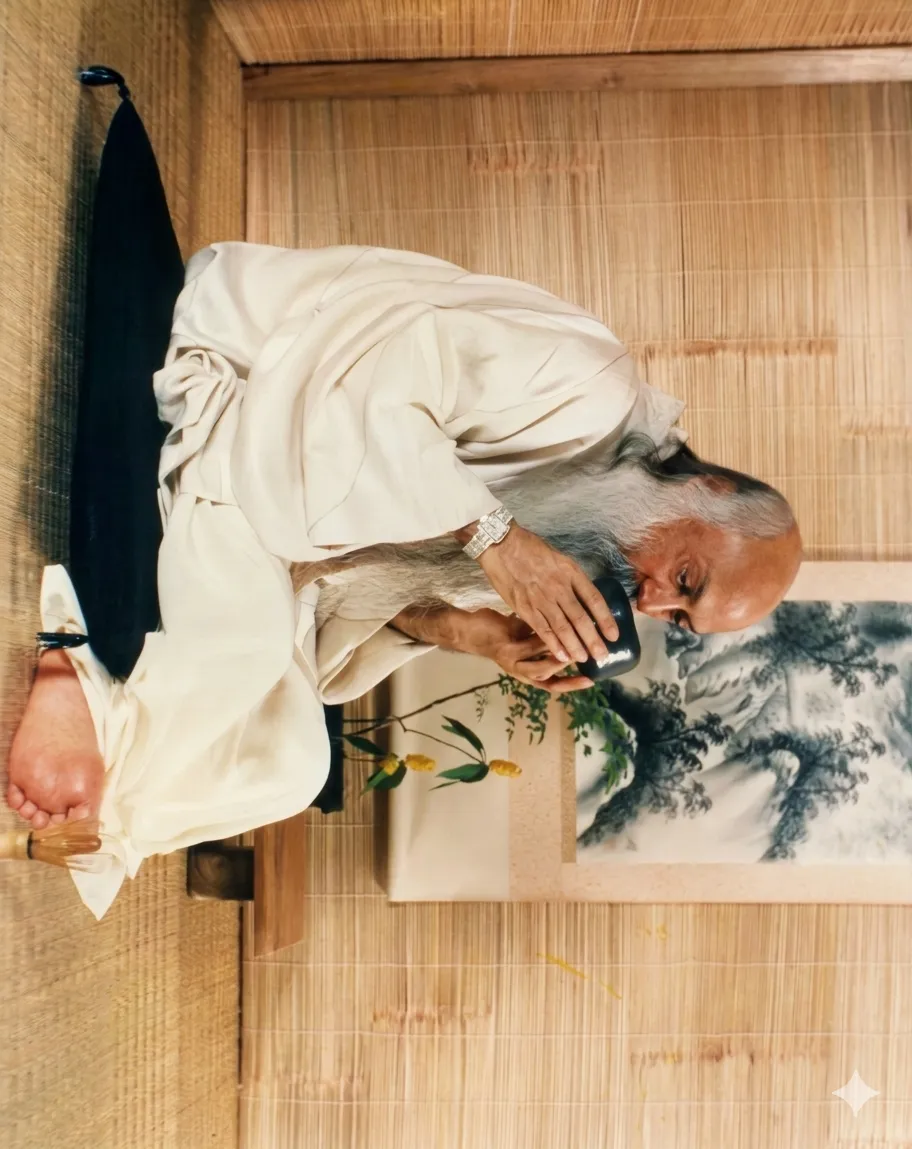
Osho's perspective on Saints
When Osho Spoke About Saints
Passages from the discourses where this theme comes alive.
A friend has asked: Osho, why should we think about death at all? We have life—let us live it. Be in what is present. Why allow the thought of death to come in between?
Just as there can be fear of sleep. Sleep is, in a way, a daily death. The day is life; the night is death. It is a piecemeal death. Every day we die a little, we sink within; in the morning we return fresh again. Then after seventy or eighty years the whole body gets tired—work, work, work—the body wears out. Then full death takes hold; the entire body changes. But we are very afraid of that. It is a deep sleep. Yet we are very afraid of it. Have you noticed that the body changes every morning too? It changes a little, which is why you don’t notice. It does not change completely; there is a partial transformation. When you go to sleep in the evening, your body is in one condition; when you wake in the morning, your body is in another. By morning the body has become…
एक मित्र ने पूछा है कि ओशो, मृत्यु के संबंध में हम सोचें ही क्यों? जीवन मिला है, उसे जीएं। वर्तमान में जो है, उसमें रहें। मृत्यु के विचार को ही हम क्यों बीच में आने दें?
… दिन भर जीवन है, रात मृत्यु है। वह टुकड़े-टुकड़े की मृत्यु है। रोज थोड़ा-सा मरते हैं, भीतर डूबते हैं, सुबह फिर ताजे होकर वापस लौट आते हैं। फिर सत्तर और अस्सी साल में पूरा शरीर थक जाता है; श्रम, श्रम, श्रम, शरीर थक जाता है। फिर पूरी मृत्यु पकड़ लेती है, फिर यह शरीर पूरा बदल जाता है। लेकिन उससे हम बहुत डरे हुए हैं। वह गहरी निद्रा ही है। लेकिन उससे हम बहुत डरे हुए हैं। क्या आपने खयाल किया कि शरीर सुबह भी रोज बदल जाता है! थोड़ा बदलता है, इसलिए आपको खयाल में नहीं आता। पूरा नहीं बदलता; पार्शियल ट्रांसफार्मेशन होता है। जब आप सांझ को थके-मांदे सोते हैं तो शरीर और हालत में होता है, जब सुबह आप उठते हैं तो शरीर और हालत में होता है। सुबह शरीर ताजा हो गया होता है, नया हो गया होता है। फिर शक्ति आ गई होती है, फिर काम की दुनिया शुरू हो जाती है। …
Like all other indian saints, why do you not like to be the saint of the masses?
You may be surprised to know that Jainas don't call Krishna a saint. They call him the greatest sinner ever because he persuaded Arjuna for the war. Arjuna was going to become a Jaina monk; he was saying, "I don't want all this war, all this violence. I want to renounce this world. This is not worth it," and Krishna persuaded him, "Do your duty. If God has willed so, let it be so. You simply say 'amen,' and go into it. You just become a vehicle, instrumental." Arjuna argued and argued, but finally Krishna persuaded him. So Jainas say the whole responsibility of the Mahabharat War, the great Indian war, goes to Krishna. He is responsible for the whole violence. What have they done to Krishna, do you know? They have thrown him into the seventh hell. Of course, you are free to do so because you write your…
Osho, forgive me; I want to ask something that has been on my mind for a long time. Why is it that all the great masters who are alive—including you—never come together?
Kabir’s disciples asked, “Why were you silent? Your speech has such power—give a little taste of it to Farid too! You shower it on us every day.” Kabir said, “Farid has already received it. What I shower on you, Farid has already received. Where I am, there is Farid. We both stand in the same place. Seeing each other, we were amazed. We are not two; we are one. So what is there to say? To whom to say it? If a man sits alone and talks, would you not call him mad? Someone sitting alone, talking to himself—raising the questions and giving the answers—that is what you call madness. So,” said Kabir, “did you want to make me mad? We were not two.” Therefore there is no need for saints to meet. Saints are not separate that they should have to meet. A Janata Party is formed by non-saints,…
अंतिम प्रश्न: ओशो, क्षमा करें, एक बात पूछना चाहता हूं जो बहुत दिनों से मेरे मन में है। आप सहित सभी महापुरुष जो जिंदा हैं, कभी इकट्ठे क्यों नहीं होते?
कबीर के शिष्यों ने पूछा, आप चुप क्यों रहे? आपकी वाणी में तो ऐसा ओज, फरीद को भी तो थोड़ा रस देते! हम पर तो आप रोज लुटाते हैं। पर कबीर ने कहा कि फरीद को तो मिल ही गया है। जो मैं तुम पर लुटाता हूं, वह फरीद को मिल गया है। जहां मैं हूं वहां फरीद है। हम दोनों एक जगह खड़े हैं। देख कर हम भौचक रह गए। हम दो ही नहीं हैं, हम एक ही हैं। इसलिए क्या कहना? किससे कहना? अब अकेला आदमी बैठ कर बात करे, कबीर ने कहा, तो पागल नहीं कहोगे उसको? कोई अकेला बैठा अपने से ही बातें कर रहा है--जवाब भी खुद ही दे, प्रश्न भी खुद ही उठाए, उसी को तो पागल कहते हैं। तो कबीर ने कहा, क्या तुम मुझे पागल बनवाना चाहते थे? हम दो थे नहीं।
Osho, the other day, speaking of India, you said that this country’s fundamental problem is its superstitions and that it is about fifteen centuries behind the times. Would you kindly tell us how to distinguish between faith and superstition, and whether today’s faiths will not become tomorrow’s superstitions? Would you also graciously tell us what an individual or a community should do to be contemporary, to remain modern?
It is a fact of life worth understanding: neither the poor nor the rich revolt; the middle class does. All revolutions—of ideas, of economy, of society—arise from the middle. This land has much experience of trust—its taste, its peace. It knows that an event like Buddhahood can happen; it has that certainty. Therefore, even if there is no Buddha, “let a Buddha’s statue do”—it clings to something or other. Other countries don’t have so much superstition because they haven’t had so many occasions for trust. In America there isn’t much superstition because America has known no Buddha, no Mahavira, no Krishna. In that sense America is non-superstitious. And superstition cannot arise until trust has arisen. Where there is pleasure, there is the sense of pain; where there is wealth, the sense of poverty; where there is the taste of trust, the shadow of distrust is cast. Then fear of distrust…
दूसरा प्रश्न: ओशो, उस दिन भारत के प्रसंग में आपने कहा कि इस देश की बुनियादी समस्या उसके अंधविश्वास हैं और यह कि यह देश समय से ड़ेढ हजार वर्ष पीछे है। क्या बताने की कृपा करेंगे कि विश्वास और अंधविश्वास की परख क्या है, और क्या आज के विश्वास कल अंधविश्वास नहीं हो जायेंगे? क्या यह भी बताने की अनुकंपा करेंगे कि कोई व्यक्ति या जनसमूह समसामयिक होने के लिए, आधुनिक रहने के लिए क्या करे?
यह जीवन का एक तथ्य है समझने जैसा कि न तो गरीब बगावत करते हैं न अमीर बगावत करते हैं--बगावत मध्य-वर्गीय लोग करते हैं। सारी क्रांतियां मध्य-वर्गीय लोगों से पैदा होती हैं। विचार की, अर्थ की, समाज की--सारी क्रांतियां! थोड़ा अनुभव होना चाहिए। इस देश को विश्वास का अनुभव है, बहुत अनुभव है। विश्वास की छाया और विश्वास की शांति इस देश ने जानी है। इसको पता है कि बुद्धत्व जैसी घटना भी घटती है। इसकी प्रतीति इसको है। इसलिये अगर बुद्ध न हों तो चलो बुद्ध की प्रतिमा ही सही, मगर किसी न किसी चीज को यह पकड़ लेता है। दूसरे मुल्कों में इतना अंधविश्वास नहीं है, क्योंकि विश्वास के इतने मौके ही नहीं। अमरीका में अंधविश्वास नहीं है, क्योंकि अमरीका ने न तो कभी कोई बुद्ध जाना न कोई महावीर जाना न कोई कृष्ण जाना। अमरीका इस अर्थ में गैर-अंधविश्वासी है। और असंभव है तब तक अंधविश्वास पैदा होना, जब तक कि विश्वास पैदा न हो जाये। सुख हो तो दुख का बोध होता है। धन हो तो गरीबी का बोध पैदा होता है। …
What is your opinion on the phenomenon of people putting faith in saints and spiritual leaders?
definitionProfound Quotes on Saints
Explore our structured collection of meaning-mapped quotes regarding Saints.