
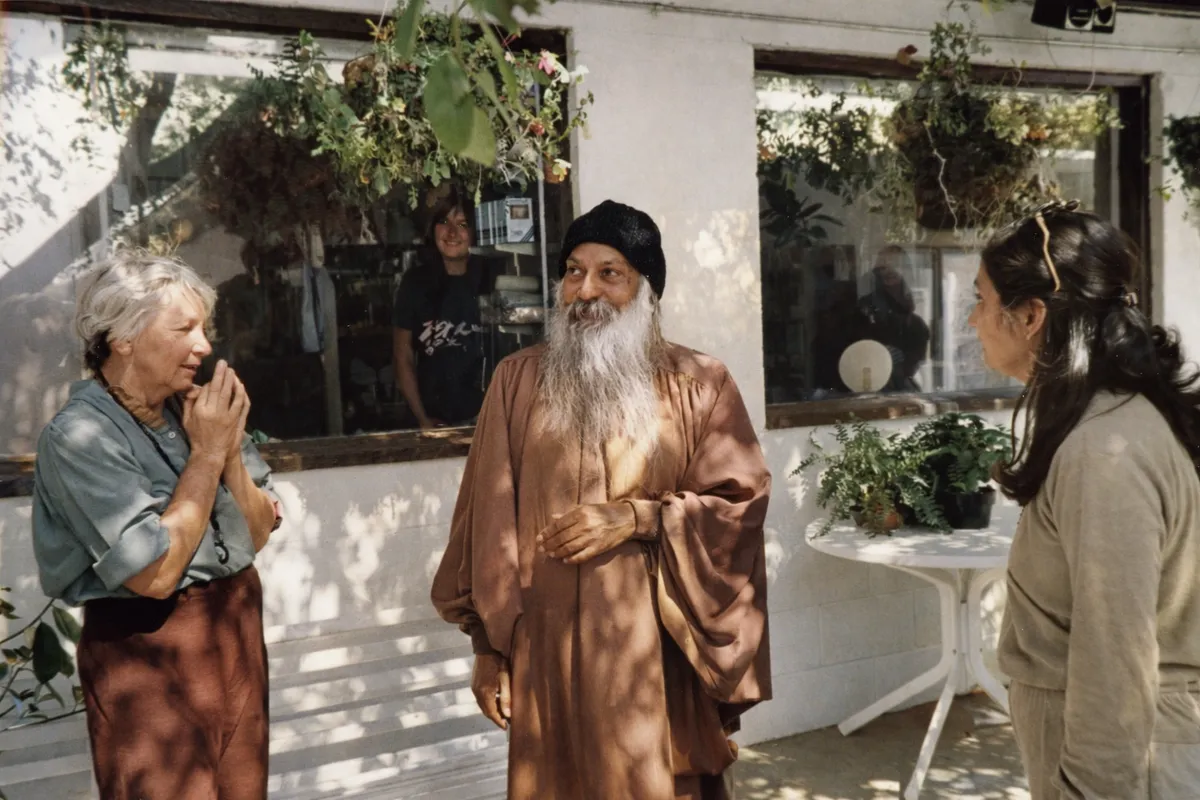
Osho's perspective on Desire
When Osho Spoke About Desire
Passages from the discourses where this theme comes alive.
Beloved Osho, would you please tell us more about what the sufis call "adab"? Is it a "tariqa"... A method that extends beyond the physical presence of the master, becoming part of the innermost being of the disciple and reflecting, in every action of his daily?
Radha Mohammed, yes, adab is a tariqa, a method. It is the beginning of something very immense, of something utterly incomprehensible to the intellect. It is the first step of a great eternal pilgrimage. To be with the Master is simply a lesson in how to be with God. That's why down the ages the Master has been called "God". It is very symbolic, it is a metaphor. The word "metaphor" is beautiful. Meta means beyond, phor means going: that which takes you beyond. The Master is a metaphor -- he takes you beyond himself. He is just a beginning, a jumping-board. To be with the Master is nothing but a discipline in how to be with God. God is not visible, the Master is visible; it is easier to learn from the visible and then move to the invisible. Have you looked into children's books? We have to make…
Osho, you say, “As He wills, let us become mere instruments; whatever role in life we have been given, let us fulfill it.” But letting what happens happen—i.e., flowing along with the body, mind, and ego—gives rise to suffering. So should we keep applying the principle of instrumentality even in relation to the body, mind, and ego, and go on suffering? How do we solve the riddle between the principle of instrumentality and the continuous reality of suffering?
That supreme bliss is beyond both pleasure and pain. It is neither like night nor like day. It is twilight. The sun has set, night has not yet come; the light remains—very gentle, sweet, non-aggressive—that is twilight. Morning has come, the sun is not yet risen, the night has gone—such is the twilight. One who abides in that twilight—that is what we call prayer. That is why Hindus call their prayer sandhya. Sandhya means one who has stopped in between the dualities, who has found the truce between the two. Between pleasure and pain, love and hate, victory and defeat, night and day, life and death—one who has found the pact and stands in that concord. Seek that interval of conjunction. Krishna says, it is simple to find. If you cease to be the doer, you will find it instantly. It is only through your doer-ship that you keep missing.…
दूसरा प्रश्न: ओशो, आप कहते हैं, जो उसकी मर्जी, हम निमित्त-मात्र हो जाएं; जो भी जीवन में अभिनय मिला है, उसे हम पूरा करें। परंतु जो होता है, उसे होने देने से अर्थात शरीर, मन और अहंकार के साथ बहने से दुख उपजता है। तो क्या हम शरीर, मन और अहंकार के संबंध में भी निमित्त का सूत्र मानते रहें और दुख पाते रहें? निमित्त के सूत्र और दुख के सतत यथार्थ की पहेली को हम कैसे सुलझाएं?
वह परम आनंद सुख-दुख दोनों के पार है। वह न तो रात जैसा है, न दिन जैसा है। वह तो संध्याकाल है। सूरज जा चुका, रात अभी आई नहीं; रोशनी कायम है--बड़ी धीमी, मधुर, अनाक्रामक--वह संध्याकाल है। सुबह हुई, अभी सूरज आया नहीं, रात जा चुकी, ऐसा संध्याकाल है। उस संध्याकाल में जो ठहर गया, उसी को हम प्रार्थना करना कहते हैं। इसलिए हिंदू अपनी प्रार्थना को संध्या कहते हैं। संध्या का अर्थ है, द्वंद्व के बीच में जो ठहर गया; दो के बीच में जिसने संधि खोज ली। सुख-दुख, प्रेम-घृणा, जीत-हार, रात-दिन, जीवन-मृत्यु, सब दो के बीच में जिसने संधि खोज ली, और जो संधि में खड़ा हो गया। उस संधिकाल को खोजो। कृष्ण कहते हैं, सरल है खोज लेना। अगर तुम कर्ता न रह जाओ, तत्क्षण मिल जाएगा। तुम्हारे कर्ता होने से ही तुम चूकते चले जाते हो।
Beloved master, will you please talk about the desire to help people, its differences and similarities to other forms of desire?
Veet Aikagro, desire is desire; there is no difference at all. Whether you want to help people or you want to harm people, the nature of desire remains the same. A buddha does not desire to help people. He helps people, but there is no desire in it; it is spontaneous. It is just the fragrance of a flower that has bloomed. The flower is not desiring that the fragrance should be released, should reach to the winds, to people. Whether it reaches or not is not the concern of the flower at all. If it reaches, that is accidental; if it does not reach, that too is accidental. The flower is spontaneously releasing its fragrance. The sun rises: there is no desire to wake up people, no desire to open the flowers, no desire to help the birds to sing. It all happens on its own accord. A buddha…
What is the difference between waiting for godot and waiting for god?
It is as if the sun has risen in the morning and you are sitting in your room with closed doors and windows, in darkness. Open the doors, you become available to the sun. The sun was already available -- just the meeting happens. You cannot wait for God. All waiting is for Godot. Godot means the one who never comes, who CANNOT come, whose arrival is impossible. And the only impossible thing is that which has already happened -- how can it happen again? You are alive, and you are waiting for life, Now, this is ridiculous. The real man of religion does not think in terms of God. He thinks in terms of life or, even better, of living -- because life can again become an abstract idea. Living, moment-to-moment living. In that very living, one knows what God is, because one knows who one is. Your idea…
Are all desires insane?
definitionAre all desires the same?
definitionDoes a desireless search exist?
definitionShould a seeker cultivate the witness or enter into desire to learn its futility or meaningfulness?
outcomeWhat do I really want?
definitionWhat do I want?
definitionProfound Quotes on Desire
Explore our structured collection of meaning-mapped quotes regarding Desire.