
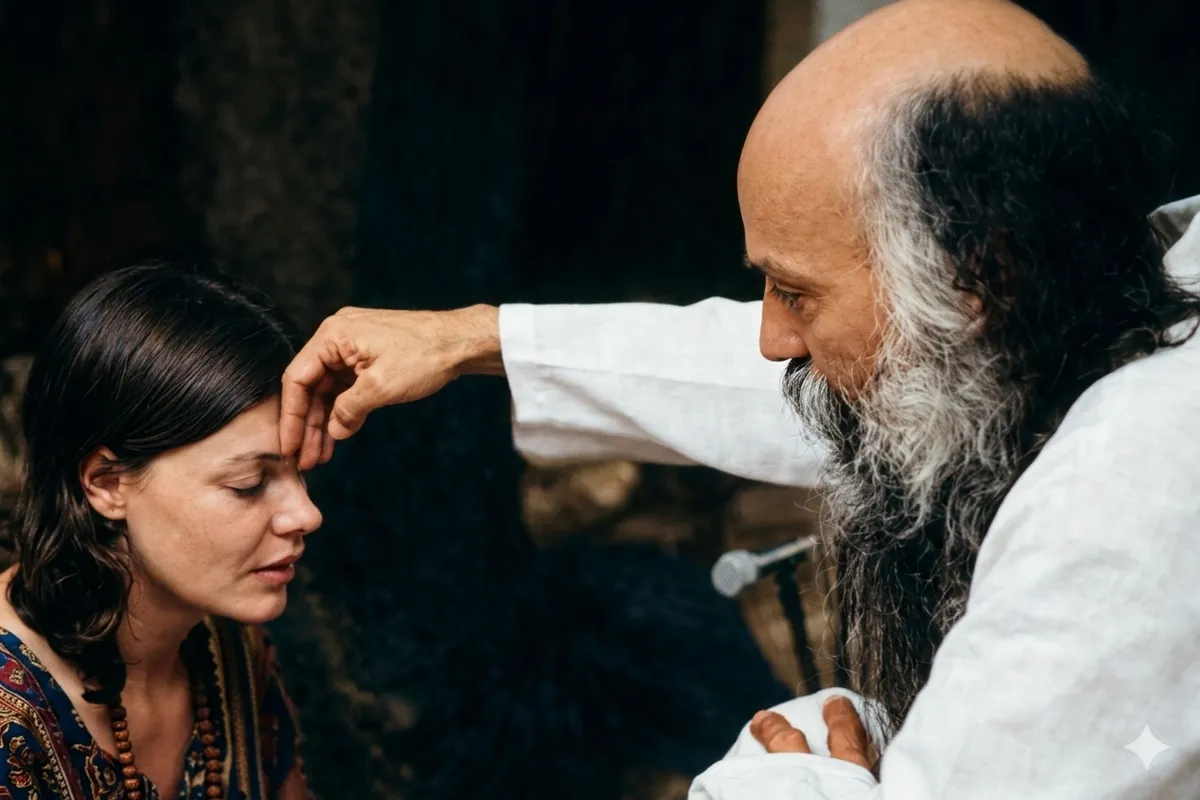
Osho's perspective on Knowing
When Osho Spoke About Knowing
Passages from the discourses where this theme comes alive.
Question: BELOVED OSHO, IS KNOWING AN INTELLECTUAL EXPERIENCE? The experience of knowing has two dimensions to it. One is objective knowing, the other is subjective knowing. Objective knowing is intellectual. That's what all of science goes on doing. It is intellectual knowing. Intellect is enough to know the object. The object is outside -- available to your eyes, available to experiments. You can dissect it, you can do whatsoever you want, all kinds of experimentation. It is available to the pure intellect. But your own being is not available to your intellect. Your own being is available only in silence, not in intellectual activity, but in a silent awareness. That is a totally different dimension and that is true knowing, knowing yourself. But that cannot be intellectual, because intellect is something that can only reach outwards; it has no way of reaching inwards.
Osho, “Ab main nachyo bahut, Gopal”—thus sings the devotee. Does the knower, like the devotee, also sing?
In the knower’s life the same event happens—of zero, or of fullness—but in another way. The knower frees himself from the Thou. That is why Mahavira says, “What God? There is no God. Appa so paramappa—the self itself is the Supreme Self. In my pure perfection, I am God.” Therefore the knower says: “Aham Brahmasmi.” “Ana’l-Haqq.” Other than me, who? So the knower diminishes the Thou, diminishes and diminishes, until a moment comes when the Thou becomes zero and only the I remains. But then the I cannot remain either. To keep the I, a little Thou is needed. The day the I alone remains and the Thou becomes zero, in that very moment the I also disappears. They go together. And when the I disappears, a unique celebration is born. But the knower will not dance; the celebration happens so deeply within, and the knower is inward-turned. These are…
पहला प्रश्न: ओशो, ‘अब मैं नाच्यो बहुत गोपाल’, भक्त ऐसा गाता है। क्या भक्त की भांति ज्ञानी भी गाता है?
ज्ञानी के जीवन में घटना घटती है यही, शून्य की, या पूर्ण की, लेकिन दूसरे ढंग से घटती है। ज्ञानी तू से अपने को मुक्त करता है। इसीलिए तो महावीर कहते हैं, कैसा परमात्मा! कोई परमात्मा नहीं है। अप्पा सो परमप्पा। आत्मा ही परमात्मा है। और कैसा परमात्मा! मैं ही अपने परिपूर्ण शुद्धता में परमात्मा हूं। इसलिए ज्ञानी कहता है: अहं ब्रह्मास्मि। अनलहक। मुझसे अलग और कौन? तो ज्ञानी तू को घटाता जाता है, घटाता जाता है, घटाता जाता है, एक ऐसी घड़ी आती है कि तू बिलकुल शून्य हो जाता है, मैं ही बचता। …
Osho, but in that knowing, Maharaj-ji, can there not be sameness—that as another has known, I may know the same? And may that sameness become available to me.
If you look very closely, such sameness is possible only if I am exactly as the other was. Otherwise it can never be. See the full implications: when I am knowing, my whole personality, my total being, is knowing. Only if your whole personality is exactly as mine, could the event of our knowing be one and the same. And no two persons are ever the same. In fact, forget persons—that is a far-off matter. Pick up a stone from a Delhi street; search the whole earth and you will not find another exactly like it. Pluck a flower from a garden; comb all the forests and you will not find another just like it. Here, each and every thing has its own uniqueness. And that very uniqueness is its soul. In my view, this uniqueness is its soul. A machine has no soul, because a machine is not unique.…
प्रश्न: ओशो, लेकिन उस जानने में महाराज जी, समानता तो हो सकती है, जैसा दूसरे ने जाना, वैसा ही मैं जानूं। और समानता मुझे उपलब्ध हो जाए।
यह जो, अगर बहुत गौर से देखेंगे: यह समानता तभी हो सकती है जब कि जैसा दूसरा था, वैसा ही मैं हूं। अन्यथा यह कभी नहीं हो सकती। अगर इसके पूरे इंप्लीकेशंस को समझेंगे, तो जब मैं जान रहा हूं तो मेरा पूरा व्यक्तित्व, मेरा टोटल बीइंग जान रहा है। और मेरा पूरा व्यक्तित्व, और अगर ठीक आपका पूरा व्यक्तित्व बिलकुल वैसा हो, जैसा मेरा है; तो हम दोनों के जानने की घटना एक ही हो सकती है। और व्यक्ति कभी दो एक जैसे नहीं हैं। व्यक्ति तो बहुत दूर की बात है, एक पत्थर उठा लें दिल्ली की सड़क का, तो सारी जमीन पर खोजने से ठीक वैसा दूसरा पत्थर हम नहीं खोज सकते। एक फूल एक बगिया में से चुन लें, और सारे जंगल छान डालें तो दूसरा फूल वैसा हम नहीं चुन सकते। यहां एक-एक चीज का अपना अनूठा होना है। और यह अनूठा होना ही उसकी आत्मा है। मेरे हिसाब में यह जो अनूठापन है, यह उसकी आत्मा है।
Osho, is the experience of the Divine different for each person?
Think of it like this: you go home from this garden, and your children say, “Tell us—what was the garden like?” A painter might tell you by making a painting: “It was like this.” A poet will write a poem—of the trees, of the winds passing through them, of the sun filtering between their leaves. Now a poem and a painting differ greatly. Or perhaps someone is a musician; he will not even write a poem—he will lift his vina. Why write? The winds passed through the trees and there was sound and resonance—he will reproduce that resonance on the vina. The colors in the trees he will translate into tones. The sun and shade he will pour into music. He will play the garden on his vina. Another will write a poem; another will render it on paper. The three expressions will differ. And if you look only at…
तीसरा प्रश्न: ओशो, क्या परमात्मा का अनुभव भी प्रत्येक का अलग-अलग होता है?
ऐसा ही समझो कि इस बगीचे से तुम गए घर, और किसी ने तुमसे कहा--तुम्हारे बच्चों ने कहा कि हमें भी तो कुछ बताओ कि बगीचा कैसा था? जो चित्रकार होगा, वह शायद चित्र बना कर बता देगा कि ऐसा था। जो कवि होगा, वह एक कविता लिखेगा--वृक्षों की, वृक्षों के बीच से गुजरती हवाओं की, वृक्षों के बीच-बीच से छनती सूरज की किरणों की, वह कविता लिखेगा। अब एक कविता में और एक चित्र में बड़ा फर्क है। या हो सकता है कोई संगीतज्ञ हो, वह कविता भी नहीं लिखेगा, वह अपनी वीणा उठा लेगा। क्यों लिखे कविता? हवाएं गुजरती थीं वृक्षों से और आवाज होती थी और नाद पैदा होता था, वह वीणा पर वही नाद पैदा कर देगा। रंग थे वृक्षों में, रंगों को वह ध्वनियों में बदल देगा। धूप-छांव थी, वह धूप-छांव को संगीत में उतार देगा। वह अपनी वीणा पर बजाएगा बगीचे को। कोई कविता में लिखेगा, कोई कागज पर उतारेगा।
Does the knower also sing like the devotee?
definitionIs knowing an intellectual experience?
definitionWhat is the nature of knowing?
definitionProfound Quotes on Knowing
Explore our structured collection of meaning-mapped quotes regarding Knowing.