
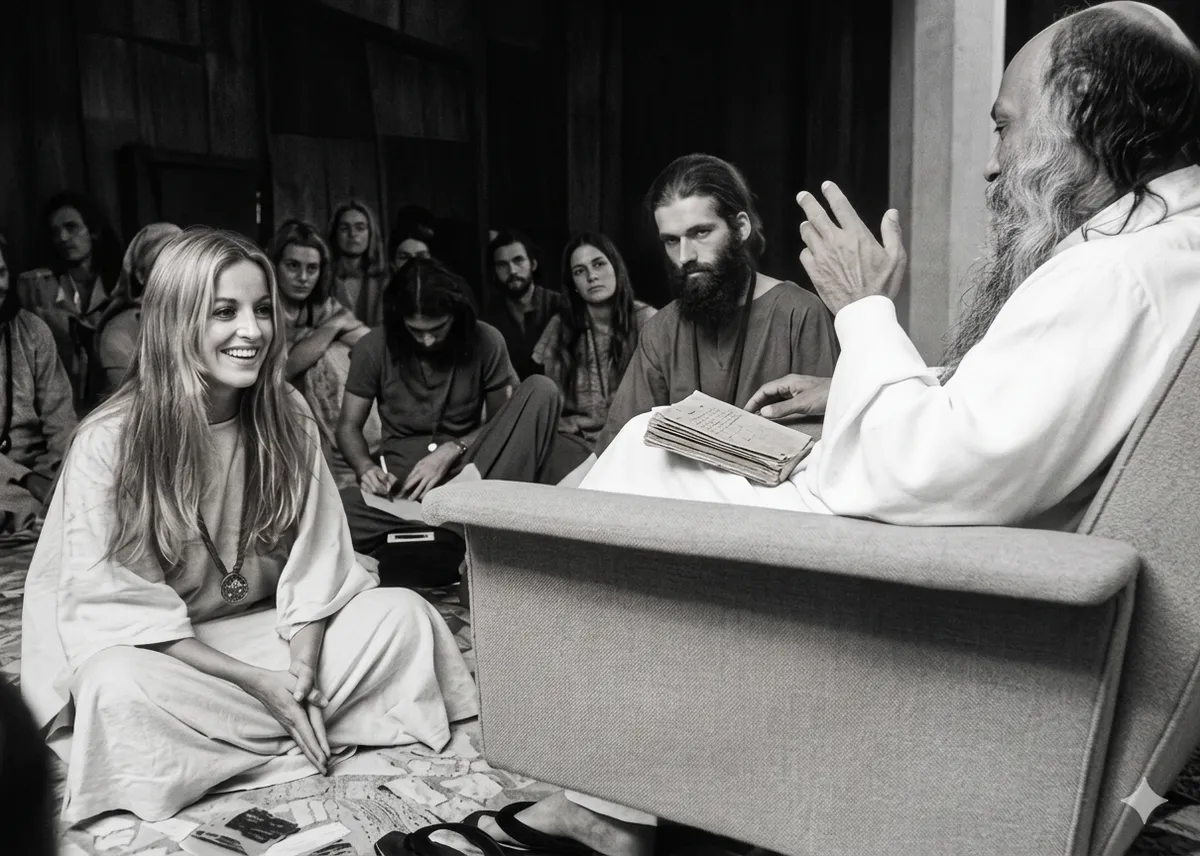
Osho's perspective on Attachment
When Osho Spoke About Attachment
Passages from the discourses where this theme comes alive.
Osho, what is attachment? Why do we become so attached to things, ideas and persons? And is there freedom from attachment?
“So do one thing,” she told the courtesan. “I will pay you whatever you ask. Go to him at midnight. He meditates at midnight—has done so for thirty years. I want to know whether meditation has happened or not before I die. His hut door is only latched; no one ever goes there. Open it and go in. Whatever he says, notice every word and tell me. Go and embrace him—then come back and report. Before I die, I want to be sure that my service was not in vain.” The courtesan went. She opened the door. The monk was startled. He opened his eyes—he had been sitting in meditation—and shouted, “You wicked woman! Why are you here? Get out! What need have you to come at midnight?” But his tongue faltered; his body trembled. The woman had taken her money; she went right in. He cried, “Stay back! Why…
पहला प्रश्न: ओशो, आसक्ति क्या है? हम चीजों, विचारों और व्यक्तियों से इतने आसक्त क्यों हो जाते हैं? और क्या आसक्ति से छुटकारा भी है?
तो तू एक काम कर--उसने वेश्या को कहा--कि जो तुझे लेना हो उतने पैसे मैं दूंगी। तू आधी रात आज चली जा। वह फकीर आधी रात को ध्यान करता है। तीस साल से कर रहा है, अभी तक हुआ ध्यान या नहीं, यह मैं जानना चाहती हूं। मरने के पहले यह पक्का कर लेना चाहती हूं कि जिसकी सेवा की, व्यर्थ ही तो नहीं की। तो तू चली जाना भीतर। उसकी झोपड़ी का द्वार अटका ही रहता है, क्योंकि कोई कभी जाता ही नहीं। तू द्वार खोल लेना। और वह कुछ भी कहे, एक-एक बात का खयाल रखना, मुझे तुझे बताना पड़ेगा। और जाकर एकदम उसका आलिंगन कर लेना। वह क्या कहता है, क्या करता है, बस तू लौट कर मुझे बता देना। मरने के पहले मैं यह जान लेना चाहती हूं। वह वेश्या गई। उसने दरवाजा खोला। दरवाजा खोला तो साधु एकदम घबड़ाया। उसने आंख खोल कर देखा साधु ने। ध्यान करने बैठा था, एकदम चिल्लाया कि अरी दुष्ट स्त्री! …
Osho, you say there is nothing to lose here. Then why is it that I still cannot stake everything?
Life can be lived in two ways: a hellish way and a heavenly way. I am teaching you the heavenly way—how to live here and now in a heavenly manner. This earth is heaven for those who know the art of joy. This earth is liberation for those who know the art of freedom. And this earth is hell for those who are skillful at manufacturing hell. Those who live on fear and greed turn life into hell. Those who live in non-greed and fearlessness turn life into heaven. And accept challenges, because only challenges bring to a polish the talent hidden within you; they give you edge. Challenges unify you. They organize you inwardly. You become concentrated. And challenges awaken you—for one whose life has no challenge, he sleeps. He whose life has challenge—how can he sleep? If your house is on fire, can you sleep? However tired you…
तीसरा प्रश्न: ओशो, आप कहते हैं कि यहां खोने को कुछ भी नहीं है। फिर भी मैं क्यों सब कुछ दांव पर नहीं लगा सकता हूं?
जिंदगी दो ढंग से जीयी जा सकती है, एक ढंग नरक और एक ढंग स्वर्ग। मैं तुम्हें स्वर्ग का ढंग सिखा रहा हूं कि कैसे अभी और यहां स्वर्गिक ढंग से जीओ। यह पृथ्वी स्वर्ग है उनके लिए जो सुख की कला जानते हैं। यह पृथ्वी मोक्ष है उनके लिए जो मुक्ति की कला जानते हैं। और यह पृथ्वी नरक है उनके लिए जो नरक का ही निर्माण करने में कुशल हैं।
Would you please explain the working of that unknown force which keeps the human mind attached to wordly things and habits in spite of being fully aware that the ultimate result is nothing but misery?
The awareness is not total, the awareness is just intellectual. Logically you follow that "Whatsoever I am doing is leading me to misery," but this is not your existential experience. Just rationally you understand. If you were reason alone then there would have been no problem, but you are "unreason" also. If you had only conscious mind then it was okay. You have unconscious mind also. Conscious mind knows that you are going into misery every day by your own efforts; you are creating your own hell. But the unconscious is not aware, and the unconscious is nine times more than your conscious mind. And that unconscious goes on persisting in its own habits. You decide not to be angry again because anger is nothing but poisoning your own system. It gives you misery. But next time, when someone insults you, the unconscious will put aside your conscious reasoning, will…
Osho, what is the definition of God?
Words are very small. If you say God is light, then what of darkness? The scriptures have said that God is light. Suppose we accept this as a definition—then what about darkness? Where will darkness go? Darkness is too; in fact it is far more than light. Light sometimes is and sometimes is not; darkness is always, eternal. Where will you place darkness? If you say God is light, darkness is left out. If you say God is darkness, then light is left out. If you say God is both darkness and light, a contradiction arises: they cannot be together. Try to have both darkness and light in the same room. If you bring in light, darkness disappears; if you preserve darkness, you cannot have light. Then how can both be together? That becomes an impossibility. So you cannot say “both” either. Then the fourth device is to say: it…
पहला प्रश्न: ओशो, परमात्मा की परिभाषा क्या है?
शब्द तो बड़े छोटे-छोटे हैं। अगर कहो परमात्मा प्रकाश है, तो फिर अंधेरे का क्या होगा? ऐसा कहा है शास्त्रों में कि परमात्मा प्रकाश है। चलो मान लें इसे परिभाषा, फिर अंधेरे का क्या होगा? फिर अंधेरा कहां जायेगा? अंधेरा भी है, प्रकाश से कहीं ज्यादा है। प्रकाश तो कभी होता है कभी नहीं भी होता; अंधेरा सदा है, शाश्वत है। अंधेरे को कहां रखोगे? अगर कहा परमात्मा प्रकाश है, तो अंधेरा बाहर पड़ गया। अगर कहा परमात्मा अंधेरा है, तो प्रकाश बाहर पड़ गया। अगर कहो परमात्मा अंधेरा प्रकाश दोनों है, तो विरोधाभास होता है। दोनों एक साथ हो नहीं सकता। एक ही कमरे में अंधेरा और प्रकाश करके दिखाओ। प्रकाश करोगे, अंधेरा खो जायेगा; अंधेरा बचाओगे, प्रकाश न कर सकोगे। तो दोनों साथ कैसे होंगे? तब एक असंभव बात हो गई। तो यह भी नहीं कह सकते कि दोनों है।
What happens when my feelings towards someone change from wanting to leave to not wanting to leave?
outcomeWhat is the need to be attached to another?
definitionProfound Quotes on Attachment
Explore our structured collection of meaning-mapped quotes regarding Attachment.