
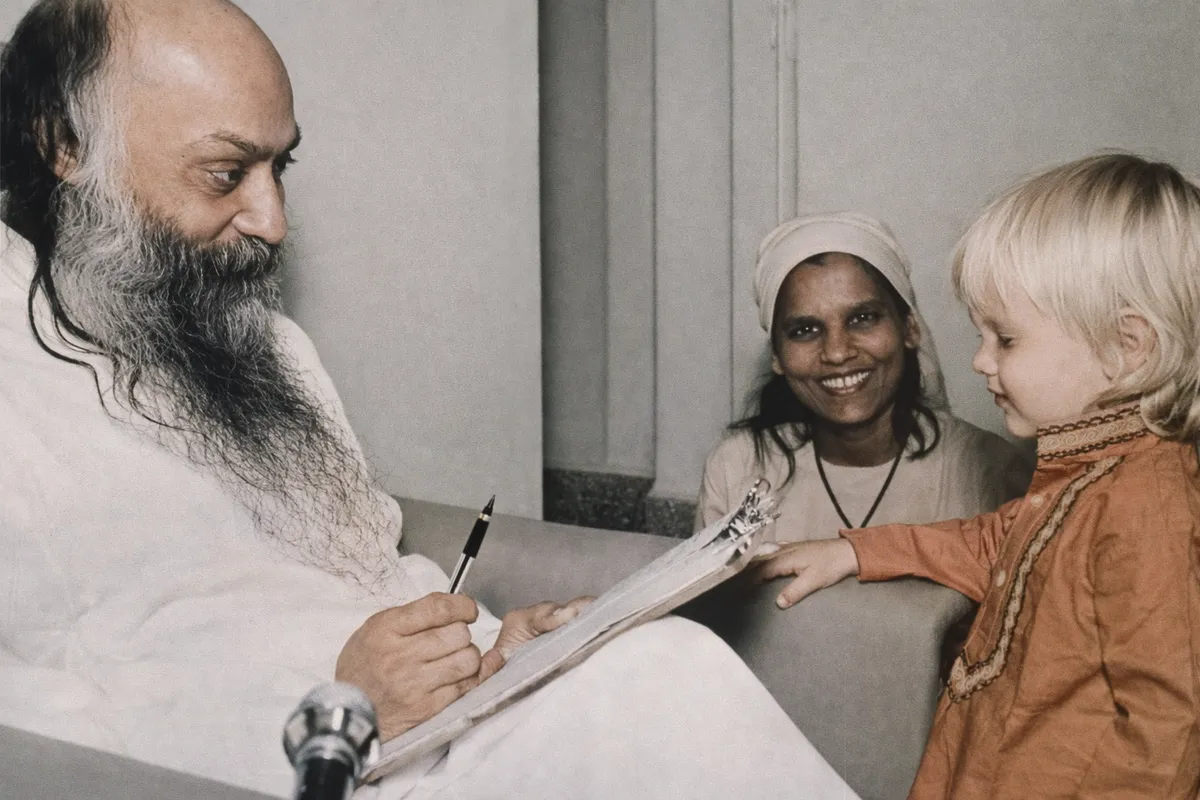
Osho's perspective on Possessions
When Osho Spoke About Possessions
Passages from the discourses where this theme comes alive.
Osho, saints have always been against possessions. But one cannot get by without possessions. Then how much should a seeker of truth keep?
And if he were to shower down gold coins, breaking the roof, we would not refuse, saying, “I am not a sensualist, I am a renunciate—what are you doing? What injustice is this!” Or if today he were to carry everything off from the house—God is a robber indeed; that is why we call him Hari: Hari means the one who takes away, who steals. He is a thief indeed—here he gives, there he also snatches away. Today he gives, tomorrow he may take. And in between you will get into great, unnecessary entanglements. There is a Sufi story. A fakir had two beloved sons, twin boys. They were the pride of the town. Even the emperor, seeing those boys, was filled with envy. The emperor’s sons were neither so handsome nor so gifted. Those two boys were the light of that village; their conduct was equally gracious and noble.…
Osho, there is one more thing I want to understand in the first question: how is it that objects—possessions—hypnotize and possess their owner, the possessor? What are the reasons?
In the very desire to become a master lie the seeds of slavery; because whatever we decide to master, we also, unknowingly, have to become its slave. We become slaves because our mastery depends upon that which we own. Without it, our ownership cannot exist. And when ownership depends on something, how can we be the owner of our ownership? The real master is that upon which it depends. If I have ten slaves, I am the master of ten slaves; but my mastery depends on those ten slaves being there. If these ten slaves are lost, my mastery will be lost with them. The key to that mastery is not in my hands; it is in the hands of those ten slaves. In a very deep sense they have become my masters, because without them I cannot be a master. And how can we be masters of those without…
ओशो, पहले प्रश्न में एक चीज और समझनी है कि वस्तुएं, पजेशंस, अपने मालिक को, पजेसर को कैसे सम्मोहित, पजेस्ड कर लेती हैं? इसके क्या कारण हैं?
… उसके बिना हमारी मालकियत नहीं हो सकती। और जब मालकियत किसी पर निर्भर होती है तो हम अपनी मालकियत के मालिक कैसे हो सकते हैं? मालिक तो वही हो गया, जिस पर वह निर्भर होती है। अगर दस गुलाम मेरे पास हैं, तो मैं दस गुलामों का मालिक हूं; लेकिन मेरी मालकियत दस गुलामों के होने पर निर्भर है। अगर ये दस गुलाम खो जाएं, तो मेरी मालकियत भी खो जाएगी, इनके साथ ही खो जाएगी। उस मालकियत की कुंजी मेरे पास नहीं है, इन दस गुलामों के पास है। ये दस गुलाम बहुत गहरे में मेरे मालिक हो गए हैं, क्योंकि इनके बिना मैं मालिक न हो सकूंगा। और जिनके बिना हम मालिक न हो सकें, उनके हम मालिक कैसे हो सकते हैं? जिनके बिना हमारी मालकियत गिर जाएगी, जाने-अनजाने उनके हम गुलाम हो गए! हम उनसे बंध गए!
The old religions have taught people to go beyond possessions; I teach you to go beyond possessiveness -- and there is a vast difference between the two. Going beyond possessions is a masochistic thing. Then you are unnecessarily torturing yourself. Mahavira lived naked, he carried the idea of non-possessions to the ultimate extreme, so he did not even have clothes. He had to live naked -- that is the logical consequence of the idea of not possessing anything, not even the begging bowl which was allowed in India for the monks, for all kinds of mystics. But Mahavira would not have anything to do even with a begging bowl. He would eat with his hands, he would beg with his hands. But this is in a way masochistic. When it was cold he must have been shivering and when it was hot and when it was raining....
The self, deluded by maya, identifies with the body and does all actions. In the waking
STATES IT IS HE, THE SAME SELF, WHO FINDS GRATIFICATION THROUGH THE VARIOUS OBJECTS OF ENJOYMENT, SUCH AS WOMEN, FOOD, WINE, ET CETERA. IN THE DREAM STATE THAT VERY SAME INDIVIDUALIZED EGO EXPERIENCES PLEASURE AND PAIN IN A FIELD OF EXPERIENCES CREATED BY ITS OWN MAYA, THE LEAST APPREHENSIVE OF REALITY. DURING THE STATE OF PROFOUND SLEEP, WHEN EVERYTHING IS MERGED, IT IS OVERPOWERED BY TAMAS, INERTIA, AND EXPERIENCES IT AS As we live, as we are, it is a deep hypnosis. Whatsoever we feel, whatsoever we think, is based on hypnotic projections. In some face I see beauty; that beauty doesn't belong to the face, because someone else may not feel it as beautiful at all. It belongs to my projection. When I say some face is beautiful, I am projecting something from me; and the face is just a screen, because someone else may see the face as…
Profound Quotes on Possessions
Explore our structured collection of meaning-mapped quotes regarding Possessions.