
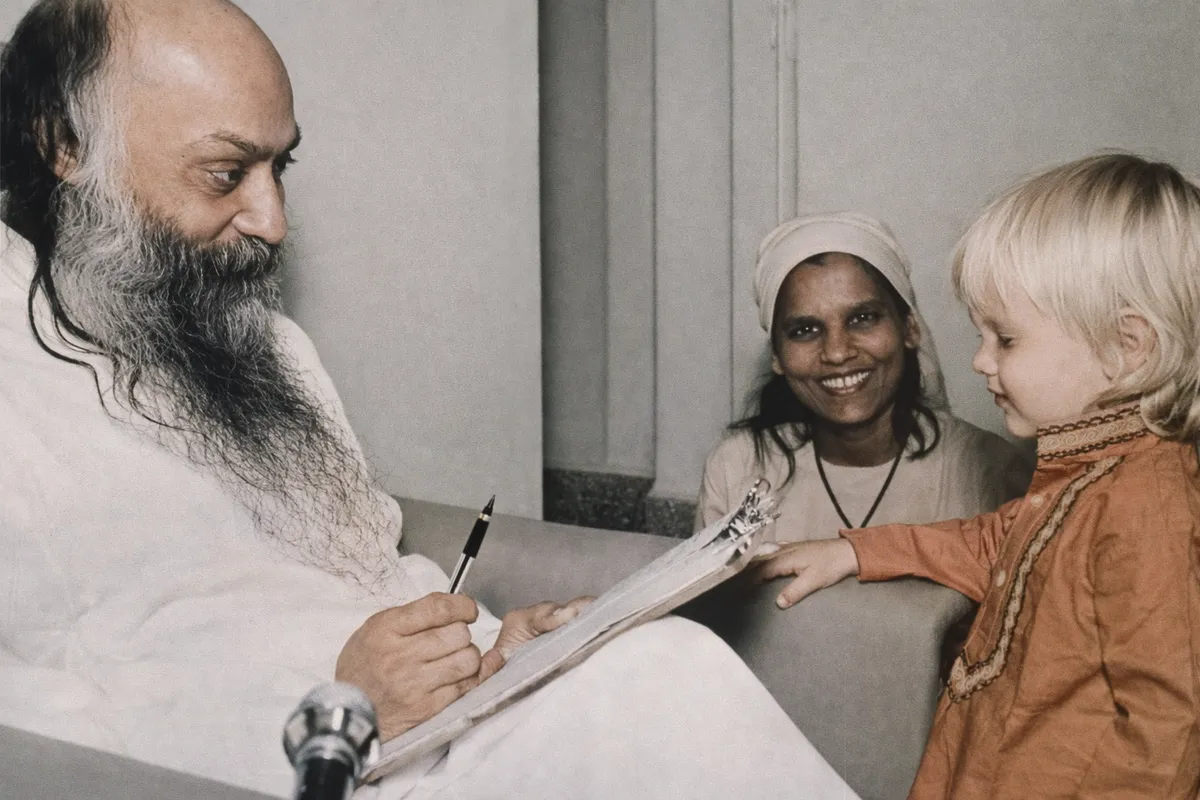
We cling because we feel empty inside; find your inner treasure and the need to hold on fades by itself.
From the Discourses
Passages where Osho speaks to this question — each links to the complete discourse.
Osho, what is attachment? Why do we become so attached to things, ideas and persons? And is there freedom from attachment?
“So do one thing,” she told the courtesan. “I will pay you whatever you ask. Go to him at midnight. He meditates at midnight—has done so for thirty years. I want to know whether meditation has happened or not before I die. His hut door is only latched; no one ever goes there. Open it and go in. Whatever he says, notice every word and tell me. Go and embrace him—then come back and report. Before I die, I want to be sure that my service was not in vain.” The courtesan went. She opened the door. The monk was startled. He opened his eyes—he had been sitting in meditation—and shouted, “You wicked woman! Why are you here? Get out! What need have you to come at midnight?” But his tongue faltered; his body trembled. The woman had taken her money; she went right in. He cried, “Stay back! Why…
पहला प्रश्न: ओशो, आसक्ति क्या है? हम चीजों, विचारों और व्यक्तियों से इतने आसक्त क्यों हो जाते हैं? और क्या आसक्ति से छुटकारा भी है?
तो तू एक काम कर--उसने वेश्या को कहा--कि जो तुझे लेना हो उतने पैसे मैं दूंगी। तू आधी रात आज चली जा। वह फकीर आधी रात को ध्यान करता है। तीस साल से कर रहा है, अभी तक हुआ ध्यान या नहीं, यह मैं जानना चाहती हूं। मरने के पहले यह पक्का कर लेना चाहती हूं कि जिसकी सेवा की, व्यर्थ ही तो नहीं की। तो तू चली जाना भीतर। उसकी झोपड़ी का द्वार अटका ही रहता है, क्योंकि कोई कभी जाता ही नहीं। तू द्वार खोल लेना। और वह कुछ भी कहे, एक-एक बात का खयाल रखना, मुझे तुझे बताना पड़ेगा। और जाकर एकदम उसका आलिंगन कर लेना। वह क्या कहता है, क्या करता है, बस तू लौट कर मुझे बता देना। मरने के पहले मैं यह जान लेना चाहती हूं। वह वेश्या गई। उसने दरवाजा खोला। दरवाजा खोला तो साधु एकदम घबड़ाया। उसने आंख खोल कर देखा साधु ने। ध्यान करने बैठा था, एकदम चिल्लाया कि अरी दुष्ट स्त्री! …
Osho, what is the definition of God?
Words are very small. If you say God is light, then what of darkness? The scriptures have said that God is light. Suppose we accept this as a definition—then what about darkness? Where will darkness go? Darkness is too; in fact it is far more than light. Light sometimes is and sometimes is not; darkness is always, eternal. Where will you place darkness? If you say God is light, darkness is left out. If you say God is darkness, then light is left out. If you say God is both darkness and light, a contradiction arises: they cannot be together. Try to have both darkness and light in the same room. If you bring in light, darkness disappears; if you preserve darkness, you cannot have light. Then how can both be together? That becomes an impossibility. So you cannot say “both” either. Then the fourth device is to say: it…
पहला प्रश्न: ओशो, परमात्मा की परिभाषा क्या है?
शब्द तो बड़े छोटे-छोटे हैं। अगर कहो परमात्मा प्रकाश है, तो फिर अंधेरे का क्या होगा? ऐसा कहा है शास्त्रों में कि परमात्मा प्रकाश है। चलो मान लें इसे परिभाषा, फिर अंधेरे का क्या होगा? फिर अंधेरा कहां जायेगा? अंधेरा भी है, प्रकाश से कहीं ज्यादा है। प्रकाश तो कभी होता है कभी नहीं भी होता; अंधेरा सदा है, शाश्वत है। अंधेरे को कहां रखोगे? अगर कहा परमात्मा प्रकाश है, तो अंधेरा बाहर पड़ गया। अगर कहा परमात्मा अंधेरा है, तो प्रकाश बाहर पड़ गया। अगर कहो परमात्मा अंधेरा प्रकाश दोनों है, तो विरोधाभास होता है। दोनों एक साथ हो नहीं सकता। एक ही कमरे में अंधेरा और प्रकाश करके दिखाओ। प्रकाश करोगे, अंधेरा खो जायेगा; अंधेरा बचाओगे, प्रकाश न कर सकोगे। तो दोनों साथ कैसे होंगे? तब एक असंभव बात हो गई। तो यह भी नहीं कह सकते कि दोनों है।
Osho, I have dropped all my attachments; but still subtle attachments remain. I am even attached to non-attachment, to no-mind, to no no-mind. I am aware of the subtle ego. How should we go beyond this vicious circle?
Why start it in the first place? I am not telling you to drop attachments, I am telling you to just understand them. That's enough. Just see what your attachments are with no effort to drop them, with no judgment, no evaluation. Just see what they are. Whatsoever they are, they are there. What can you do? -- Just as you have eyes and hands and legs and a certain color of hair and skin, so your attachments are there. Accept them! In that acceptance the revolution begins. The moment you accept your attachments and you start understanding them, with NO idea to drop them... Remember, if there is the idea to drop them behind your understanding, your understanding cannot be profound and total; that idea will be a hindrance. Why drop attachments? God has not dropped the attachment to his world -- why should you drop your attachments to…
This non-attachment—someone has asked—how can it arise in an ordinary person?
All are ordinary until non-attachment arises. So the question is not how it can come to “ordinary” people. Until it comes, everyone is ordinary; only when it flowers does extraordinariness bear fruit in life. Hence there are not two paths—one for the ordinary and one for the extraordinary—because “extraordinary” only means one who has attained non-attachment. Ask instead: how to attain it? How is this non-attachment to be realized? And before we ask that, first see how it was missed in the first place. How have we gone astray from non-attachment? In Krishna’s vision, non-attachment is our very nature. How did we miss our nature? So it is not that we have to do some special practice to acquire non-attachment. We only need to understand how we drifted from our nature. How did we lose non-attachment? Someone came to me and said, “I am searching for God.” I asked him,…
यह अनासक्ति, पूछा है, कैसे साधारणजन को आए?
सभी जन साधारण हैं जब तक अनासक्ति न आ जाए। इसलिए ऐसा सवाल नहीं है कि साधारणजन को कैसे आए। अनासक्ति जब तक न आए, तब तक सभी साधारण हैं। अनासक्ति आ जाए तभी असाधारणता जीवन में फलित होती है। इसलिए ऐसा नहीं है कि साधारणजन के लिए अनासक्ति का और रास्ता होगा, असाधारणजन के लिए और होगा। क्योंकि असाधारण का एक ही अर्थ है कि वह अनासक्ति को उपलब्ध हुआ है। कैसे उपलब्ध हो, ऐसा ही पूछें। यह अनासक्ति कैसे उपलब्ध हो? इसको भी समझने के पहले जरा इसे समझ लें कि यह चूक कैसे गई है? यह अनासक्ति हमसे चूक कैसे रही है? अनासक्ति कृष्ण की दृष्टि में स्वभाव है। हम चूक कैसे गए हैं स्वभाव से? इसलिए ऐसा नहीं है कि हमें कुछ साधना है अनासक्ति में। इतना ही जानना है कि स्वभाव से हम चूक कैसे गए हैं? हमने अनासक्ति खोई कैसे? कोई व्यक्ति मेरे पास आया और उसने पूछा कि मैं ईश्र्वर को खोजता हूं। तो मैंने उससे पूछा कि तुमने खोया कब? और अगर खोया हो तो खोज सकते हो। उसने कहा, नहीं, मैंने खोया तो कभी भी नहीं। …
You said that love can make you free. But ordinarily we see that love becomes attachment, and instead of freeing us it makes us more bound. So tell us something about attachment and freedom.
Right now you are not. When you say, "When I love someone it becomes an attachment," you are saying you are not, so whatsoever you do goes wrong because the doer is absent. The inner point of awareness is not there, so whatsoever you do goes wrong. First BE, and then you can share your being. And that sharing will be love. Before that, whatsoever you do will become an attachment. And lastly: if you are struggling against attachment, you have taken a wrong turn. You can struggle. So many monks, recluses, sannyasins are doing that. They feel that they are attached to their house, to their property, to their wives, to their children, and they feel caged, imprisoned. They escape, they leave their homes, they leave their wives, they leave their children and possessions, and they become beggars and escape to a forest, to a loneliness. But go and…