
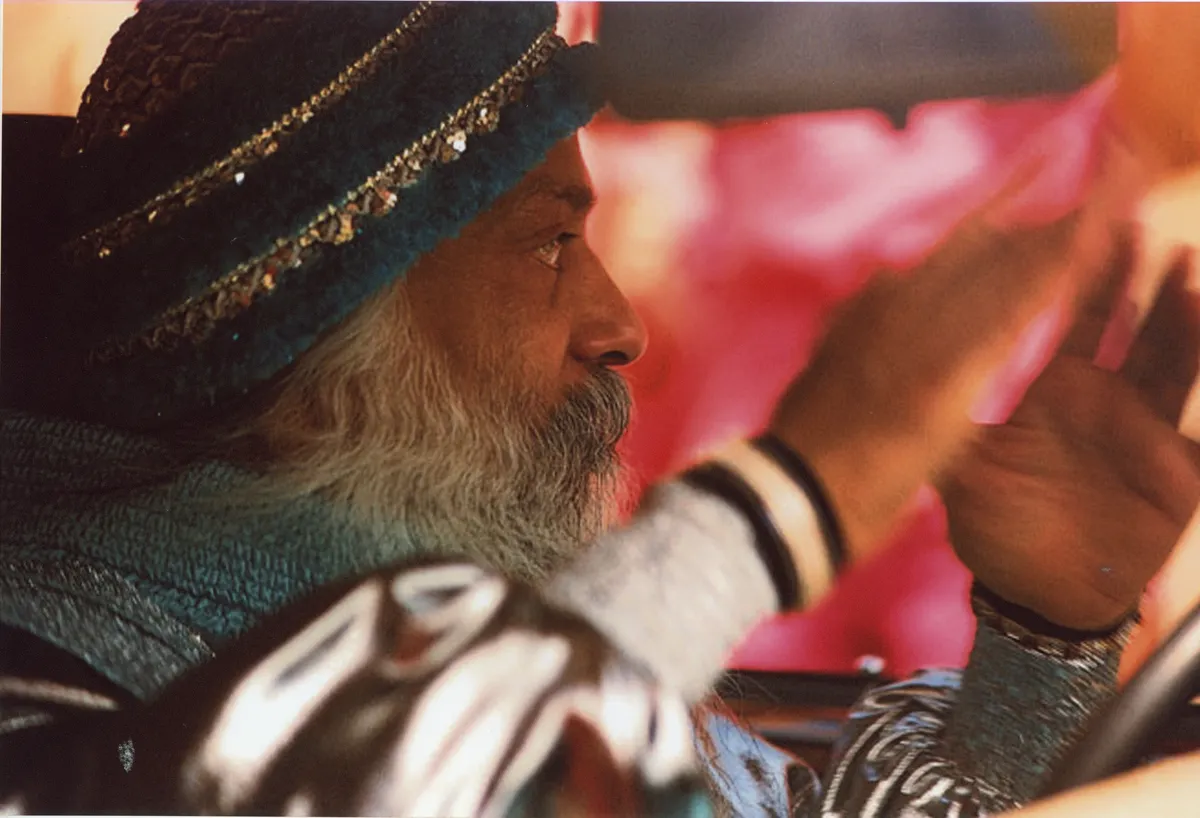
Osho's perspective on Philosophy
When Osho Spoke About Philosophy
Passages from the discourses where this theme comes alive.
Whom do you think is the greatest western philosopher?
Friedrich Nietzsche. It will surprise you, but Friedrich Nietzsche is the most misunderstood philosopher... and he was more misunderstood because Adolf Hitler accepted him as his master. He was not a fascist. No other philosopher in the West had such a deep insight into things. And his approach was so multidimensional that he could not write in the ordinary way philosophical treatises are written. He wrote in maxims, because he had so much to write that he could write only in condensed forms. That became one of the reasons for misunderstanding him. Now there is a revival of interest in Nietzsche. And I was hoping that there would be a revival, because the greater a philosopher is, the more is the possibility that his contemporaries will not understand him. It will take at least a hundred years for people to understand him; a genius is always a hundred years ahead…
What is the difference between waiting for godot and waiting for god?
It is as if the sun has risen in the morning and you are sitting in your room with closed doors and windows, in darkness. Open the doors, you become available to the sun. The sun was already available -- just the meeting happens. You cannot wait for God. All waiting is for Godot. Godot means the one who never comes, who CANNOT come, whose arrival is impossible. And the only impossible thing is that which has already happened -- how can it happen again? You are alive, and you are waiting for life, Now, this is ridiculous. The real man of religion does not think in terms of God. He thinks in terms of life or, even better, of living -- because life can again become an abstract idea. Living, moment-to-moment living. In that very living, one knows what God is, because one knows who one is. Your idea…
Osho, your philosophy of life is so simple, natural and true—yet why does the crowd still hurl abuses at you?
Dhirendra! Because a crowd is a crowd. Crowds are of sheep, not of lions. Crowds are of the blind, not of those who can see. Those with eyes have the strength to walk alone. The crowd walks by clutching at one another. The crowd belongs to cowards, not to the brave. Lions don’t flock; there is no herd of lions. Why do sheep move in a flock? Because in a crowd there is a sense of safety: “We are so many; danger will be less. There is company; nothing will go wrong.” The crowd is blind. I call its gait the gait of sheep. The crowd’s opinions have no value. If a crowd could understand, it wouldn’t be a crowd—individuality would be born. In anyone within whom even a little wisdom arises, he becomes a person; he ceases to be a fragment of the crowd. Even while in a crowd…
तीसरा प्रश्न: ओशो, आपका जीवन-दर्शन इतना सरल, सहज और सत्य है, फिर भी भीड़ आपको गालियां क्यों दिए जाती है?
धीरेंद्र! भीड़ भीड़ है, इसलिए। भीड़ तो भेड़ों की होती है, सिंहों की नहीं होती। भीड़ तो अंधों की होती है, आंख वालों की नहीं होती। आंख वाले तो अकेले चलने में समर्थ होते हैं। भीड़ एक-दूसरे को पकड़ कर चलती है। भीड़ कायरों की होती है, वीरों की नहीं होती। सिंहों के नहीं लेहड़े। सिंहों की कोई भीड़ नहीं होती। क्यों? भेड़ें क्यों भीड़ में चलती हैं? क्योंकि भीड़ में एक सुरक्षा है। इतनी हैं, इसलिए कोई खतरा कम रहेगा। इतना संग-साथ है, इसलिए खतरा नहीं होगा। भीड़ तो अंधी होती है। भीड़ की चाल को मैं भेड़-चाल कहता हूं। भीड़ की बातों का कोई मूल्य नहीं है। अगर भीड़ समझ ही सकती होती तो भीड़ न होती, व्यक्तित्व का जन्म हो जाता। जिस आदमी के भीतर भी थोड़ी प्रज्ञा पैदा होती है वह व्यक्ति बन जाता है, भीड़ का हिस्सा नहीं रह जाता। भीड़ में भी हो तो भी अकेला होता है। बाजार में भी हो तो भी अकेला होता है। उसके पास एक निजता होती है। हिंदू नहीं होता वह। क्योंकि हिंदू तो एक भीड़ का नाम है। मुसलमान नहीं होता वह। …
Osho, why are you so much against philosophy?
And I can understand your question: this is how every child is being brought up, for centuries. Your question is relevant. You say, "I LOVE YOU. BUT IF YOU ARE NOT A PERSON, THEN HOW CAN I LOVE YOU?" We have been told that we can love only persons. The truth is just the opposite: you cannot love the person. Persons can only fight, persons can only be in conflict, because wherever two egos are, there is conflict, a CONSTANT war -- sometimes hot, sometimes cold, but the war continues. Sometimes the warriors are tired so they maintain a certain peace. Whenever they are back again and their energy is there again, they start fighting. You can see it happening with all kinds of lovers -- a continuous fight, a kind of intimate enmity, together and yet not together. Why is this fight there? -- because of two egos. Two…
Am I a philosopher?
definitionCan a stolen match light?
definitionDid Lieh Tzu ever exist?
definitionIs philosophy sufficient to reach God?
definitionIs there love or wisdom in philosophy?
definitionWhat is a positive philosophy of life?
definitionWhat is basic Indian philosophy?
definitionWhat is philosophy?
definitionWhat is the essence of your philosophy?
definitionWhat is the meaning of the question 'What is surprising?' in the context of the Mahabharata?
definitionWhat is the philosophy of Osho?
definitionProfound Quotes on Philosophy
Explore our structured collection of meaning-mapped quotes regarding Philosophy.