
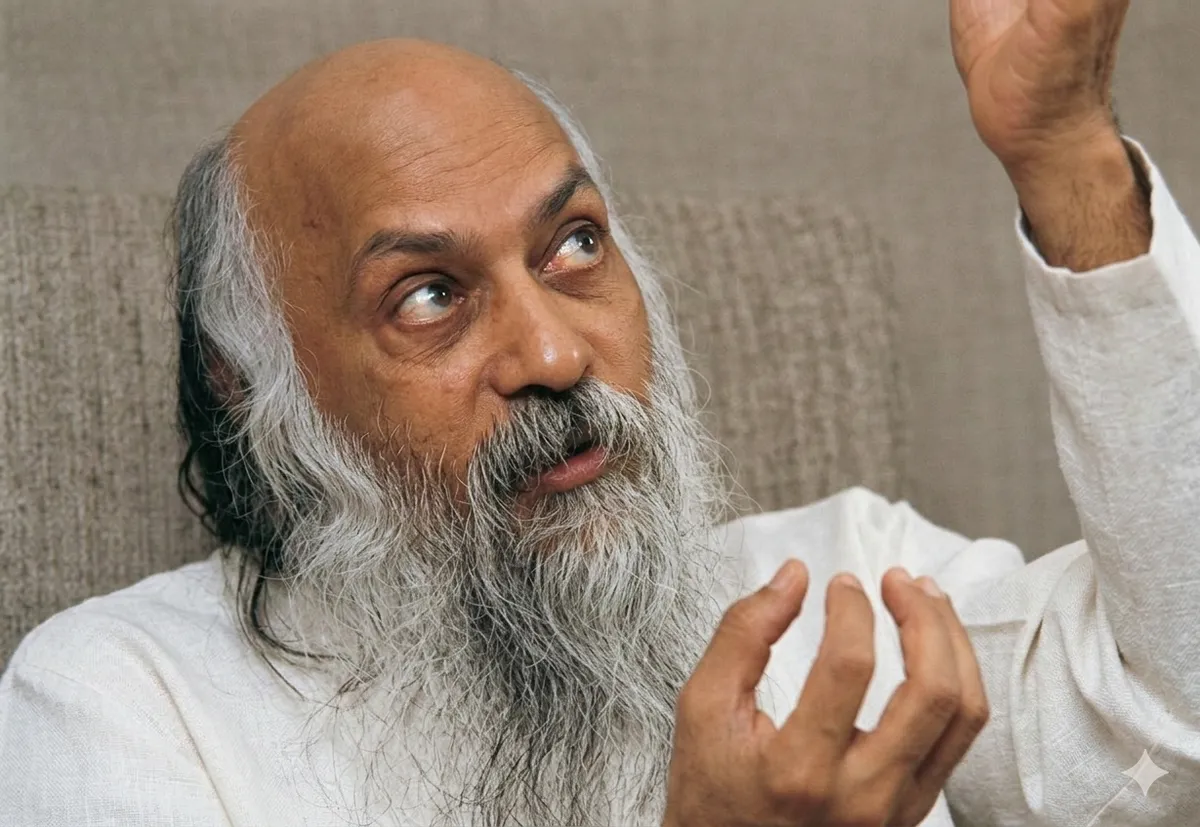
Osho's perspective on Spiritual Paths
When Osho Spoke About Spiritual Paths
Passages from the discourses where this theme comes alive.
Osho, you have said that there are many mutually opposite paths that lead to the One Divine. In the past it used to be that seekers of a single path would gather around one master: yogis separate, devotees separate, tantrikas separate, meditators separate. That made it easy for everyone to walk their own path. But with you, in your ashram, there is a whole fair of opposing paths—yogis and bhaktas, tantrikas and Sufis, karma-yogis and meditators—all together. How is this so? It also creates obstacles. Kindly say something about this.
It is true. In the past it was like that. A master would be the advocate of one narrow path. That had its benefits, and its harms. The benefit was that no dilemma arose in your mind. The same thing—the same thing, the same thing—you heard. The same thing—the same thing, the same thing—you did. Doubt did not arise. You quietly held your path and walked. But there was a danger: narrowness set in. Sectarianism set in—the feeling that only I am right and everyone else is wrong; only this path is right and all others are wrong. So there was a benefit, and there was a harm. And the harm proved greater than the benefit. The benefit reached very few; the harm reached millions. The whole world became sectarian. The whole world became dogmatic: we are right and everyone else is wrong. Ask a Jain—he says, our guru is…
तीसरा प्रश्न: ओशो, आपने कहा है कि एक-दूसरे से विपरीत अनेक मार्ग हैं, जो एक परमात्मा पर ले जाते हैं। अतीत में ऐसा रहा है कि एक ही मार्ग के साधक एक गुरु के पास इकट्ठे होते थे। जैसे योगी अलग, भक्त अलग, तांत्रिक अलग, ध्यानी अलग। इससे सभी को अपने मार्ग पर चलने में सुविधा थी। परंतु आपके पास, आपके आश्रम में तो सब विपरीत मार्गों का मेला लगा हुआ है--योगी और भक्त, तांत्रिक और सूफी, कर्मयोगी और ध्यानी, सब एक साथ। ऐसा कैसे? इससे बाधाएं भी बनती हैं। इस संबंध में कुछ कहने की कृपा करें।
यह सच है। अतीत में ऐसा ही था। एक गुरु एक संकीर्ण मार्ग का उपदेष्टा होता था। उसके लाभ भी थे, हानियां भी थीं। लाभ तो यह था कि तुम्हारे मन में कभी दुविधा पैदा न होती थी। एक ही बात.एक ही बात.एक ही बात सुनते थे। एक ही बात.एक ही बात.एक ही बात करते थे। संदेह पैदा न होता था। चुपचाप अपने मार्ग को पकड़कर चलते थे। लेकिन खतरा था। संकीर्णता पैदा होती थी। सांप्रदायिकता पैदा होती थी, कि मैं ही ठीक हूं, और सब गलत हैं। यही मार्ग ठीक है, और सब मार्ग गलत हैं। तो लाभ था, हानि थी। और लाभ से हानि ज्यादा बड़ी सिद्ध हुई। लाभ तो बहुत थोड़े लोगों को हुआ, हानि करोड़ों को हुई। सारी दुनिया सांप्रदायिक हो गई। सारी दुनिया में यह मतांधता फैल गई कि हम ठीक और बाकी सब गलत। जैन से पूछो, वह कहता है हमारा गुरु गुरु, बाकी सब कुगुरु। हमारा शास्त्र शास्त्र, बाकी सब कुशास्त्र। मुसलमान से पूछो, हिंदू से पूछो, ईसाई से पूछो। सब संकीर्ण हो गए, सांप्रदायिक हो गए। धर्म की तो हत्या हो गई। …
How would you describe your particular path to enlightenment in relationship to other traditional paths such as the various kinds of yoga, sufism, buddhism, zen, christianity, etcetera?
I HAVE NO particular path. I don't belong to any path whatsoever, and therefore all paths belong to me. Each path is perfect in itself, but each path can help only a very minor part of humanity. Each path exists for a particular type. It is complete in itself. Nothing is to be added to it -- nothing is to be deducted from it. As it is, it is perfect. But it can help only a particular type. Humanity is vast; one path cannot carry the whole of humanity. All paths are needed. In fact, as the human mind changes, more new paths have to be evolved. With the mind changing, many old paths have become by and by useless, or can be used only by a very few individuals. I use all paths. Whenever I see a seeker, I start looking into him -- what type he is and…
Osho, if there were only one single method of sadhana in your ashram, wouldn’t it be more convenient for seekers?
These are two styles: either you support yourself—and then there is no need of another. Fine; the matter is finished. Support was the whole issue, and you supported yourself. Have you noticed: a mother’s love is strongest for the child who is the weakest. This is exactly the opposite of economics. But economics and the scripture of love are opposite. According to economics, love should be for the strongest, the most intelligent, the most skilled. No—mother knows the strong, the intelligent, the skilled will manage for themselves. They have no need. It is the weak who are less intelligent, who are more likely to stray, who may fall—the mother takes care of them. It often happens that the sick child becomes dearest to the mother—more than the healthy ones. The experience of God comes to those who stagger in helplessness. That is why in the religions of Buddha and Mahavira…
A friend has asked, Osho, is it not possible to develop intelligence and feeling together? Can a healthy person not practice meditation and devotion at the same time? A person is whole—intelligence, feeling, and action—then why should the path of practice be one-sided?
A person is indeed whole—but that person is an ideal. That is not you who are already whole. When a person’s wholeness is revealed, attained, then everything in them becomes complete. Their intelligence is as sharp as their feeling is deep. Their action, their intelligence, their heart, all come together—like a threefold confluence. But that is the final goal. You are not yet like that. You have a journey to make. So you will only be able to travel from the side toward which you lean more, the dimension for which you have greater interest and inclination. Right now you are fragmented, incomplete. One person has abundant feeling but little intelligence. Another is skilled and attached to action, with little intelligence or feeling by comparison. Another has deep intelligence but a barren heart and no bent for action. In this way we are incomplete, each in our own way. Wholeness…
एक मित्र ने पूछा है, ओशो, बुद्धि और भाव का विकास क्या साथ-साथ संभव नहीं है? स्वस्थ व्यक्ति क्या ध्यान और भक्ति एक साथ नहीं कर सकता? व्यक्ति तो पूरा है--बुद्धि भी, भाव भी, कर्म भी--तो फिर साधना का मार्ग एकांगी क्यों होना चाहिए?
व्यक्ति तो पूरा है, लेकिन वह व्यक्ति है आदर्श। वह आप नहीं हैं, जो पूरे हैं। जब व्यक्ति अपनी पूर्णता को प्रकट होता है, उपलब्ध होता है, तब उसमें सभी बातें पूरी हो जाती हैं। उसकी बुद्धि भी उतनी ही प्रखर होती है, जितना उसका भाव। उसका कर्म, उसकी बुद्धि, उसका हृदय, सभी मिल जाते हैं, त्रिवेणी बन जाते हैं। लेकिन यह है अंतिम लक्ष्य। आप अभी ऐसे हैं नहीं। और यात्रा करनी है आपको। तो आप तो जिस तरफ ज्यादा झुके हैं, जिस आयाम में आपकी रुचि, रुझान ज्यादा है, उससे ही यात्रा कर सकेंगे। और आप अभी खंड-खंड हैं, अधूरे हैं। कोई है, जिसके पास भाव ज्यादा है और बुद्धि कम है। कोई है, जिसके पास कर्म की कुशलता है और कर्म का लगाव है, न बुद्धि है, न भाव है; या तुलना में कम है। और कोई है कि बुद्धि गहन है, भाव कोरा है, कर्म की वृत्ति नहीं है। ऐसे हम अधूरे-अधूरे हैं।
Profound Quotes on Spiritual Paths
Explore our structured collection of meaning-mapped quotes regarding Spiritual Paths.