
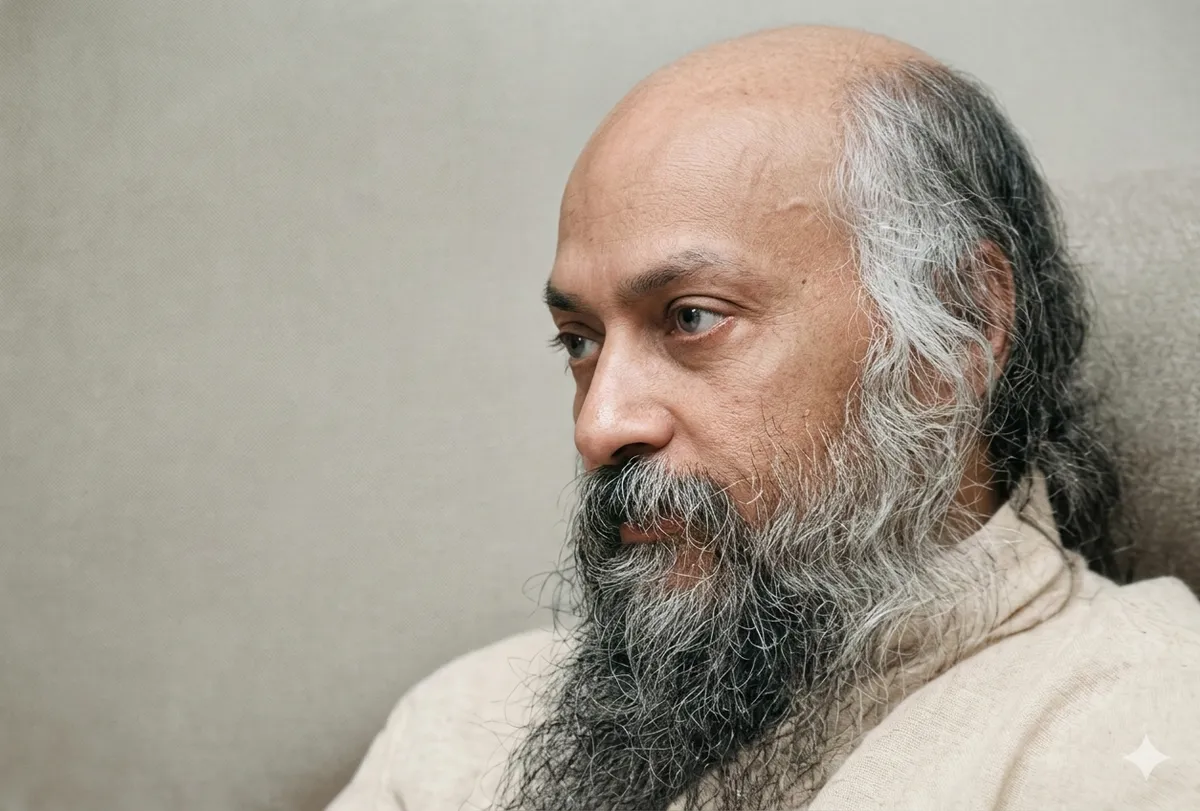
Osho's perspective on Oneness
When Osho Spoke About Oneness
Passages from the discourses where this theme comes alive.
...and then no difference remains between them?
It is not a matter of doing it for twenty-four hours. Even if you can enter perfect thoughtlessness for ten minutes, then gradually you will find that while doing all your work—there is no need to be lying down—the inner void will remain established even as you do, talk, speak. To begin with, carve out a little time—half an hour, even fifteen minutes out of the twenty-four hours. In those fifteen minutes, first of all drop every activity and go into the void. And once the experience of the void happens even once, then you can remain in the void even amidst activities. You do not have to lie there for twenty-four hours. Half an hour you should lie down—in the beginning. This is because if we are very busy with work, at the outset it will be difficult to drop thoughts. Dropping thought itself is difficult; and if you…
प्रश्न: ...और उसमें कोई फर्क नहीं रह जाता है?
चौबीस घंटे करने की बात नहीं है। अगर दस मिनट भी परिपूर्ण निर्विचार में जा सकते हैं आप, तो चौबीस घंटे धीरे-धीरे आप पाएंगे कि सब काम करते हुए, पड़े रहने की कोई जरूरत नहीं है। सब काम करते हुए, बात करते हुए, बोलते हुए—भीतर एक शून्य स्थापित बना रहेगा। एक बारगी, थोड़ा सा समय तोड़ कर चौबीस घंटे में से आधा घंटा, पंद्रह मिनट। उस पंद्रह मिनट में प्राथमिक रूप से सब क्रियाएं छोड़ कर शून्य में जाना पड़ता है पहले-पहले। और जब एक दफा शून्य का अनुभव हो गया, तब तो क्रियाओं के बीच भी शून्य में रहा जा सकता है। चौबीस घंटे पड़ा नहीं रहना है। आधा घंटा जरूर पड़ा रहना है—शुरुआत में।
Beloved Osho, you seem to mixing together all of our questions. It's like puzzle pieces, where all the pieces fit together perfectly in the end. Is this one example of the oneness of all?
The truth is, with numbers, at the most I can remember up to three. After that, I don't know what number comes. Secondly, all the questions that I choose have a certain coherence, a certain inner unity. It may not be apparent to you. When I speak, if I go into one question in absolute detail, then I cannot deal with another question on that day. One question will be enough for two and a half hours. So I have my way; I introduce the first question, answer its essential points; then I take the second question, answer its essential points, and if there is any point there that can emphasize something in the first question, I bring in the first question again. And it is not done in any systematic way because I have not prepared it. It is just my sensitivity and my spontaneity. I simply go with…
So to me, meditation has two steps: first, the active, which is not really meditation at all, and second, the completely nonactive, the passive awareness that is really meditation. Awareness is always passive, and the moment you become active you lose your awareness. It is possible to be active and aware only when awareness has come to such a point that now there is no need of meditation to achieve it, or to know it, or to feel it. When meditation has become useless, you simply throw meditation. Now you are aware. Only then can you be both aware and active, otherwise not. As long as meditation is still needed, you will not be able to be aware during activity. But when even meditation is not needed.... If you have become meditation, you will no longer need it.
Osho, the witness, the seer, consciousness is always separate—virginal and unbound. And the whole play of life is nothing but the movement of the gunas within themselves. In such a situation, if a person’s qualities of sattva, rajas, and tamas are calmed in a scientific or chemical way, or if a person is made sattvic, will he then attain that ever-free witness? If the witness is forever free and present, then by chemically altering the three gunas will it not be revealed? Would the person not then become religious? What is the fundamental difference between solving the problem arising from the
Sadhana means we are dissolving the current itself, not breaking the bulb. There is no point in breaking the bulb. In fact, the bulb is useful; it tells you whether the current is flowing or not, whether there is current or not. Your anger within tells you you are still sunk in ignorance. Lust tells you your life energies have not yet become aware. If we remove these elements, anger will stop manifesting and you will also stop knowing that you are in deep ignorance. It is as if a man is sick and we snatch away the symptoms of his disease so that he doesn’t even come to know he is ill. And keep in mind, anger is an opportunity. Only the unwise say anger is simply bad; I do not say so. Anger is an opportunity; you can use it badly or well. Anger is a chance. In…
पहला प्रश्न: ओशो, साक्षी, द्रष्टा, चैतन्य सदा ही अलग कुंवारा और अनबंधा है। और सारी जीवन-लीला गुणों का ही स्वयं में वर्तन है। ऐसी स्थिति में व्यक्ति से सत्व, रज, तम के गुणों को वैज्ञानिक या रासायनिक ढंग से शांत कर दिया जाए या व्यक्ति को सात्विक बना दिया जाए, तो क्या वह उस हमेशा से मुक्त साक्षी को उपलब्ध हो जाएगा? यदि साक्षी सदा ही मुक्त एवं उपस्थित है, तो त्रिगुणों को रासायनिक ढंग से बदल देने पर वह क्या प्रकट न हो जाएगा? क्या व्यक्ति तब धार्मिक नहीं हो जाएगा? त्रिगुणों से उत्पन्न समस्या को रासायनिक ढंग से हल करने में या साधना के माध्यम से हल करने में क्या मौलिक भिन्नता है?
साधना का अर्थ है कि हम बिजली की धारा को ही विलीन कर रहे हैं, बल्ब को नहीं तोड़ रहे हैं। बल्ब को तोड़ने का कोई अर्थ ही नहीं है। बल्कि बल्ब तो उपयोगी है। क्योंकि वह बताता है, धारा बह रही है या नहीं; धारा है या नहीं। आपके भीतर क्रोध यह बताता है कि अभी आप अज्ञान में डूबे हैं। वासना बताती है कि अभी आपके प्राण जागरूक नहीं हुए हैं। अगर ये तत्व हमने अलग कर लिए, तो क्रोध प्रकट होना बंद हो जाएगा और आपको यह पता चलना भी बंद हो जाएगा कि आप गहन अज्ञान में पड़े हैं। यह तो ऐसा हुआ, जैसे कोई आदमी बीमार हो और हम उसके बीमारी के लक्षण छीन लें, तो उसे यह भी पता न चले कि वह बीमार है। और यह भी खयाल में रहे कि क्रोध एक अवसर है। क्रोध सिर्फ बुरा है, ऐसा नासमझ कहते हैं; मैं नहीं कहता। …
Do all three windows become one?
definitionWhy is there division if all is one?
definitionProfound Quotes on Oneness
Explore our structured collection of meaning-mapped quotes regarding Oneness.