
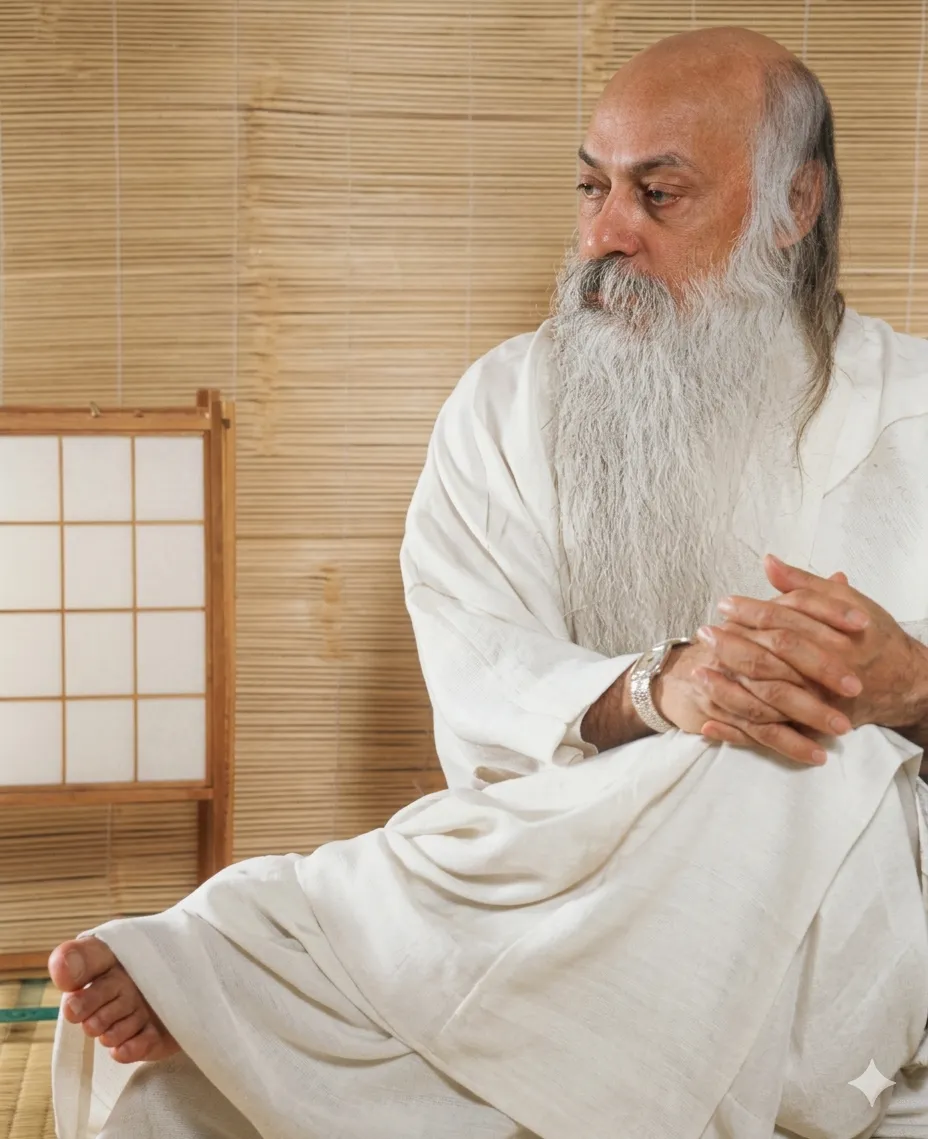
Osho's perspective on Knowledge
When Osho Spoke About Knowledge
Passages from the discourses where this theme comes alive.
Question: OSHO, IS KNOWLEDGE ABSOLUTELY USELESS? KNOWLEDGE HAS ITS USES, it is not absolutely useless. But if you are going inwards it becomes more and more useless; the deeper you go the more useless it is. If you are going outwards, the farther you go into the world the more useful it becomes. The world respects the knowledgeable person. It needs experts; it needs all kinds of people carrying information, knowledge, expertise. But in the inner world the question does not arise: in the inner world the same knowledge becomes a hindrance. That which is useful in the outside world becomes a barrier to the inner. It is a bridge to the world; it is a barrier to the inner exploration. Whenever I say anything against knowledge I simply mean that for those who are pilgrims, explorers of their subjectivity, it is utterly useless.
Osho, as you said just now that a newborn baby acquires knowledge by learning from the environment. Then should we ignore heredity?
No, it is not a matter of ignoring it. Much—ninety percent—is learned from the environment. Ten percent also comes through heredity. What comes through heredity—perhaps today or tomorrow—ways may be found to change that too. Not today, but maybe later. Yet what comes through heredity is very fluid; it can be molded into any shape. Ultimately, what a person becomes is created by the environment. And the mind we are speaking about is created by the environment. The body comes through heredity. Many of the body’s capacities come from heredity. Many capacities of the brain also come from heredity, but the mind is created by society. Mind comes entirely from the environment. Certainly, if brains differ, society also faces difficulties in producing the same mind through the environment. But the mind is a social product. What I am saying is: one must go behind the mind. Brains differ. One child…
ओशो, ए़ज यू सैड जस्ट नाव दैट दि न्यू बोर्न बेबी एक्वाय़ज दि नालेज बाई वे ऑफ लर्निंग फ्रॉम द इनवायरमेंट्स। दैन शुड वी इग्नोर दि हेरिडिटी?
नहीं, उपंक्षा करने की बात नहीं है। बहुत कुछ, नब्बे प्रतिशत वातावरण से सीखा जाता है। दस प्रतिशत वंश-परंपरा से भी आता है। वंश-परंपरा से जो आता है, शायद आज नहीं कल उसको बदलने के भी उपाय हो सकेंगे। आज तो नहीं हो सकते हैं। लेकिन वंश-परंपरा से जो आता है वह बहुत लिक्विडिटी है, वह बहुत तरल चीज है। उसे किसी भी ढांचे में ढाला जा सकता है। अंततः व्यक्ति जो बनता है, वह वातावरण ही बनाता है। और जिस माइंड की हम बात कर रहे हैं, वह तो वातावरण ही बनाता है। शरीर वंश-परंपरा से आता है। शरीर की बहुत सी क्षमताएं हेरेडिटी से आती हैं। ब्रेन की भी बहुत सी क्षमताएं हैं, हेरेडिटी से आती हैं, लेकिन माइंड सोसाइटी पैदा करती है। माइंड तो पूरा एनवायरनमेंट से आता है। निश्चित ही अगर ब्रेन अलग-अलग तरह के हैं, तो समाज को भी वातावरण से भी पैदा करने में कठिनाइयां होती हैं। लेकिन माइंड समाज पैदा करता है। माइंड जो है, वह सोशल प्रोडक्ट है।
Osho, why are you so much against philosophy?
And I can understand your question: this is how every child is being brought up, for centuries. Your question is relevant. You say, "I LOVE YOU. BUT IF YOU ARE NOT A PERSON, THEN HOW CAN I LOVE YOU?" We have been told that we can love only persons. The truth is just the opposite: you cannot love the person. Persons can only fight, persons can only be in conflict, because wherever two egos are, there is conflict, a CONSTANT war -- sometimes hot, sometimes cold, but the war continues. Sometimes the warriors are tired so they maintain a certain peace. Whenever they are back again and their energy is there again, they start fighting. You can see it happening with all kinds of lovers -- a continuous fight, a kind of intimate enmity, together and yet not together. Why is this fight there? -- because of two egos. Two…
Osho, I have heard you say that knowledge is useless. Then what is needed to guide us to the ultimate goal?
Geetam, there is one good thing about your question that I appreciate: you say "I have heard you say." All the Buddhist scriptures begin in that way; that is a very sincere thing. The Christian, the Judaic, the Hindu, the Mohammedan scriptures don't begin that way, but all Buddhist scriptures begin "I have heard the Master say" because it is not a question whether the Master has said it or not, "I have heard it"; these are two different things. The Master may have said one thing, you may have heard something totally different, because between you and the Master there is a great barrier -- the barrier of the mind, prejudices, concepts, preconceived ideas. So what YOU hear is not necessarily the thing that is said. Geetam, this is good that you say "I have heard you say." You are not saying that "YOU have said it," you are…
Do priests know nothing?
definitionHow is the knowledge of it reported?
definitionIs knowledge absolutely useless?
definitionIs knowledge always dangerous?
definitionIs there a hierarchy within knowledge?
definitionWhat is a question that cannot be answered?
definitionProfound Quotes on Knowledge
Explore our structured collection of meaning-mapped quotes regarding Knowledge.