
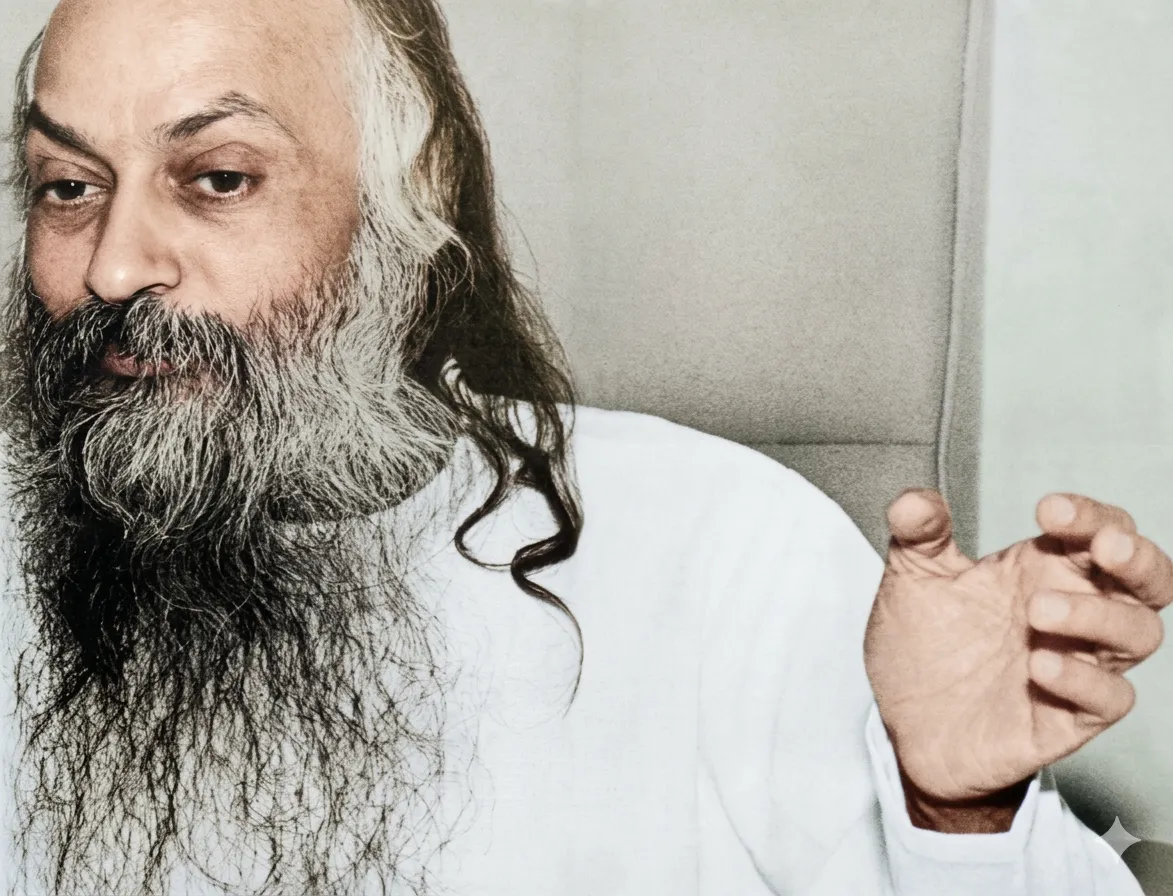
Don’t ignore genes, but remember most learning comes from surroundings—and your deepest self is beyond both.
From the Discourses
Passages where Osho speaks to this question — each links to the complete discourse.
Osho, as you said just now that a newborn baby acquires knowledge by learning from the environment. Then should we ignore heredity?
No, it is not a matter of ignoring it. Much—ninety percent—is learned from the environment. Ten percent also comes through heredity. What comes through heredity—perhaps today or tomorrow—ways may be found to change that too. Not today, but maybe later. Yet what comes through heredity is very fluid; it can be molded into any shape. Ultimately, what a person becomes is created by the environment. And the mind we are speaking about is created by the environment. The body comes through heredity. Many of the body’s capacities come from heredity. Many capacities of the brain also come from heredity, but the mind is created by society. Mind comes entirely from the environment. Certainly, if brains differ, society also faces difficulties in producing the same mind through the environment. But the mind is a social product. What I am saying is: one must go behind the mind. Brains differ. One child…
ओशो, ए़ज यू सैड जस्ट नाव दैट दि न्यू बोर्न बेबी एक्वाय़ज दि नालेज बाई वे ऑफ लर्निंग फ्रॉम द इनवायरमेंट्स। दैन शुड वी इग्नोर दि हेरिडिटी?
नहीं, उपंक्षा करने की बात नहीं है। बहुत कुछ, नब्बे प्रतिशत वातावरण से सीखा जाता है। दस प्रतिशत वंश-परंपरा से भी आता है। वंश-परंपरा से जो आता है, शायद आज नहीं कल उसको बदलने के भी उपाय हो सकेंगे। आज तो नहीं हो सकते हैं। लेकिन वंश-परंपरा से जो आता है वह बहुत लिक्विडिटी है, वह बहुत तरल चीज है। उसे किसी भी ढांचे में ढाला जा सकता है। अंततः व्यक्ति जो बनता है, वह वातावरण ही बनाता है। और जिस माइंड की हम बात कर रहे हैं, वह तो वातावरण ही बनाता है। शरीर वंश-परंपरा से आता है। शरीर की बहुत सी क्षमताएं हेरेडिटी से आती हैं। ब्रेन की भी बहुत सी क्षमताएं हैं, हेरेडिटी से आती हैं, लेकिन माइंड सोसाइटी पैदा करती है। माइंड तो पूरा एनवायरनमेंट से आता है। निश्चित ही अगर ब्रेन अलग-अलग तरह के हैं, तो समाज को भी वातावरण से भी पैदा करने में कठिनाइयां होती हैं। लेकिन माइंड समाज पैदा करता है। माइंड जो है, वह सोशल प्रोडक्ट है।
Osho, while speaking about Transactional Analysis you said that if the discoverers of this method were to come upon Buddha’s sutra mātaram pitaram hantvā, the method would become extraordinarily useful. Kindly shed more light on this!
When a human being is born, he is born like a blank sheet of paper. When a human being is born, he is born as pure innocence. When a human being is born, he is born as total freedom—unconditional. There is no limit upon him, no boundary—unbounded, infinite. When a human being is born, he is born as soul. Then society, family, father, mother, teacher, school, college, university—all together erect a layer of mind around this soul. They build a wall of mind. Remember, mind is manufactured by society. The soul is yours, the body belongs to nature, and the mind belongs to society. Mind is entirely borrowed, stale. The body too is beautiful, for nature’s beauty lives in it—the babble of streams runs in your blood, the fragrance of earth dwells in your flesh, the energy of the stars lives in your life-breath; your body has come from nature;…
दूसरा प्रश्न: ओशो, ट्रांजेक्शनल एनालिसिस के बारे में बोलते हुए आपने कहा कि अगर इस विधि के खोजने वालों को भगवान बुद्ध का मातरम् पितरम् हंत्वा वाला सूत्र मिल जाए तो यह विधि अपूर्व रूप से उपयोगी हो जाए। इस पर कुछ और प्रकाश डालने की कृपा करें!
मनुष्य जब पैदा होता है, तो कोरे कागज की तरह पैदा होता है। मनुष्य जब पैदा होता है, तो शुद्ध निर्मलता की तरह पैदा होता है। मनुष्य जब पैदा होता है, तो पूर्ण स्वतंत्रता की तरह पैदा होता है। बेशर्त। उस पर कोई सीमा नहीं होती, कोई मर्यादा नहीं होती—अमर्याद, असीम। मनुष्य जब पैदा होता है, तो आत्मा की तरह पैदा होता है। फिर समाज, परिवार, पिता, माता, शिक्षक, स्कूल, कालेज, विश्वविद्यालय, सब मिलकर इस आत्मा के आसपास मन की एक पर्त खड़ी करते हैं। मन की एक दीवाल बनाते हैं। ध्यान रखना, मन समाज द्वारा निर्मित होता है। आत्मा तुम्हारी है, शरीर प्रकृति का है और मन समाज का है। मन बिलकुल उधार और बासी चीज है। शरीर भी सुंदर है, क्योंकि प्रकृति का सौंदर्य है उसमें—झरनों की कलकल है तुम्हारे खून में, मिट्टी की सुगंध है तुम्हारी देह में, जैसे आकाश के तारे हैं ऐसी ऊर्जा है तुम्हारे प्राण में; तुम्हारा शरीर निसर्ग से आया, वह प्राकृतिक है। वह प्रकृति है। तुम्हारी आत्मा परमात्मा से आयी। …
Osho, if parents meditate before conception and during pregnancy, what effect does it have on the child?
And if, for the full nine months, the mother carries the child in meditation—does nothing contrary to meditation, and does everything that supports meditation—then certainly, in these nine months, a Buddha can be born. These nine months are the formative moments of the child. And in these nine months let him have only the experience of love, of peace, of light. If in these nine months he has only one experience—the experience of his own inner power—then at birth he will not be an ordinary child; he will be extraordinary. We will have laid the foundation of his life, and the temple that rises on that foundation cannot be different from it. Therefore whenever parents come to me with complaints about their children, I have told them: you may feel hurt, but you are responsible. You must have laid the wrong foundation. Today your child is a bandit; today your…
प्रश्न: ओशो, गर्भ से पहले और गर्भकाल में यदि माता-पिता ध्यान करते हैं, तो बच्चे पर इसका क्या असर पड़ता है?
और अगर मां पूरे नौ महीने बच्चे को ध्यान में रख कर चले, ऐसा कुछ भी न करे जो ध्यान के विपरीत है, और ऐसा सब कुछ करे जो ध्यान के लिए सहयोगी है। तो निश्र्चित इन नौ महीनों में किसी भी बुद्ध को जन्म दिया जा सकता है। ये नौ महीने उस बच्चे के निर्माण के क्षण हैं। और इन नौ महीनों में सिर्फ उसे प्रेम का अनुभव हो, शांति का अनुभव हो, ज्योति का अनुभव हो। इन नौ महीनों में अगर उसे सिर्फ एक ही बात का अनुभव हो--अपनी आत्मशक्ति का, तो वह बच्चा पैदा होते ही साधारण बच्चा नहीं होगा। वह असाधारण होगा। और हमने उसके जीवन की बुनियाद रख दी है। और अब जो मंदिर खड़ा होगा उस बुनियाद पर, वह बुनियाद से भिन्न नहीं हो सकता।
Osho, you have called training a child’s intellect essential. But should training in meditation also be given simultaneously? Many sannyasins have families. What outlook should they have toward their children? Where should the emphasis be? Please shed light on this.
Jesus tells a very sweet parable—understand it. Jesus used to say, and because his whole emphasis was on love, the story is indicative. He said: A father had two sons. The father was very rich. One son was obedient; the other was rebellious. One increased the wealth; the other broke and wasted it. At last there was no way but to separate them. The father divided the wealth in halves. The elder stayed with the father, invested, bought fields, made orchards. The younger disappeared from the village as soon as he got his share. Soon news began to come that he had squandered everything in gambling, drank it away, lost it in the dances and songs of prostitutes—everything turned to dust. The father sent word: come back home. The younger, who had left, a gambler and drunkard, could not believe that after wasting everything his father could still call him…
प्रश्न: ओशो, बच्चों की बुद्धि का प्रशिक्षण आपने अनिवार्य बताया। लेकिन क्या ध्यान का प्रशिक्षण भी युगपत देना चाहिए? बहुत से संन्यासी परिवार वाले हैं। उनको अपने बच्चों के प्रति कौन-सी दृष्टि रखनी चाहिए? जोर किस बात पर होना चाहिए, इस पर कृपया प्रकाश डालिए।
… और चूंकि जीसस का सारा जोर प्रेम पर था, वह कहानी सूचक है। जीसस कहते थे, एक बाप के दो बेटे थे। बाप बड़ा धनी था। एक बेटा बाप का आज्ञाकारी था और एक बड़ा विद्रोही था। एक कमाई को बढ़ाता और एक कमाई को तोड़ता और घटाता। अंततः इन दोनों बेटों को अलग कर देने के सिवाय कोई उपाय न रहा। आधा-आधा धन बांट दिया गया। बड़ा बेटा बाप के पास रुका, धन को उसने व्यवसाय में लगाया, खेत खरीदे, बगीचे बनाए। छोटा बेटा धन मिलते ही नदारद हो गया गांव से। थोड़े दिनों बाद खबरें आने लगीं कि जुए में उसने सब बरबाद कर दिया, शराब पी डाली, वेश्याओं के नाच-गान में वह जो मिला था, सब मिट्टी हो गया। बाप ने खबर भेजी कि घर वापस लौट आओ। छोटा बेटा जो घर छोड़कर चला गया था, जुआरी था, शराबी था, उसे भरोसा न आया कि मेरे सब बरबाद कर देने पर भी बाप मुझे वापस बुला सकता है।
Osho, does a child not have as much right to privacy and freedom from parental conditioning as the parents themselves expect?
Jimmy: 'Yes, Mum, there wasn't time to take them off.' The first-grade teacher was talking to her class about nature and she called it 'The World Around You'. She asked little Helen in the first row, 'Now, Helen, tell everyone in the class. Are you vegetable, animal or mineral?' 'I'm not any of those,' she replied promptly. 'I'm a real live girl!' A little fellow who was fishing off the end of a pier lost his balance while trying to land a fish and fell in the lake. Several men who also were fishing nearby rushed to his aid and pulled him out. 'How did you come to fall in?' one of the men asked him. 'I didn't come to fall in,' the kid said. 'I came to fish!' A large family was finally able to move into a more spacious home. Some time later an uncle asked his nephew,…