
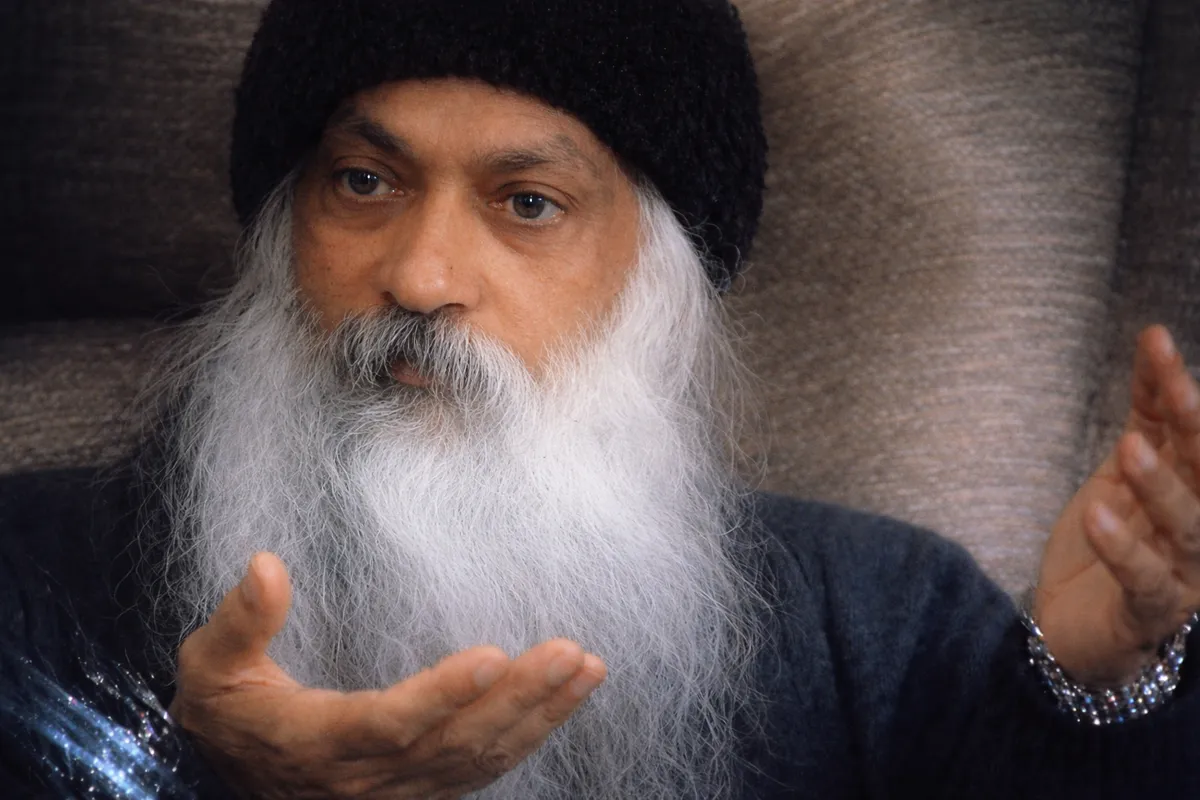
Osho's perspective on Beauty
When Osho Spoke About Beauty
Passages from the discourses where this theme comes alive.
A friend has asked: Osho, yesterday you said that to know anger completely, one must experience it in its totality. Then how is one to know lust completely? Because the experienced say that lust is never satisfied; the more you indulge it, the more it grows. So how can one go beyond lust?
Surely there is an inherent purpose. And it is this: even these saints could not have been born without lust. They too went beyond only by passing through the experience. They too entered it and found it to be futile. That realization of futility is precious—and it comes only when it happens in your own experience. So do not be in a hurry. Do not rely on borrowed experience. That does not mean you tell the experienced, “You are wrong.” You should simply say, “We do not yet know. We wish to enter and know for ourselves what this lust is. We will know it fully. If it turns out to be wrong, that very knowing will bring liberation. And if it turns out to be right, then there is no need for liberation.” One thing is certain: whoever has known rightly has become free. And another thing is also…
एक मित्र ने पूछा है कि ओशो, कल आपने कहा कि क्रोध को पूरा जानने के लिए क्रोध का पूरा अनुभव जरूरी है। तो कामवासना को पूरा कैसे जाना जाए? क्योंकि अनुभवियों ने कहा है कि कामवासना की तृप्ति कभी भी नहीं हो पाती; जितनी भोगेंगे, उतनी ही बढ़ती जाएगी। तो कामवासना को कैसे पार किया जाए?
… और वह निहित प्रयोजन यह है कि ये महात्मा भी पैदा नहीं हो सकते थे, अगर कामवासना न होती। ये महात्मा भी उसी अनुभव से गुजरकर पार गए हैं। इन्होंने भी उसमें पड़कर जाना है कि व्यर्थ है। वह व्यर्थता का बोध बड़ा कीमती है। वह होगा ही तब, जब आपको अनुभव में आ जाए। तो जल्दी मत करना। उधार अनुभव का भरोसा मत करना। इसका यह मतलब नहीं है कि आप अनुभवियों को कहो कि तुम गलत हो। आपको इतना ही कहना चाहिए कि हमें अभी पता नहीं है। और हम उतरना चाहते हैं, और हम जानना चाहते हैं कि क्या है यह कामवासना। और हम इसे पूरा जान लेंगे। तो अगर यह गलत होगी, तो वह जानना मुक्ति ले आएगा। …
Osho, in a letter to Sohanbai you once wrote—“Make your life musical so that poetry can be born. And then there is beauty and only beauty, and beauty is the very form of the Divine.” Would you speak on music, poetry, and beauty? Ultimately, for everything to become divine, are these three the practices?
Taru! The practice is one; the other two come of their own accord. The other two are outcomes. You sow only one seed; from that, many leaves and many branches appear—fruits and flowers too. The seed is one. There is a single practice: ik sādhē sab sadhē; sab sadhē sab jāe—master the one and all is mastered; try to master everything and everything is lost. If you try to practice all three, you will get entangled, because they are not separate. They are interrelated, beads on the same thread. Music is the practice. From the practice of music, poetry arises by itself. Poetry is the expression of music; poetry is music’s body. And the very moment music is born, the sense of beauty awakens. What sensitivity in music experiences of existence—that experience is what we call beauty. Poetry is the body of music; beauty is music’s soul. Cultivate the one—music—and…
पहला प्रश्न: ओशो, सोहनबाई के एक पत्र में आपने लिखा था, वह याद आया--‘जीवन को संगीतपूर्ण बनाओ, ताकि काव्य का जन्म हो सके। और फिर सौंदर्य ही सौंदर्य है, और सौंदर्य ही परमात्मा का स्वरूप है।’ क्या आप संगीत, काव्य और सौंदर्य पर कुछ कहना चाहेंगे? अंततः सब कुछ परमात्मामय हो जाए, इसके लिए ये तीन बातें साधना हैं न?
तरु! साधना एक है, शेष दो अपने-आप चले आते हैं। शेष दो परिणाम हैं। बीज तो एक ही बोना है, फिर उस बीज में बहुत पत्ते लगते हैं, बहुत शाखाएं-प्रशाखाएं, फल और फूल। बीज एक ही बोना है। एक ही साधना है--इक साधे सब सधे, सब साधे सब जाए। तीन को साधने में पड़ो, उलझ जाओगे। क्योंकि वे तीन भिन्न-भिन्न नहीं हैं, वे एक-दूसरे से संबंधित हैं, एक की ही श्रृंखला है। संगीत साधना है। संगीत की साधना से अपने-आप काव्य का आविर्भाव होता है। काव्य है संगीत की अभिव्यक्ति। काव्य है संगीत की देह। और जैसे ही संगीत का जन्म होता है, वैसे ही सौंदर्य का बोध पैदा होता है। संगीत की संवेदनशीलता में ही जो अनुभव होता है अस्तित्व का, उस अनुभव का नाम सौंदर्य है। काव्य है देह संगीत की, सौंदर्य है आत्मा संगीत की। …
Beloved Osho, your inner beauty I can only feel as far as I have discovered myself. But for ten years, whenever I see you entering the auditorium, there is this surprise about your unbelievable outer beauty too. Osho, is the outer appearance always just a reflection of the inner?
Janak asked him, "I can understand why they are laughing -- because of your body; but I cannot understand why you are laughing. And you stopped all their laughing with your laughter." A single man stopped one thousand people's laughter. Ashtavakra said to Janak, "I thought this conference was for scholars and philosophers, but these are all shoemakers. They can understand only the skin. They cannot see the inner, they can only see the outer." There was a great silence. What he was saying had a great truth in it. Janak dissolved the conference and said, "Now I would like to inquire of Ashtavakra only. He has defeated you all just by his laughter and his statement that, `You can't see the inner, you can only see the outer; you are all shoemakers.' Shoemakers work with the skin of different animals. I dissolve the conference and, Yagnavalka, return those one…
Beloved Osho, each time I see you, I am shocked by your beauty. You've got to be the most gorgeous being that has ever happened! Osho, in what way do you experience your own beauty?
So he made the portrait. It took many sittings and the woman became more and more puzzled as she saw the portrait coming up. When the portrait was complete she said, "Only one question, I want to know where my nose is. Everything is okay, but at least I should know where my nose is. From there I can figure out the eyes, the mouth, my ears -- that can be the center for finding myself." Picasso said, "I told you in the very beginning...! Now it is a trouble to find the nose -- who knows where your nose is! I have painted it, that is true, but in so many sittings I can't remember exactly where I have put it. You take it home and contemplate; perhaps you may find it. It is there, that much is certain. It is there, this much I can guarantee because I…
What is the beauty of Ronald Reagan?
definitionWhat is the deeper meaning of beauty?
definitionProfound Quotes on Beauty
Explore our structured collection of meaning-mapped quotes regarding Beauty.