
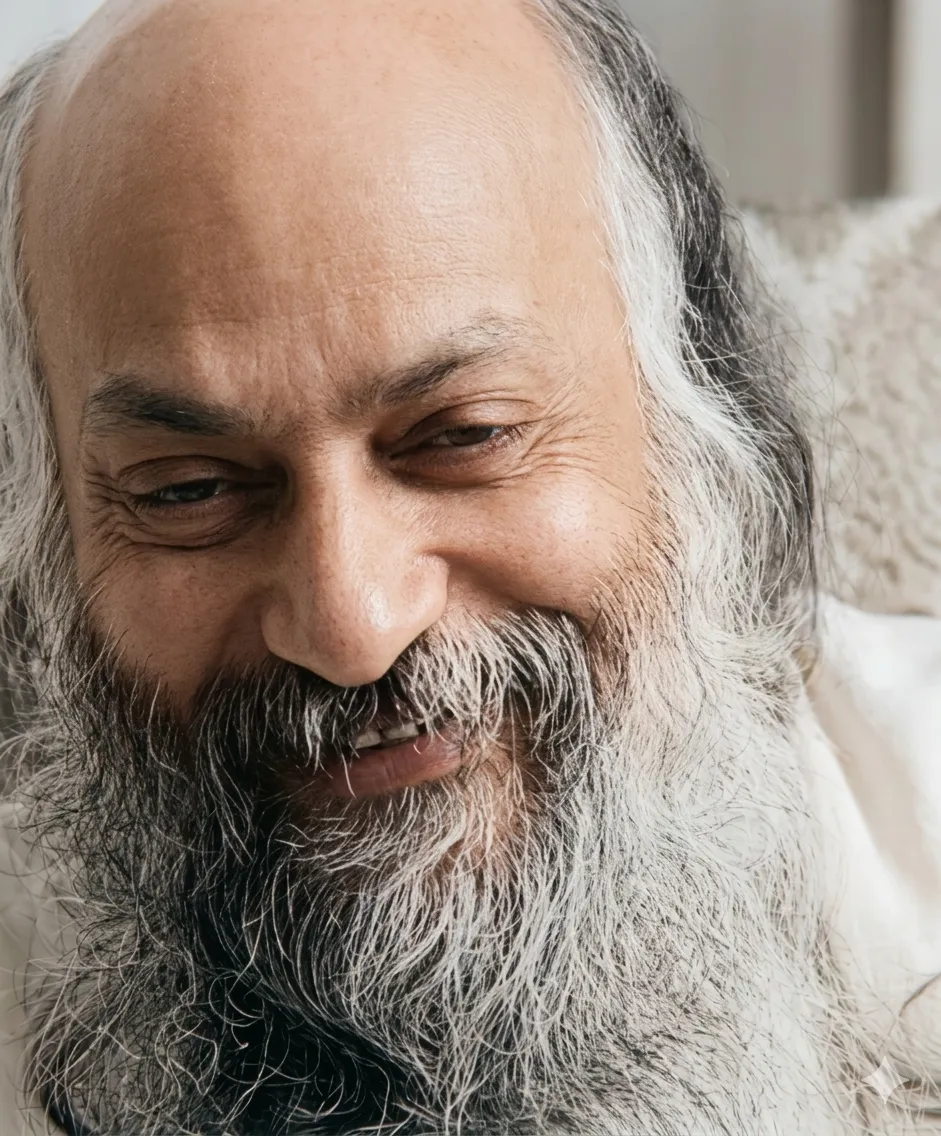
According to Osho, a true 'man of knowledge' is a buddha—one who knows from direct experience—while a 'knowledgeable' person merely carries borrowed information and quotations. The knower is obviously beyond ignorance; the knowledgeable can be worse than the ignorant because pretension breeds hypocrisy and self-deception. Better drop secondhand certainties, remain humble about not-knowing, and seek firsthand realization through awareness.
Living the truth yourself is real knowing; pretending by quoting others is worse than honestly not knowing.
From the Discourses
Passages where Osho speaks to this question — each links to the complete discourse.
Beloved master, I also think that a man of knowledge is better than an ignorant man. Am I absolutely wrong?
Sanatan, a man of knowledge is a totally different phenomenon. I was saying that the man of knowledge and the knowledgeable man are not the same. The man of knowledge is what a buddha is: one who knows. But the knowledgeable man is not a buddha; he does not know. He has accumulated great information, but that information is borrowed. It is from the scriptures, from the books, from others. He has not experienced it; it is about and about. He can talk, he can write, he can sermonize, but he knows nothing. He talks ABOUT God; he has no idea what God is. He has no glimpse even -- what to say about experience. The priests all over the world of all the religions are knowledgeable people. Jesus knows, but the pope is not a man of knowledge. He is a knowledgeable man, he has great information. He can…
Question: BELOVED OSHO, OF SCHOLARS I HAVE LEFT THE HOUSE OF SCHOLARS AND SLAMMED THE DOOR BEHIND ME. TOO LONG DID MY SOUL SIT HUNGRY AT THEIR TABLE; I HAVE NOT BEEN SCHOOLED, AS THEY HAVE, TO CRACK KNOWLEDGE AS ONE CRACKS NUTS. I LOVE FREEDOM AND THE AIR OVER FRESH SOIL; I WOULD SLEEP ON OX-SKINS RATHER THAN ON THEIR DIGNITIES AND RESPECTABILITIES. I AM TOO HOT AND SCORCHED BY MY OWN THOUGHT: IT IS OFTEN ABOUT TO TAKE MY BREATH AWAY. THEN I HAVE TO GET INTO THE OPEN AIR AND AWAY FROM ALL DUSTY ROOMS. BUT THEY SIT COOL IN THE COOL SHADE: THEY WANT TO BE MERE SPECTATORS IN EVERYTHING AND THEY TAKE CARE NOT TO SIT WHERE THE SUN BURNS UPON THE STEPS....
What is the difference between waiting for godot and waiting for god?
It is as if the sun has risen in the morning and you are sitting in your room with closed doors and windows, in darkness. Open the doors, you become available to the sun. The sun was already available -- just the meeting happens. You cannot wait for God. All waiting is for Godot. Godot means the one who never comes, who CANNOT come, whose arrival is impossible. And the only impossible thing is that which has already happened -- how can it happen again? You are alive, and you are waiting for life, Now, this is ridiculous. The real man of religion does not think in terms of God. He thinks in terms of life or, even better, of living -- because life can again become an abstract idea. Living, moment-to-moment living. In that very living, one knows what God is, because one knows who one is. Your idea…
Question: BELOVED OSHO, WOULD YOU SAY SOMETHING TO US ABOUT WISDOM? ... Knowledge never transforms anybody, it simply burdens you. It may give you respectability, honor, prestige, but it will not make you aware of yourself; you will not know who you are. You may remain a Christian, you may remain a Hindu, you may remain a Buddhist, you may remain a Mohammedan, just because the older generation -- your parents, your teachers, your priests -- have burdened you, conditioned you, fed you with all kinds of traditional knowledge. But wisdom, nobody can impart to anybody else. That's its beauty and that's its grandeur. You can find it yourself, but it will be always firsthand -- young and fresh and alive. Knowledge is always dead; it stinks of death. Wisdom is fragrant of love, of life, of rejoicings.