
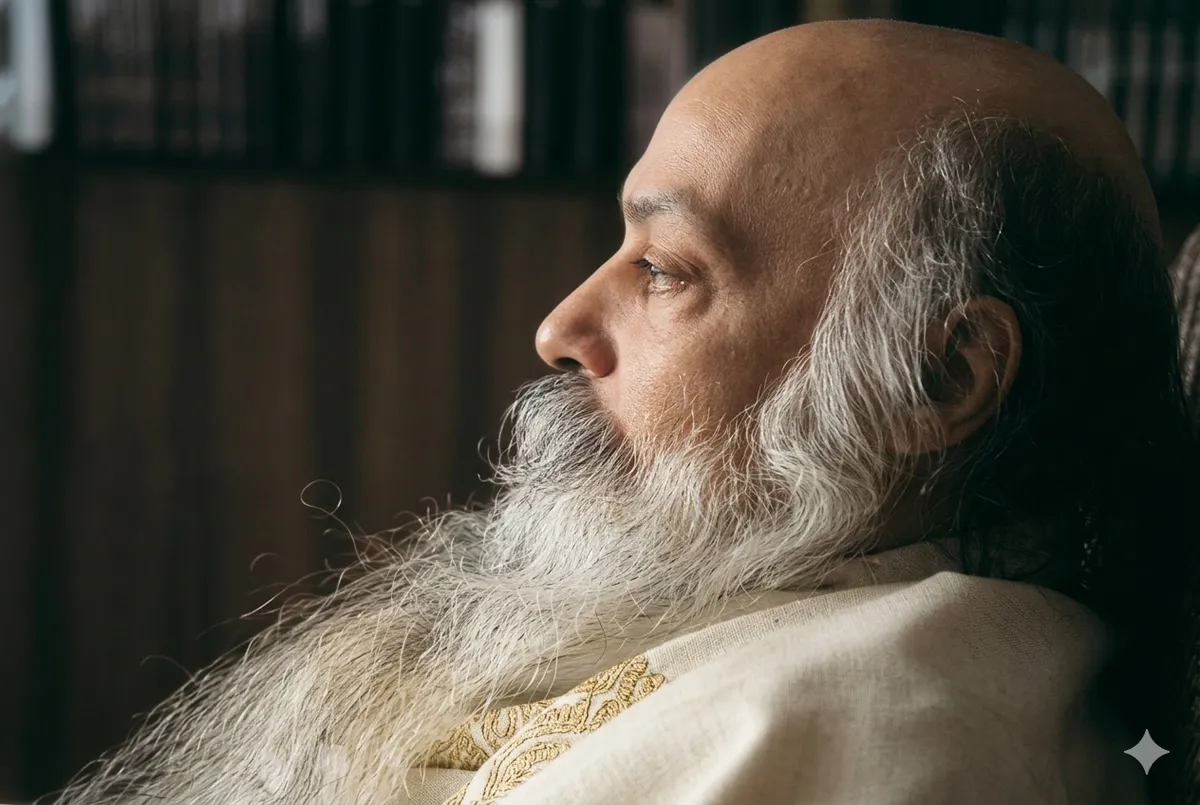
Osho's perspective on Buddhism
When Osho Spoke About Buddhism
Passages from the discourses where this theme comes alive.
Osho, is everything in life a river-boat happenstance? The Buddha too? Buddhahood too?
No—except for Buddhahood, everything is a river-boat happenstance. Because Buddhahood is your nature, not a happenstance. It is not that you have to become a Buddha. You are a Buddha. All that is needed is to recognize it. It is not that you have to acquire Buddhahood. You never lost it. It is re-cognition, a remembering. You simply have to wake up and see what is already there. Buddhahood is not a happenstance. Buddhahood does not depend on any circumstances. Nor does it depend on your spiritual practices—remember that. Don’t think that by doing a lot of meditation you will become a Buddha. By much meditation and austerity it may become easier for you to awaken to Buddhahood, but not to be a Buddha—you were that already. Even when you were in deep stupor, snoring away, you were still a Buddha. Wandering through wombs—countless wombs—living like insects and worms, lost…
तीसरा प्रश्न: ओशो, क्या जीवन में सभी कुछ नदी-नाव संयोग है? बुद्ध भी? बुद्धत्व भी?
नहीं--बुद्धत्व को छोड़कर सभी कुछ नदी-नाव संयोग है। क्योंकि बुद्धत्व तुम्हारा स्वभाव है, संयोग नहीं। ऐसा नहीं है कि तुम्हें बुद्ध होना है। तुम बुद्ध हो। बस इतना ही है कि तुम्हें पहचानना है। ऐसा नहीं है कि तुम्हें बुद्धत्व अर्जित करना है। तुमने कभी गंवाया ही नहीं। प्रत्यभिज्ञा करनी है। पहचान करनी है। जो मिला ही है, जागकर देखना है। बुद्धत्व संयोग नहीं है। बुद्धत्व किन्हीं परिस्थितियों पर निर्भर नहीं है। न तुम्हारी साधना पर निर्भर है, याद रखना। यह मत सोचना कि तुम बहुत ध्यान करोगे इसलिए बुद्ध हो जाओगे। बहुत ध्यान, बहुत तपश्चर्या से शायद तुम्हें जागने में आसानी होगी बुद्धत्व के प्रति, लेकिन बुद्ध होने में नहीं। बुद्ध तो तुम थे। गहरी तंद्रा में थे और खर्राटे ले रहे थे, तब भी तुम बुद्ध ही थे। भटक रहे थे योनियों में--अनंत योनियों में कीड़े-मकोड़ों की तरह--जी रहे थे कामवासना में, हजार क्रोध और लोभ में, तब भी तुम बुद्ध ही थे। ये सब सपने थे जो तुमने देखे। …
Osho, why do all the buddhas say the same thing?
TRUTH IS ONE. Even if it is said differently, it is the same truth. Languages may differ, metaphors may differ parables may differ, but if you really look a little deep, then al parables, all languages, all metaphors, culminate in one truth. TRUTH is one -- what can Buddhas do? Although each Buddha speaks in his own way, and his expression has HIS signature on it. His expression is just his and nobody else's. But still those who can see will always find that it is the same diamond -- maybe we have been shown only one aspect of it by Krishna, another aspect by Christ, still another by Mohammed, but those are aspects of the same diamond. The diamond is one, this universe is one -- and all the Buddhas have been saying the same thing, in different languages, in different ways. Those differences come from their individualities, not…
Osho, when Lord Buddha visited the house of the Panchagra-dayaka Brahmin, was it a river-boat meeting or a river-ocean meeting? But is it not true that the river goes to the ocean, and the ocean does not come to the river?
First thing: meeting a true master is not a river-boat encounter; it is a river-ocean union. A river-boat encounter lasts only a moment: husband-wife, brother-brother, friend-friend. All the relationships of this world are river-boat encounters; they arise and they dissolve. Whatever is formed and then dissolves is a worldly relationship. Whatever, once formed, does not dissolve, transcends the world. That is why there has always been a yearning in the human heart for a love that never ends. If such a love happens, one that never dies, it becomes the path to the Divine. The loves that form and fade, form and fade, are river-boat encounters. There is no inevitability there; the river can part from the boat, the boat from the river. You can drag the boat up onto the shore. There is no compulsion. But once the Ganga has fallen into the ocean, you cannot pull the Ganga…
चौथा प्रश्न: ओशो, पंचग्र-दायक ब्राह्मण के घर भगवान बुद्ध का पधारना नदी-नाव-संयोग था या नदी-सागर-संयोग? लेकिन क्या यह सच नहीं है कि नदी सागर के पास जाती है, सागर नदी के पास नहीं आता है?
पहली बात: सदगुरु से मिलना नदी-नाव-संयोग नहीं है, नदी-सागर-संयोग है। नदी-नाव-संयोग क्षणभर का होता है। पति-पत्नी का, भाई-भाई का, मित्र-मित्र का। इस जगत के और सारे संबंध नदी-नाव-संयोग हैं; बनते, मिट जाते। जो बनकर मिट जाए, वह संबंध सांसारिक है। जो बनकर न मिटे, वह संबंध संसार का अतिक्रमण कर जाता है। इसीलिए तो सदा से आकांक्षा रही है आदमी के मन में कि ऐसा प्रेम हो, जो कभी मिटे न। क्योंकि ऐसा प्रेम अगर हो जाए, जो कभी न मिटे, तो वही परमात्मा तक ले जाने का मार्ग बन जाएगा। और जो प्रेम मिट-मिट जाते हैं; बनते हैं मिट जाते हैं, वे प्रेम नदी-नाव-संयोग हैं। कोई अनिवार्यता नहीं है; नदी नाव से अलग हो सकती है; नाव नदी से अलग हो सकती है। …
Osho, what is the essence of buddha dharma -- the religion of the buddha?
Mouna, <q>YOKA SAYS IF YOU REACH THE ZEN OF BUDDHA, AT THAT VERY MOMENT YOU ACCOMPLISH EVERYTHING.</q> <q>IN YOUR DREAM THERE ARE MANY PATHWAYS, BUT WHEN YOU WAKE UP, THEY ARE REDUCED TO NOTHING. NEITHER ERROR, NOR HAPPINESS, NOR LOSS, NOR GAIN. DO NOT TRY TO FIND ANYTHING IN THE ESSENCE OF YOUR BEING. IT IS A LONG TIME SINCE YOU WIPED THE DUST FROM YOUR MIRROR, NOW IT IS TIME FOR YOU TO SEE ITS BRILLIANCY PERFECTLY.</q> <q>WHO CAN NOT-THINK, ALL IS HIS. IF YOU PRACTICE CHARITY IN ORDER TO BECOME BUDDHA WHEN WILL YOU SUCCEED? NEVER -- A THOUSAND TIMES NEVER. DRINK AND EAT ACCORDING TO YOUR TRUE NATURE. ALL THINGS IN THE UNIVERSE ARE IMPERMANENT, AND THEREFORE ALL EXISTENCE IS VOID. THAT IS THE WHOLE UNDERSTANDING OF BUDDHA.</q> This is the essence of Buddha Dharma, the religion of the Buddha. First: it is not a philosophy that…
Are Buddha’s Four Noble Truths scientific?
definitionCan a madman become a Buddha?
definitionDid Buddha have a rational mind?
definitionDoes the Buddha ever laugh?
definitionIs Osho a reincarnation of Gautam Buddha?
definitionIs it true that the Russian people are more receptive to Buddha due to their connection with Zorba?
definitionWas Buddha’s leaving his family a weakness?
definitionWhat is the essence of Buddha Dharma?
definitionWhat is the psychology of the Buddhas?
definitionWhat is the purpose behind using the words 'dwelling' and 'staying' in Buddhist and Jain literature?
definitionProfound Quotes on Buddhism
Explore our structured collection of meaning-mapped quotes regarding Buddhism.