
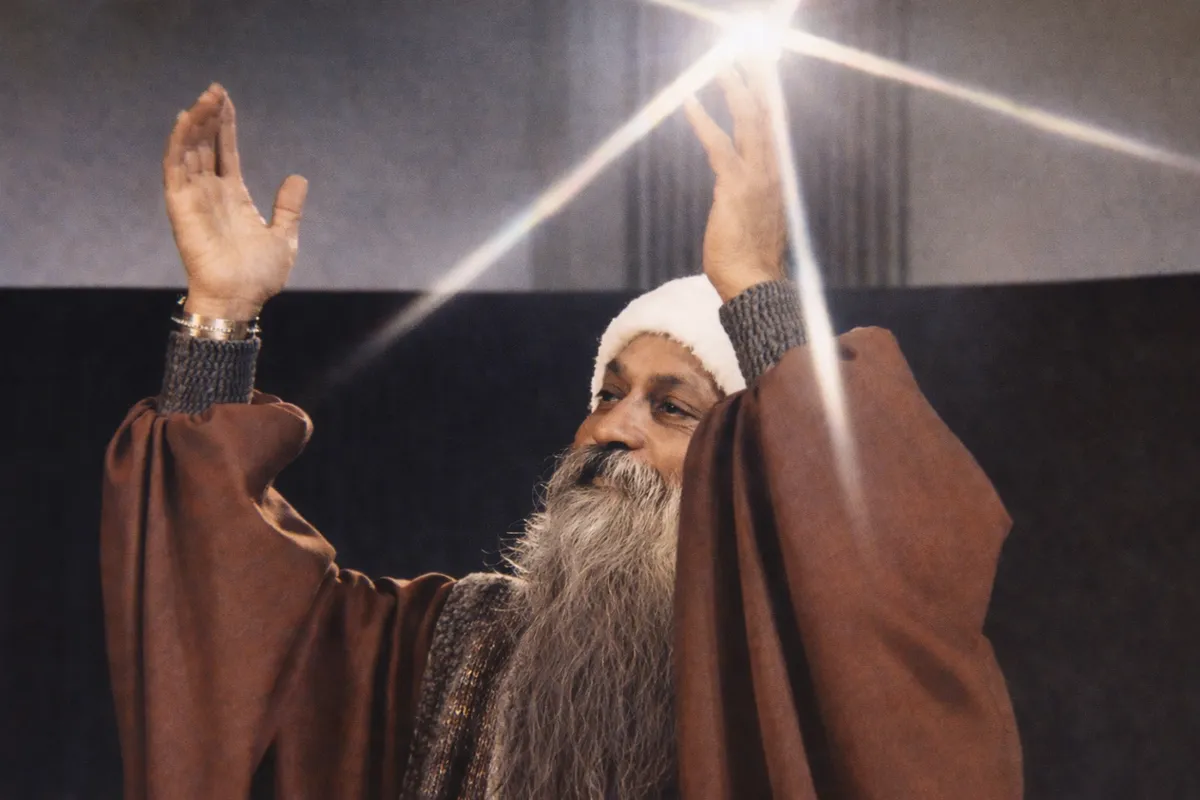
No—once someone becomes a Buddha the self is gone, so there’s no coming back; new Buddhas may arise with the same feel, and today’s call is to grow friendship and love.
From the Discourses
Passages where Osho speaks to this question — each links to the complete discourse.
Osho, this feeling keeps arising that perhaps Gautam Buddha has reincarnated as you. You call everyone “friends.” And Buddha’s future avatar is to be called “Maitreya.” You too—as the proclamation foretold—impart awakening while seated on a chair. I have seen, in the Chicago Museum, a Tibetan statue of Buddha seated on such a chair. You are creating a Buddhafield. Or are you Lao Tzu—not even Maitreya? Would you kindly shed light on this?
Only when the ego dies is Buddhahood born. What is the meaning of Buddhahood? When the darkness of ego departs, the lamp of Buddhahood is lit—or when the lamp of Buddhahood is lit, the darkness of ego is gone. Ego means darkness. In Buddhist terminology, the first event is called nirvana—when the ego departs but the body continues; and the second event, when the body also falls, is called mahaparinirvana. After mahaparinirvana, what returning? Impossible. So Buddha’s words have another meaning. He is speaking in symbols. He is saying: someone like me—not “me,” but like me. Exactly like me—this very taste, this same song, this same proclamation, this same light, this same celebration, this same color—this same spring will come again twenty-five centuries later. And then its fundamental characteristic will be friendliness, love. Its essential teaching will be love. Buddha’s essential teaching was compassion, because the people of that age…
पहला प्रश्न: ओशो, यह भाव निरंतर उभर आता है कि हो न हो भगवान बुद्ध ने आप ही के रूप में पुनरावतार लिया है। आप सभी को मित्र कहते हैं। और बुद्ध का भावी अवतार ‘मैत्रेय’ कहा जाएगा। आप भी--जैसा कि उदघोषणा थी--कुर्सी पर बैठ कर बोध प्रदान करते हैं। मैंने शिकागो के म्यूजियम में इस प्रकार कुर्सी पर आसनस्थ बुद्ध की तिब्बती प्रतिमा देखी है। आप बुद्धक्षेत्र निर्मित कर रहे हैं। या कि आप लाओत्सु हैं, मैत्रेय भी नहीं? क्या इस विषय पर प्रकाश डालने की कृपा करेंगे?
… या बुद्धत्व का दीया जला, तो अहंकार का अंधेरा गया। अहंकार यानी अंधकार। बौद्ध परिभाषा में पहली घटना को ‘निर्वाण’ कहते हैं--जब अहंकार चला जाता, लेकिन देह चलती। और दूसरी घटना को, जब देह भी गिर जाती, ‘महापरिनिर्वाण’ कहते हैं। महापरिनिर्वाण के बाद लौटना कैसा? असंभव। तो फिर बुद्ध का कुछ और अर्थ है। बुद्ध प्रतीक में बोल रहे हैं। वे यह कह रहे हैं कि मुझ जैसा, मैं नहीं, मुझ जैसा। ठीक मेरे जैसा, ठीक मैं ही--यही स्वाद, यही गीत, यही देशना, यही प्रकाश, यही उत्सव, यही रंग--यही वसंत फिर आएगा पच्चीस सौ वर्ष बाद। और तब इसका मौलिक लक्षण होगा: मैत्री, प्रेम। तब इसकी मौलिक उपदेशना होगी प्रेम की।
Osho, you have said that Buddha attained Mahaparinirvana in the seventh body, but elsewhere in a discourse you have said that Buddha will take one more human birth as Maitreya. After merging into the nirvanic body, how would it be possible to take a human body again? Kindly clarify this briefly.
For example, a man in America died—three, four years ago—and he left a trust of millions of dollars, with instructions that his body be preserved until science has reached the point of being able to reanimate it. Hundreds of thousands are being spent on his body. It must be kept exactly as it was at the moment of death. Not the slightest deterioration should occur—until then. There is hope that by the end of this century the possibility of reanimating a body will emerge. So for thirty to forty years his body has to be kept as it was when he died. This is a scientific procedure. And if by the end of the century we can reanimate a body, that body will be reanimated. Certainly, a different soul will occupy that body; the same soul cannot be available. But the body will remain: the same eyes, the same gait,…
प्रश्न: ओशो, आपने कहा कि बुद्ध सातवें शरीर में महापरिनिर्वाण को उपलब्ध हुए, लेकिन अन्यत्र एक प्रवचन में आपने कहा है कि बुद्ध का एक और जन्म मनुष्य शरीर में मैत्रेय के नाम से होनेवाला है। तो निर्वाण काया में चले जाने के बाद पुनः मनुष्य शरीर लेना कैसे संभव होगा, इसे संक्षेप में स्पष्ट करने की कृपा करें।
जैसे अभी अमेरिका में एक आदमी मरा, कोई तीन साल पहले, चार साल पहले, तो वह कोई करोड़ों डालर का ट्रस्ट कर गया है, और कह गया है कि मेरे शरीर को तब तक बचाया जाए जब तक साइंस इस हालत में न आ जाए कि उसको पुनरुज्जीवित कर सके। तो उसके शरीर पर लाखों रुपया खर्च हो रहा है। उसको बिलकुल वैसे ही सुरक्षित रखना है। उसमें जरा भी खराबी न हो जाए। उस समय तक.आशा है कि इस सदी के पूरे होते-होते तक शरीर को पुनरुज्जीवित करने की संभावना प्रकट हो जाएगी। तो इधर तीस-चालीस साल उसको, उसके शरीर को ऐसा सुरक्षित रखना है जैसा कि वह मरते वक्त था। उसमें जरा भी डिटोरिएशन न हो जाए। तो यह शरीर बचाया जा रहा है। यह वैज्ञानिक प्रक्रिया है। और अगर इस सदी के पूरे होते-होते तक हम शरीर को पुनरुज्जीवित कर सकें, तो वह शरीर पुनरुज्जीवित हो जाएगा।
Osho, Mahavira’s prior-life state was a state of moksha, and you say that from moksha there is no return. Then how did he return? Please clarify.
In a rush he kissed the maid and said to the wife, “Take care of the children!” The wife protested. He said, “Then let me correct it,” kissed the wife and told the maid, “Take care of the children.” “Sometimes I slip,” he said. So do we all—we keep remembering: this is my father, my wife, my son. If we forget, others remind us: “I am your father.” We must remember our roles; the more dutifully one plays, the more “conscientious” he is. I do not say, “Do not play.” Life is for playing—and it is delightful. Only do not forget one thing—even if you forget everything else—do not forget that it is a play, and that inwardly there is a point in you that forever stands outside. Swami Ram went to America. He had a strange habit; people were puzzled—he always spoke in the third person. He would say,…
प्रश्न: ओशो, महावीर के पूर्व-जन्म की स्थिति मोक्ष की स्थिति थी और आपका कहना है कि मोक्ष से लौटना नहीं होता, तो फिर उनका लौटना कृपया स्पष्ट करें।
एक फ्रेंच चित्रकार अमरीका जा रहा था। उसके भुलक्कड़ होने की बड़ी कहानियां थीं। उसकी पत्नी और उसकी नौकरानी, उसको दोनों विदा देने एअरपोर्ट आई हैं। उसने जल्दी में नौकरानी को चूम लिया है और पत्नी को कहा, खुश रहना, बच्चों का खयाल रखना! और वह जाकर...वे दोनों घबड़ा गई हैं, क्योंकि वह, उसकी पत्नी ने कहा, यह क्या करते हैं? आप खयाल नहीं करते, वह नौकरानी है! उसको आप चूमते हैं और मुझे नौकरानी बनाते हैं? मैं आपकी पत्नी! उसने कहा, चलो बदले देता हूं! उसने कहा कि चलो, बदले देता हूं! पत्नी को चूम लिया है, नौकरानी को कहा, बच्चों का खयाल रखना। उसने कहा, कभी-कभी चूक जाता हूं, खयाल नहीं रख पाता। कभी-कभी चूक जाता हूं, खयाल नहीं रख पाता। हम खयाल रख पाते हैं, कुछ लोग चूक जाते हैं। खयाल क्या रख रहे हैं हम चौबीस घंटे? यह मेरा पिता है, यह मेरी पत्नी है, यह मेरा बेटा है, इसका हमें खयाल रखना पड़ता है चौबीस घंटे! …
Osho, do you believe in the second coming of christ?
And who do you think I am? Christ is not a person, Christ is a state of consciousness. There have been Christs before Jesus, there have been Christs after Jesus. Jesus is only one of the Christs. Buddha is a Christ, Mahavir is a Christ, Lu-tsu is a Christ, Zarathustra is a Christ. Christ simply means the ultimate state of consciousness; it is equivalent to Buddha. Buddha is not the name of any person, it is a happening. So is Christ -- it is not Jesus' name! His name was Jesus. One day Jesus disappeared and the Christ-consciousness descended IN him. He was no more the ego, he became the vehicle of the whole. He could say, "I and my Father in heaven are one." This is Christ-consciousness; it has nothing to do with Jesus. If you are waiting for Jesus' second coming, then you are waiting in vain; but…
Osho, Gautam Buddha again and again says, “This is the reign of the buddhas.” You too often speak in the same way. So can one buddha speak on behalf of all buddhas? If yes, why then were there differences among the buddhas in the past?
So I am not telling you to accept theoretically that there is no difference—so that the Quran says exactly what the Vedas say, and the Dhammapada says exactly what the Bible says. I am not saying that. I am saying: as long as the mind is there, to see difference is a mistake; to see non-difference is also a mistake. The mind has no door to truth. Rise beyond the mind. Go beyond thinking. Be free of thought. In thoughtlessness, non-difference is seen. But remember: non-difference does not mean that Buddha uttered word for word what Mahavira said. The essence is one. Buddha’s examples are different—of course they will be. Jesus’ examples are different—of course they will be. Jesus comes from a different tradition. He heard different stories in childhood. He learned a different language, a different idiom. When he speaks, the Old Testament will echo in it. You will…
पहला प्रश्न: ओशो, भगवान बुद्ध बार-बार कहते हैं कि यही बुद्धों का शासन है। आप भी प्रायः इसी भाषा में बोलते हैं। तो क्या एक बुद्ध सभी बुद्धों की ओर से बोल सकता है? यदि हां, तो अतीत में हुए बुद्धों में मतभेद क्यों रहा?
तो तुमसे मैं यह नहीं कह रहा हूं कि सैद्धांतिक रूप से तुम मान लो कि कोई भेद नहीं है। तो कुरान में भी वही लिखा है, जो वेद में है। और धम्मपद में भी वही लिखा है, जो बाइबिल में है। ऐसा नहीं कह रहा हूं तुमसे। मैं तुमसे यह कह रहा हूं कि तुम्हारा मन जब तक है, तब तक तुम भेद देखो तो गलती है, अभेद देखो तो गलती है। मन से सत्य को जानने का कोई द्वार ही नहीं है। मन के पार उठो। सोचने के पार चलो। विचार से मुक्त हो जाओ। निर्विचार में तुम्हें दिखायी पड़ेगा अभेद।