
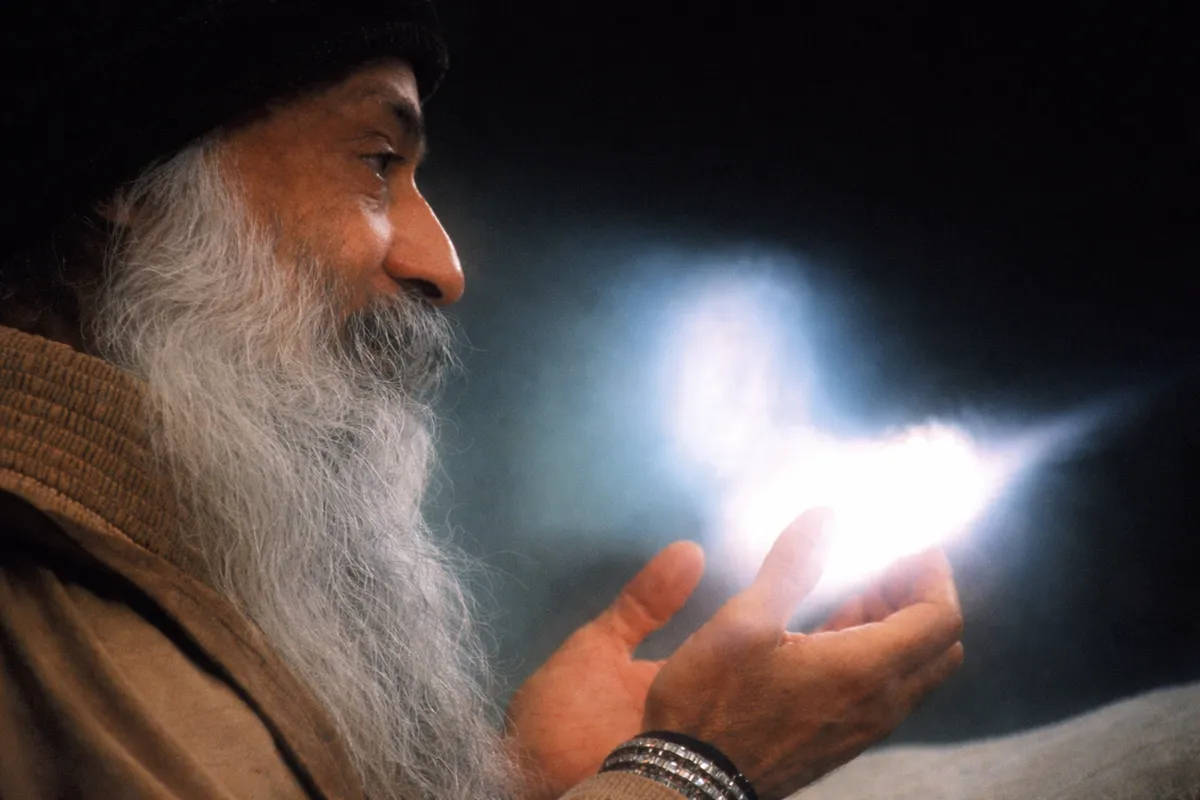
Osho's perspective on Belief
When Osho Spoke About Belief
Passages from the discourses where this theme comes alive.
Question: The last question: Osho, can a devotee live only by the support of belief? Belief is a hollow thing, a false thing. A devotee lives by love, not by belief. Belief is needed by those in whose lives love is absent. In a devotee, love wells up on seeing existence. Seeing green trees, the desire to embrace them arises. Hearing music, there is a longing to become musical. Seeing the stars, one feels like dancing with them. In a devotee, love toward existence has awakened. A devotee has no need of belief. In a devotee, trust has arisen. And there is a great difference between trust and belief. Belief belongs to the head, trust belongs to the heart. Belief is of doctrine. If you are born in a Hindu home, your beliefs are Hindu; that does not make you a devotee.
विश्वास तो थोथी बात है, झूठी बात है। भक्त तो प्रेम के सहारे जीता है, विश्वास के सहारे नहीं। विश्वास की जरूरत तो उनको पड़ती है, जिनके जीवन में प्रेम नहीं है। भक्त को तो अस्तित्व को देखकर प्रेम उमगता है। हरे वृक्षों को देखकर आलिंगन करने की कामना जगती है। संगीत सुनकर संगीतमय हो जाने की अभीप्सा जगती है। तारों को देखकर तारों के साथ नाचने का मन होता है। भक्त को तो अस्तित्व के प्रति प्रेम जगा है। विश्वास की भक्त को जरूरत ही नहीं है। भक्त को तो श्रद्धा जगी है। और श्रद्धा और विश्वास में बड़ा फर्क है। विश्वास होता है सिर का, श्रद्धा होती है हृदय की। विश्वास तो सिद्धांत का होता है। जैसे तुम हिंदू घर में पैदा हुए तो तुम्हारे विश्वास हिंदू हैं; इससे तुम भक्त नहीं हो गए। तुम मुसलमान घर में पैदा हुए तो तुम्हारे विश्वास मुसलमान हैं; इससे तुम भक्त नहीं हो गए। भक्त न तो हिंदू होता, न मुसलमान, न ईसाई, न जैन, न बौद्ध--भक्त तो बस भक्त होता है; उतना होना पर्याप्त है; विशेषण रहित होता है।
Osho, why is it that the moment we cling to some belief—whether theism or atheism—the mind feels so reassured? Why does it seem almost impossible for it to stand in the middle, dropping both?
There is no greater courage than to stand in existence without conclusions. By “without conclusions” I mean: no belief, no superstition. It means: we will see existence as it is, without bringing our notions in between. We will neither say “God is” nor “God is not.” We will neither say “the soul is” nor “the soul is not.” We will inquire. But inquiry is hard. Inquiry means you must pay a price. Who wants that bother? So we borrow beliefs on credit. We say, Mahavira knew, Buddha knew, Krishna knew—why should we get into the mess? We’ll cling to them, hold their feet, and pass through. That is not faith; it is only weakness. And the weak do not move. It is not trust to think we can walk to freedom by holding Buddha’s feet. If you have no trust in yourself, how will you trust Buddha? No real trust…
दूसरा प्रश्न: ओशो, क्या बात है कि कोई न कोई विश्वास पकड़ लेने से--चाहे वह आस्तिकता हो या नास्तिकता, मन बहुत आश्वस्त अनुभव करता है? दोनों को छोड़कर बीच में खड़ा होना उसके लिए असंभव जैसा क्यों है?
अस्तित्व में निर्धारणा के खड़े हो जाने से बड़ा कोई साहस नहीं है। निर्धारणा का अर्थ होता है: कोई विश्वास नहीं, कोई अंधविश्वास नहीं। निर्धारणा का अर्थ होता है: अस्तित्व जैसा है, हम उसे वैसा ही देखेंगे। अपनी कोई धारणा बीच में न लाएंगे। न हम कहेंगे, ईश्वर है; न हम कहेंगे कि ईश्वर नहीं है। न हम कहेंगे कि आत्मा है, न हम कहेंगे कि आत्मा नहीं है। हम खोजेंगे। पर खोज कठिन है। खोज का अर्थ है: मूल्य चुकाना पड़े। कौन इस झंझट में पड़े? तो हम उधार विश्वास ले लेते हैं। हम कहते हैं, महावीर ने जान लिया, बुद्ध ने जान लिया, कृष्ण ने जान लिया, अब हम क्यों पंचायत में पड़ें? हम इन्हीं को पकड़ लेंगे, इन्हीं के चरणों के सहारे निकल जाएंगे। यह आस्था नहीं है, यह केवल कमजोरी है। और कमजोर की कोई गति नहीं है। यह भरोसा नहीं है कि हम बुद्ध के चरणों पर चलकर निकल जाएंगे। जिसका अपने पर ही भरोसा नहीं है, उसका बुद्ध पर कैसे भरोसा होगा? तुम्हारे आत्म-अविश्वास से किसी भी तरह की आस्था का जन्म नहीं हो सकता। …
I believe in god, and it is not out of fear. Why do you say that all belief is out of fear?
Then why do you believe? You don't know. If you know, there is no need to believe. All belief is out of ignorance Belief MEANS ignorance. Buddha knows, he does not believe. I know, I don't believe at all. But why do you believe? From where comes your belief? It is not coming from your experience -- then from where is it coming? It can come only from two sources, which are basically the same source -- either fear or greed. Either you are afraid or you are greedy. And these are the two aspects of the same coin, fear and greed. Greed is out of fear, and out of greed more fear arises. They go together. So either you are afraid of hell or you are greedy for heaven. Otherwise why do you believe in God? How can you believe in God? Your very belief simply says that alone…
I have been surrounded since my childhood by people who wanted me to believe in god and to follow his commandments. Why are the god believers always trying to convert others?
Mahatma Gandhi interpreted them -- I don't agree with his interpretation. He interpreted that the monkey who is holding his hands on the ears says, "Don't listen to anything evil." And the monkey who is holding his hands on the eyes says, "Don't see anything evil." And the third monkey who has his hands on the mouth is indicating, "Don't say anything evil." Now, you can understand why the fourth monkey has been dropped -- in fact he should not have been dropped if Gandhi had really been a man of truth. The fourth monkey is the logical conclusion: "Hide the origin of all evil." But this is not my interpretation. Knowing the people, and knowing that Charles Darwin has this great idea that man has come from monkeys -- and there is every possibility, because your mind still functions like a monkey. My interpretation, when I went to see…
Do you teach disbelief?
definitionWhat is the concept of Gnostic belief?
definitionWhy is belief condemned?
definitionWill belief still remain?
outcomeProfound Quotes on Belief
Explore our structured collection of meaning-mapped quotes regarding Belief.