
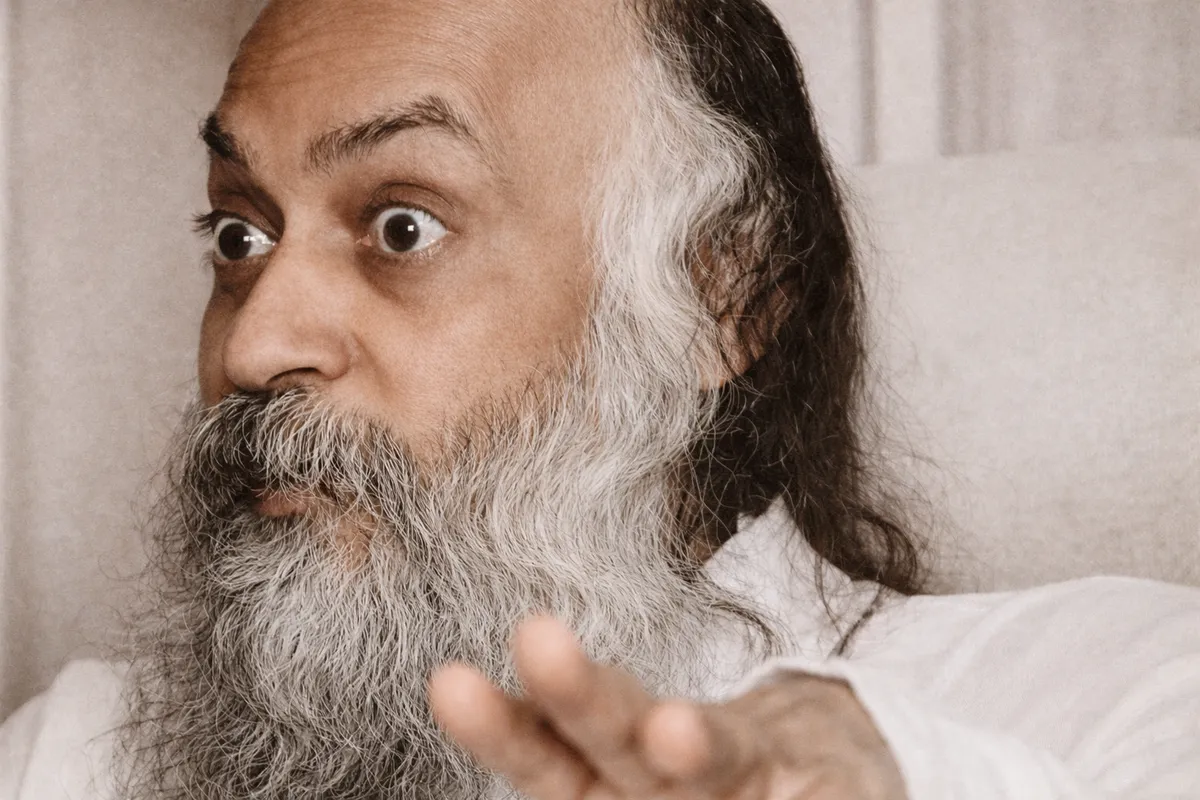
We grab beliefs because they feel safe and give answers, but staying with no belief feels scary—like having no floor—even though that’s how we truly see.
From the Discourses
Passages where Osho speaks to this question — each links to the complete discourse.
Osho, why is it that the moment we cling to some belief—whether theism or atheism—the mind feels so reassured? Why does it seem almost impossible for it to stand in the middle, dropping both?
There is no greater courage than to stand in existence without conclusions. By “without conclusions” I mean: no belief, no superstition. It means: we will see existence as it is, without bringing our notions in between. We will neither say “God is” nor “God is not.” We will neither say “the soul is” nor “the soul is not.” We will inquire. But inquiry is hard. Inquiry means you must pay a price. Who wants that bother? So we borrow beliefs on credit. We say, Mahavira knew, Buddha knew, Krishna knew—why should we get into the mess? We’ll cling to them, hold their feet, and pass through. That is not faith; it is only weakness. And the weak do not move. It is not trust to think we can walk to freedom by holding Buddha’s feet. If you have no trust in yourself, how will you trust Buddha? No real trust…
दूसरा प्रश्न: ओशो, क्या बात है कि कोई न कोई विश्वास पकड़ लेने से--चाहे वह आस्तिकता हो या नास्तिकता, मन बहुत आश्वस्त अनुभव करता है? दोनों को छोड़कर बीच में खड़ा होना उसके लिए असंभव जैसा क्यों है?
अस्तित्व में निर्धारणा के खड़े हो जाने से बड़ा कोई साहस नहीं है। निर्धारणा का अर्थ होता है: कोई विश्वास नहीं, कोई अंधविश्वास नहीं। निर्धारणा का अर्थ होता है: अस्तित्व जैसा है, हम उसे वैसा ही देखेंगे। अपनी कोई धारणा बीच में न लाएंगे। न हम कहेंगे, ईश्वर है; न हम कहेंगे कि ईश्वर नहीं है। न हम कहेंगे कि आत्मा है, न हम कहेंगे कि आत्मा नहीं है। हम खोजेंगे। पर खोज कठिन है। खोज का अर्थ है: मूल्य चुकाना पड़े। कौन इस झंझट में पड़े? तो हम उधार विश्वास ले लेते हैं। हम कहते हैं, महावीर ने जान लिया, बुद्ध ने जान लिया, कृष्ण ने जान लिया, अब हम क्यों पंचायत में पड़ें? हम इन्हीं को पकड़ लेंगे, इन्हीं के चरणों के सहारे निकल जाएंगे। यह आस्था नहीं है, यह केवल कमजोरी है। और कमजोर की कोई गति नहीं है। यह भरोसा नहीं है कि हम बुद्ध के चरणों पर चलकर निकल जाएंगे। जिसका अपने पर ही भरोसा नहीं है, उसका बुद्ध पर कैसे भरोसा होगा? तुम्हारे आत्म-अविश्वास से किसी भी तरह की आस्था का जन्म नहीं हो सकता। …
Osho, you have earlier said, “Live moment to moment, live in the present.” Now you are saying, “Return to the past.” What should we do?
So it is with the mind—there are ruts. The past means endless grooves. However much you understand, your intellect agrees, you make decisions, you resolve—at the moment of resolve you feel something is going to change. But not even an hour passes before your decision breaks. Then only self-condemnation is produced, nothing else. Your saints, your fakirs, your priests and pundits—most of the time they only succeed in producing self-condemnation in you, nothing else. Their words are logically correct. You cannot even say they are wrong; you have to admit they are right. In that admission you take a decision. But against what are you deciding? Inside are grooves carved since who knows when, deep tracks. Walking in them has become a habit. It is easy to walk in them. They will pull you again and again. The meaning of returning into the past is: these grooves must be erased.…
दूसरा प्रश्न: ओशो, आपने पहले कहा है, क्षण-क्षण जीयो, वर्तमान में जीओ। अब आप कह रहे हैं, अतीत में लौटो। हम क्या करें?
ठीक मन पर लीकें हैं। अतीत का अर्थ है, अनंत लीकें। तो आप कितनी ही बातें समझ लेते हैं; बुद्धि सहमत हो जाती है; निर्णय ले लेते हैं; संकल्प कर लेते हैं। और जब संकल्प करते हैं, तब सोचते हैं कि कुछ होने-जाने वाला है। घड़ी भी नहीं बीत पाती कि जो आपने निर्णय लिया था, वह टूट जाता है। और तब सिर्फ आत्मग्लानि पैदा होती है, और कुछ भी नहीं। आपके संत, आपके फकीर, आपके पंडित-पुरोहित, आप में सिर्फ आत्मग्लानि पैदा करवा पाते हैं और कुछ भी नहीं। क्योंकि उनकी बातें तो तर्कयुक्त हैं। आप भी कह नहीं सकते कि वे गलत कह रहे हैं। स्वीकार करना पड़ता है कि ठीक कह रहे हैं। उस स्वीकृति में आप निर्णय लेते हैं। लेकिन निर्णय किसके खिलाफ ले रहे हैं! न मालूम कितनी लंबी लकीरें भीतर हैं, गहरे खांचे हैं। उनमें चलने की आदत हो गई है। उनमें चलना सुगम है। …
Question: A friend has asked: Osho, do you teach atheism? Would the man who wants to save people even from learning theism teach atheism? I teach neither theism nor atheism. I teach neither belief nor disbelief. I say: remain free of belief as well as disbelief, and search in freedom. Do not be bound by partisanship. Seek impartially—there are two sides. And remember, opposing sides are two faces of the same coin. There is not much difference between them. The theist and the atheist are two faces of the same coin. There isn’t much difference: one is the back of the same thing, the other its face. ... Reason is a very fragile realm. I am not saying, “Cling to belief. The believer says, “We have reasons, arguments. The disbeliever also says, “We have reasons, arguments. We say there is no God, no soul. I am not speaking for either.
तर्क, बड़ी कमजोर दुनिया है तर्क की। मैं न कह रहा हूं कि विश्र्वास को पकड़ो। विश्र्वास वाला भी कहता है, तर्क है हमारे पास, आर्ग्युमेंट है। अविश्र्वास वाला भी कहता है, तर्क है हमारे पास, आर्ग्युमेंट है। हम कहते हैं कि ईश्र्वर नहीं है, आत्मा नहीं है। मैं दोनों की बात नहीं कह रहा। मैं कुछ तीसरी ही बात कह रहा हूं जो इन तीन दिनों में धीरे-धीरे साफ हो सकेगी। मैं यह कह रहा हूं, विश्र्वास से भी मत बंधना और अविश्र्वास से भी मत बंधना। और क्यों यह कह रहा हूं, क्योंकि जो आदमी ऊपर से विश्र्वास से बंधता है उसके भीतर अविश्र्वास होता है, उसका दूसरा पहलू उसके भीतर रहेगा। कांशस माइंड में, चेतन मन में, वह विश्र्वासी होगा, अचेतन में अविश्र्वासी होगा। चेतन में आस्तिक होगा, अचेतन में नास्तिक होगा। जो चेतन में नास्तिक होगा उसके भीतर आस्तिक छिप जाएगा। उलटा पहलू नीचे दब जाएगा। इसलिए ऐसा कोई नास्तिक नहीं है जिसके भीतर आस्तिक न बैठा हो। और ऐसा कोई आस्तिक नहीं है जिसके भीतर नास्तिक न बैठा हो। …
So am I asking you to disbelieve? No! There is no need to disbelieve either. But we think that if we don't believe something then we inevitably disbelieve it. This is an absolutely wrong idea. There is a state of mind which neither believes nor disbelieves.... Disbelief is a form of belief. When we say that we don't believe in god, what are we saying? We are saying that we believe in the non-existence of god. When we say, "I don't believe in the soul," then we are saying that we believe in the non-existence of the soul. Belief and disbelief are similar things, there is no difference between them. Belief is positive and disbelief is negative. Belief is a positive trust and disbelief is a negative trust, but both are trusts.
Osho, under the influence of atheistic and communist ideas I kept denying God and the principle of the self. Then I read your writings, my rational mind found no footing, and I came here. Now, from listening to you and meditating, a trust in the unknown has begun to arise and I feel like taking sannyas. Could it be that I have simply been hypnotized by the new environment?
Atheism is the precise preparation for theism. One who has not been an atheist has never been a theist. One who becomes a true atheist cannot remain without becoming a theist. Where atheism is complete, theism begins. So, first: don’t think that earlier you were an atheist and now you are going in the opposite direction. No—your atheism itself has brought you to me. This is my experience after working with thousands of people: those who consider themselves theists are almost hollow people. And with them it is very difficult. Their growth is very hard, because they have assumed themselves to be what they are not; they are clinging to a lie. It is like a sick person believing, “I am healthy.” How will you treat him? He won’t even let you touch him. He won’t let you take his pulse. He will say, “I am not ill.” Only if…
दूसरा प्रश्न: ओशो, नास्तिक व साम्यवादी विचारों से प्रभावित होने के कारण मैं ईश्वर और आत्मतत्व को नकारता रहा। फिर आपका साहित्य पढ़ा तो तर्क-बुद्धि काम न पड़ी और यहां आ गया। जब आपको सुनने और ध्यान करने से अज्ञात के प्रति आस्था जगने लगी है और संन्यस्त होने का जी कर रहा है। कहीं ऐसा तो नहीं है कि मैं नये परिवेश से सम्मोहित हो गया हूं।
इसलिए पहली बात: ऐसा मत सोचो कि पहले तुम नास्तिक थे और अब तुम कुछ विपरीत दिशा में जा रहे हो। नहीं, तुम्हारी नास्तिकता ही तुम्हें मेरे पास ले आई है। यह मेरा अनुभव है हजारों लोगों पर काम करने के बाद, कि जो अपने को आस्तिक समझते हैं, वे करीब-करीब थोथे लोग हैं। और उनके साथ बड़ी मुश्किल होती है। उनका विकास बड़ा कठिन होता है। क्योंकि जो वे नहीं हैं वह उन्होंने अपने को मान रखा है, एक झूठ को पकड़ रखा है। यह तो ऐसे ही है जैसे बीमार आदमी समझता हो कि मैं स्वस्थ हूं। अब इसका इलाज कैसे करोगे? वह हाथ ही न रखने देगा। वह नाड़ी भी न पकड़ने देगा। वह कहेगा, मैं बीमार ही नहीं हूं। बीमार अगर जान ले कि मैं बीमार हूं तो ही इलाज हो सकता है।