
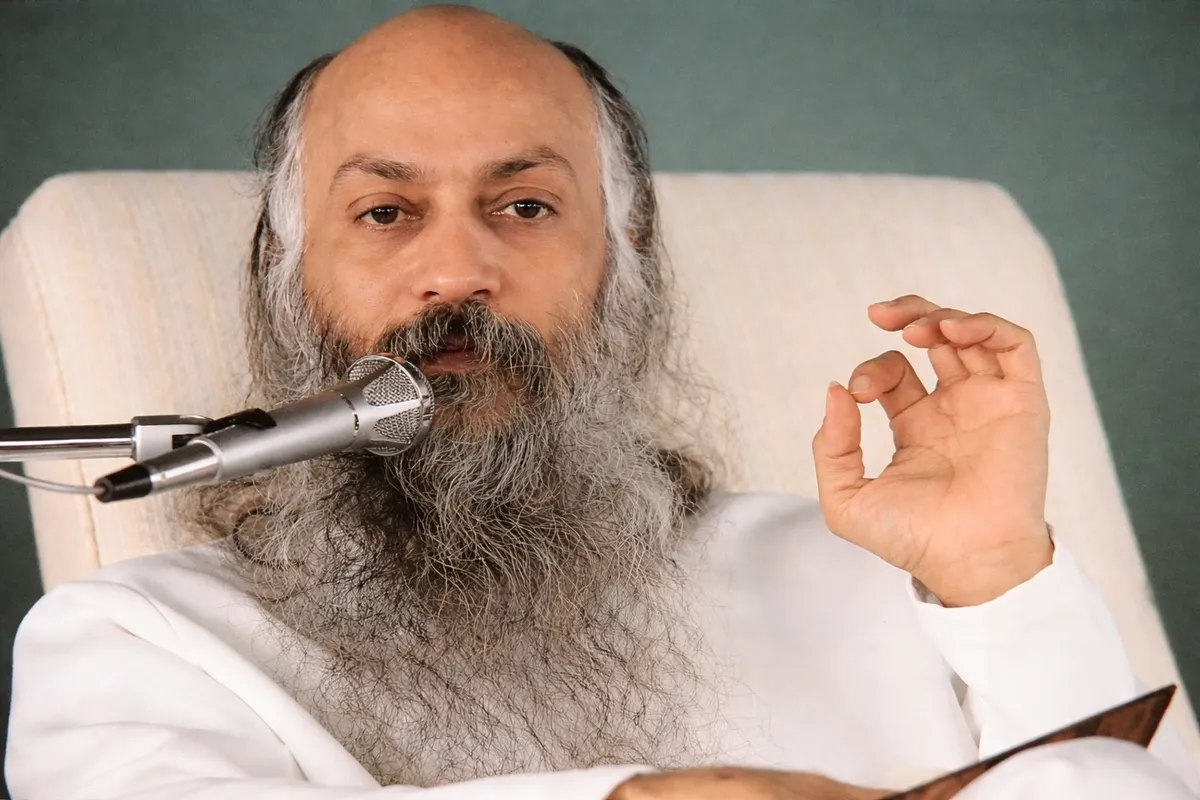
Osho's perspective on Language
When Osho Spoke About Language
Passages from the discourses where this theme comes alive.
Osho, are all words useless?
Not all. How can all words be useless? Words are useful as far as the world is concerned, the outer; words are useless as far as you are concerned, the inner. When you start moving inwards you have to drop words. They are not needed. They are an unnecessary load on you, a disturbance, a noise. But when you go outwards and you meet people, you need language. When you are talking about things, you need language. Language is perfectly adequate for the world -- otherwise there would be great difficulty. If you go to the market and you want to purchase something, you will be in difficulty without words. And it will be an unnecessary wastage of time. Words are tremendously useful instruments. If you want to see it, one day go into the market and try to purchase things without words. Each small thing will take so much…
So what would you call it? What is the word for it?
It simply means this: for a little while—just for a little while—do nothing at all; and whatever is happening, let it happen. Thoughts come—let thoughts come; feelings arise—let feelings arise; the hands move—let them move; a leg turns—let it turn—let everything happen. For a short while, don’t be the doer; just remain a witness. Whatever is happening, let it happen. Do nothing. Don’t do anything from your side. Then the state that arises is samayik. That is to say, nothing can be done to produce samayik. If for a little while you are not doing anything, what happens on its own is called samayik. The difficulty is this: samayik will happen—its flowering will happen—and it will happen when you are utterly effortless. As you may have noticed: you forget someone’s name, you try to recall it and it won’t come; then you get bored, tired, drop the effort, get involved…
प्रश्न: तो क्या कहेंगे? शब्द क्या है उसके लिए?
उसका कुल मतलब इतना है कि कुछ देर के लिए, कुछ देर के लिए कुछ भी नहीं करना है; और जो हो रहा है, होने देना है। विचार आते हैं, विचार आने देना; भाव आते हैं, भाव आने देना; हाथ हिले, हिलने देना; पैर करवट बदले, बदलने देना--सब होने देना। थोड़ी देर के लिए कर्ता मत रह जाना, बस साक्षी रह जाना। जो हो रहा है, होने देना। कुछ मत करना। अपनी तरफ से कुछ भी मत करना। तो जो अवस्था उत्पन्न होगी, वह सामायिक है। यानी सामायिक के लिए कुछ भी नहीं किया जा सकता। अगर आप कुछ भी न कर रहे हों थोड़ी देर, तो जो हो जाएगा, उसका नाम सामायिक है। तो वह जो कठिनाई होती है न, कठिनाई यह होती है कि सामायिक तो घटेगी, उसकी फ्लावरिंग होगी। और वह तब होगी, जब आप बिलकुल ही अप्रयास में पड़े हों। जैसे कभी आपने खयाल किया हो, किसी का नाम आपको भूल गया है और आप कोशिश कर रहे हैं याद करने की और वह नहीं याद आ रहा है, और फिर आप ऊब गए और थक गए और आपने कोशिश छोड़ दी, और आप दूसरे काम में लग गए और अचानक वह नाम आ गया है। …
Osho, knowing words to be inadequate, Kabir casts them into ulatbansis—inversions. For example: “Everyone knows the sky rains and the earth gets wet. Rare is the one who understands that the earth rains and the sky gets wet.” What does it mean?
The earth returns too. The Ganges runs toward the ocean; all rivers run to the sea. What can the ocean do? It lifts them up to the sky, pours them back. Clouds form again, thicken in the sky; the earth calls; rain falls; rivers run to the sea. It is a circle, a cycle of give-and-take. There is never a moment’s break. The name of this circle is joy. Wherever it is broken, there is sorrow. Why is Kabir saying this? He is not declaring a meteorological truth. He is speaking about you. Within you too are earth and sky. Your body is your earth; your soul is your sky—the inner sky. Between them too a vast exchange should flow. But often your inner sky gives much to your bodily earth, and you fail to return. What should return to the sky gets lost in the world’s deserts; the river…
प्रश्न: ओशो, कबीर शब्दों को असमर्थ जानकर उनको उलटबांसियों में ढालते हैं। जैसे--अंबर बरसै धरती भीजै यह जानै सब कोई। धरती बरसै अंबर भीजै बूझै बिरला कोई। क्या है इसका मतलब?
पृथ्वी भी लौटाती है। गंगा भाग रही है सागर की तरफ, सारी गंगाएं भाग रही हैं सागर की तरफ। सागर क्या करेगा? गंगाओं को उलीच देगा आकाश में, वापस लौटा देगा। फिर बनेंगे बादल, फिर आकाश में घने होंगे, फिर पृथ्वी पुकारेगी, फिर वर्षा होगी, फिर गंगाएं बहेंगी सागर की तरफ। एक वर्तुल है, लेन-देन का एक वर्तुल है। इस लेन-देन के वर्तुल में कहीं भी क्षणभर को विच्छेद नहीं होता। इस वर्तुल का नाम ही आनंद है। और जहां भी विच्छेद होता है, वहीं दुख हो जाता है।
Do animals have a language of their own?
Only in a manner of speaking. It is not a language, just signals. The signals are makeshift and very limited. For example, bees have about four signals. So they can give those four signals.
प्रश्न: पशुओं की अपनी भाषा है?
कहने मात्र को। भाषा नहीं है, सिर्फ संकेत हैं। संकेत कामचलाऊ हैं और बड़े सीमित हैं। यानी जैसे कि मधुमक्खियों के कोई चार संकेत हैं उनके पास। तो वे चार संकेत दे सकती हैं।
Are all words useless?
definitionAre you against the English language?
definitionDo animals have a language of their own?
definitionHow did 'Jesus Christ!' become a swear word?
definitionWhat is the word for it?
definitionWhy are complex words sometimes used?
definitionProfound Quotes on Language
Explore our structured collection of meaning-mapped quotes regarding Language.