
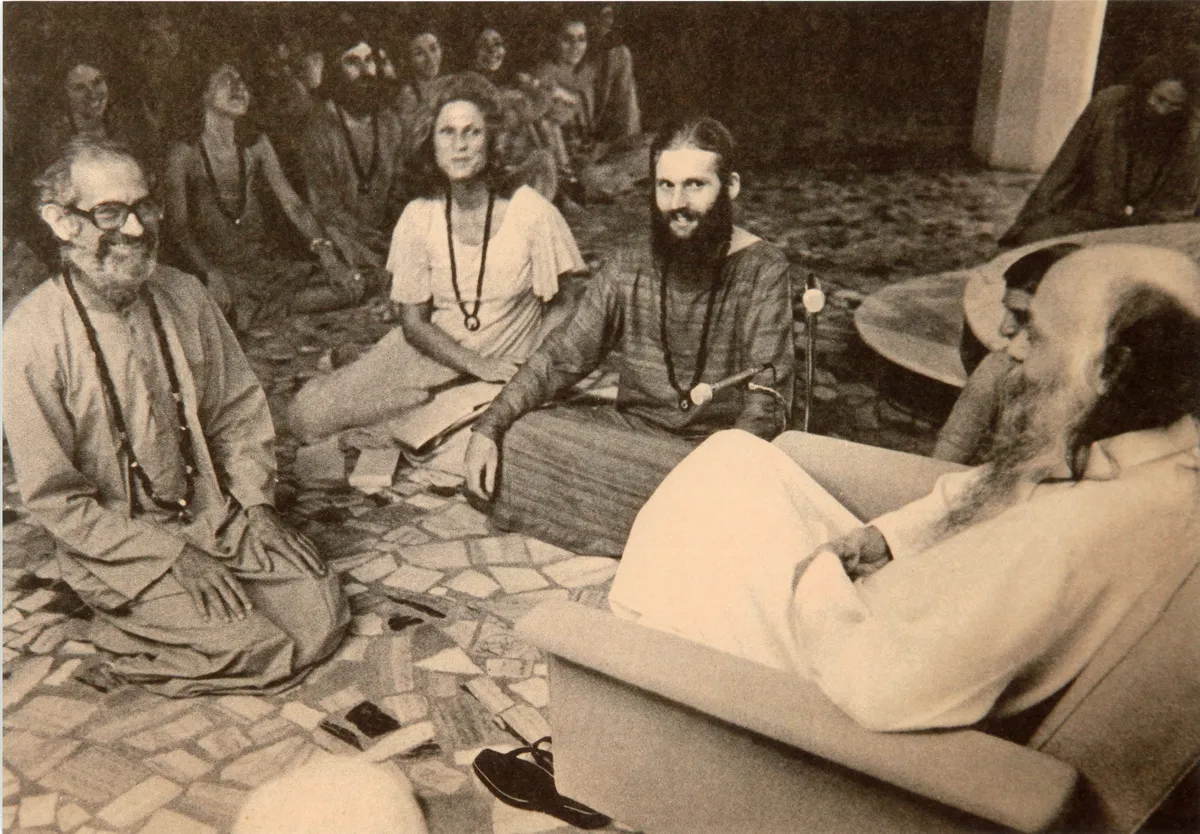
Osho's perspective on Identity
When Osho Spoke About Identity
Passages from the discourses where this theme comes alive.
Questioner: is there a special significance in changing one's name and wearing a mala given by you?
Yes, it has significance, great significance. The change of name has great significance for a sannyasin. It is an index, a symbol. Everything in our life is symbolic. You have a name; you are identified with this name. This name has become your symbol; it is identified with your individuality. Your name has an association with everything that you have been before yesterday. Changing the name of a sannyasin means we disconnect him from his old identity, from his old associations. We say to him, now you are not the same as you were before yesterday. Now you are starting on a new journey with a new name, a new identity. Since ancient times they have had a small ceremony at the time of one's initiation into sannyas. It is a kind of cremation ceremony. Exactly as we bathe a dead body and shave its head before putting it on…
Question: OSHO, IS THERE SOMETHING WRONG WITH ME? I FEEL PROUD TO BE A POLACK! THERE IS nothing wrong to be a Polack. Polacks are as beautiful as anybody else, or a little more, a little more juicy. A sign outside a police station read: Man Wanted For Rape. Next day three Polacks applied for the job. But it is certainly wrong to feel proud. Whether one feels to be proud as an Indian or as a Polack or as an Englishman, it does not matter. These are just excuses. The real thing is that the ego wants some support. The ego cannot stand on its own feet; it needs crutches. It claims that "My country is the best country in the world, my religion the most superior, my culture the most evolved," and so on, so forth.
Osho, do the mala and the renaming have any special significance?
Yes, they do; there is great meaning. Changing a sannyasin’s name has deep significance. It is symbolic. And in our lives, everything is symbolic. You have lived with one name; your identity is tied to it. A name has been your symbol. Your personality has become connected with it. Your name is associated with all that you were till yesterday; it is linked to that. The meaning of changing a sannyasin’s name is that we break him from his old identity. We say: now you are not who you were till yesterday. Now you set out on a new journey, carrying a new identity. In the old days, when initiation was given, they performed a small experiment. It was like this: just as we bathe a corpse before placing it on the bier, so they would bathe him. Just as we shave a corpse’s hair, shave the head, so they…
ओशो, माला और जो नामकरण है, उसका कोई विशेष अर्थ है?
हां, अर्थ है, अर्थ बहुत है। संन्यासी का नाम बदलने का बड़ा अर्थ है। सूचक। और हमारी जिंदगी में सभी कुछ सूचक है। एक नाम से आप जीते रहे हैं, एक नाम से आपकी आइडेंटिटी है। एक नाम आपका प्रतीक रहा है। आपके व्यक्तित्व का उससे जोड़ हो गया है। आप कल तक जो थे, उसके साथ आपके नाम का एसोसिएशन है। उससे वह जुड़ा है। संन्यासी का नाम बदलने का अर्थ यह है कि हम उसकी पुरानी आइडेंटिटी से उसे तोड़ते हैं। हम कहते हैं कि अब तुम वह नहीं रहे जो तुम कल तक थे। अब तुम एक नई यात्रा पर जाते हो, नई आइडेंटिटी लेकर जाते हो। पुराने दिनों में जब दीक्षा दी जाती थी तो एक छोटा सा प्रयोग करते थे। वह प्रयोग यह था कि जैसे हम मुर्दे को नहलाते हैं, अरथी पर चढ़ाने के पहले, वैसे उसे नहलाते। जैसे हम मुर्दे के बाल घोंट देते हैं, सिर घोंट देते हैं, ऐसा उसका सिर घोंट देते। फिर जैसा मुर्दे को अरथी पर चढ़ाते हैं, ऐसा उसे अरथी पर चढ़ा देते। फिर अरथी में आग लगा देते। …
Some days I feel like a swami and others like a ma. Can I be both? Or will I grow up schizy?
The question is from Mallika. Everybody is both, and you have become aware -- that's very good; that's a great insight into your being. Everybody is both. The difference between a man and a woman is not much; the difference is only of degree, quantity -- not of quality. A woman may be sixty percent woman and forty percent man, or may be just fifty-one percent woman and forty-nine percent man. And so is the case with men. It is only a question of percentage -- but both exist in you. You come from both -- from your father and from your mother; they both have contributed to you. Men and women are not just men and women: they are bisexual, they are a meeting-place of both the sexes. The polarity is there. So, no woman is just a pure simple woman. If you understand this your life will become…
Are religious identities like Hindu, Jain, Christian, and Buddhist merely borrowed personalities?
definitionDid he live in Kashmir under another name?
definitionHow does the choice to not wear malas or red clothes fit into the identity of a Rajneeshee?
definitionHow to transcend cultural identity?
practiceIs it true that Osho is really Italian?
definitionIs my name essential or non-essential?
definitionIs there significance in being a Jew?
definitionWhat defines a car's identity in culture?
definitionWhat do you call American females?
definitionWhat does it mean to be a Marwari?
definitionProfound Quotes on Identity
Explore our structured collection of meaning-mapped quotes regarding Identity.