
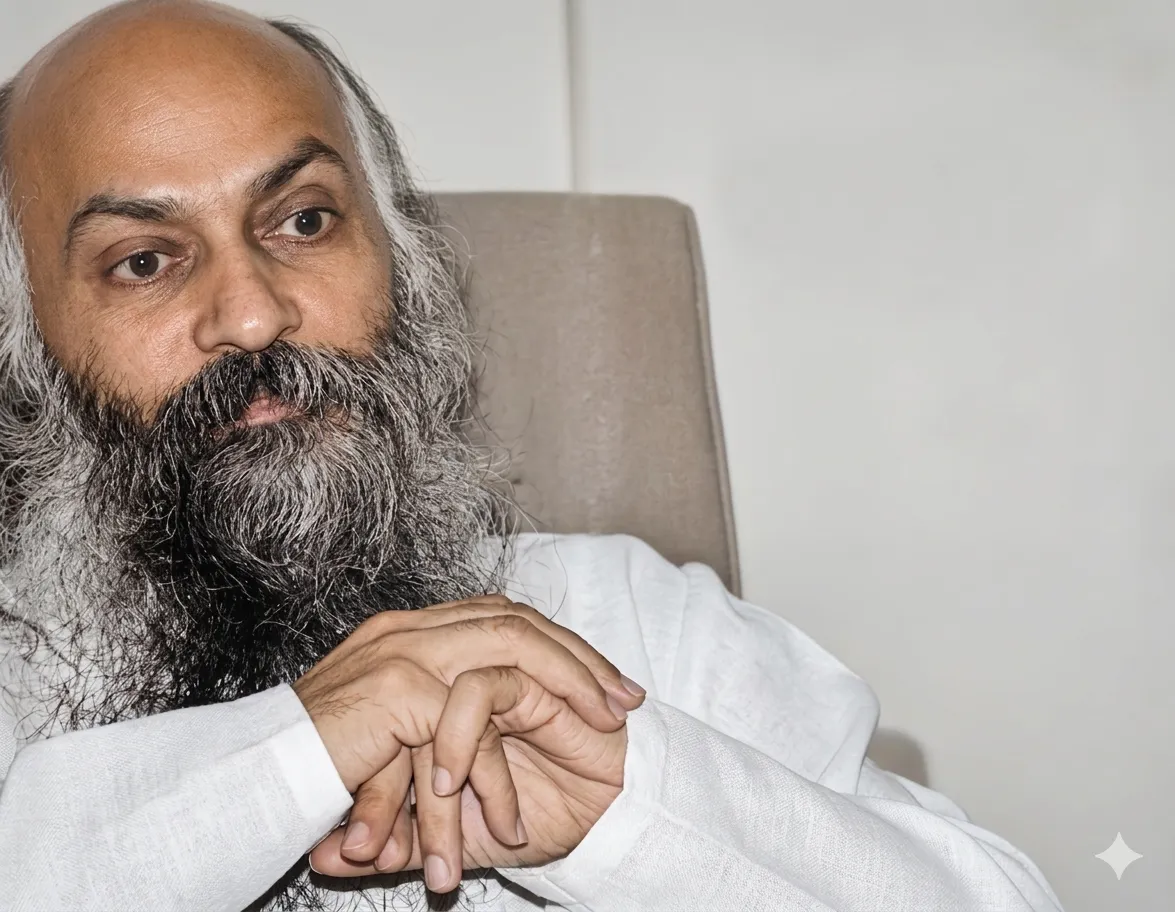
Osho's perspective on Poetry
When Osho Spoke About Poetry
Passages from the discourses where this theme comes alive.
Osho, is being attracted to Krishna not the same as being free of life’s other attractions?
One has to think a little. Here lies Krishna’s distinction. If you are attracted to Mahavira, you will have to be free of all the world’s attractions. If you go toward Mahavira, you will have to go against the world. That is Mahavira’s path. But with Krishna the matter is a little delicate and deep. Krishna says, if you want to come to me, you must seek me right within the attractions of the world; for I am present there too. There is no need to run away from there. Understand it like this. You relish food. If you listen to Mahavira, there will be a vow of non-taste (aswad-vrat). Then you must drop taste. Eat as a function, a necessity; do not savor. Put food into the body so that the body’s work may continue, but take no relish in it. Drop taste, continue eating. Let food become tasteless,…
चौथा प्रश्न: ओशो, कृष्ण के प्रति आकर्षित होना क्या जीवन के अन्य आकर्षणों से मुक्त होना नहीं है?
सोचना पड़े। यहीं कृष्ण का भेद है। अगर तुम महावीर में आकर्षित होते हो, तो तुम्हें संसार के समस्त आकर्षणों से मुक्त होना पड़ेगा। अगर महावीर की तरफ जाते हो, तो संसार के विपरीत जाना पड़ेगा। वह महावीर का मार्ग है। लेकिन कृष्ण के संबंध में मामला जरा नाजुक है और गहरा है। कृष्ण कहते हैं, अगर तुम्हें मेरी तरफ आना है, तो तुम्हें संसार के आकर्षण में ही मुझे खोजना पड़ेगा; क्योंकि मैं वहां भी मौजूद हूं। वहां से भागने की कोई जरूरत नहीं है। इसे ऐसा समझो। तुम्हें भोजन में रस है। अगर तुम महावीर की सुनते हो, तो अस्वाद व्रत होगा। तब तुम्हें स्वाद छोड़ना है। भोजन ऐसे कर लेना है कि काम है, जरूरत है; स्वाद नहीं लेना है। भोजन को ऐसे शरीर में डाल देना है कि काम शरीर का चल जाए, लेकिन उसमें कोई रस नहीं लेना है। स्वाद छोड़ना है, भोजन जारी रखना है। भोजन बेस्वाद हो जाए, अस्वाद हो जाए, स्वादहीन हो जाए, स्वादातीत हो जाए। स्वाद न रह जाए। बस, शरीर का धर्म है, पूरा कर देना है। तो भोजन ले लेना है। …
Is poetry the voice of wonder, or an avoidance of moving closer to the source, a sensuous lingering?
The other kind of poetry may be an avoidance of the real kind. It may be an escape. Samarpan, you ask, "Is poetry the voice of wonder, or an avoidance of moving closer to the source, a sensuous lingering?" The other kind of poetry can be an avoidance. You may be afraid to take the jump, you may be afraid to lose yourself totally, so you allow only a few glimpses here and there, and then you "drown" yourself -- what you call creativity. You paint, you make poetry, you create music -- and you get lost in "doings". That may be an avoidance. Maybe you are afraid: that lightning was too much. You are afraid that if you don't get drowned in your so-called creativity, the window may open again. And who knows? You may not be capable of resisting the temptation of jumping out of it. It is…
Osho, in this age of science it is said that poetry is counting its last days. But seeing the Ganges of poetry that flows through your discourses, it seems you are set on reviving poetry along with religion. Would you kindly tell us whether religion, poetry, and science can walk together?
For example, there is ecstasy in a person. You weigh him and ecstasy has no weight. The person’s weight will show on the scale. Today the person is ecstatic—still the weight will be the same; tomorrow he is unhappy—still the weight will be the same. So the scale will say ecstasy and sorrow do not exist, because they have no weight. Whether there is poetry in a person’s life or not, the weight will be the same. The scale will not distinguish between a man and a monkey. The scale knows only one thing: weight. Science has the scale; it is very gross. With it, some things simply slip away. You can weigh a flower, but how will you weigh the beauty of a flower? To see that beauty a sensitive heart is needed. It is not weighed on a scale; it is weighed on the heart. It is not…
दूसरा प्रश्न: ओशो, विज्ञान के इस युग में, कहते हैं, कविता अपने आखिरी दिन गिन रही है। लेकिन आपके प्रवचनों में प्रवाहित काव्य-गंगा को देख कर लगता है कि आप धर्म के साथ कविता को भी पुनर्जीवन देने पर तुले हैं। क्या बताने की कृपा करेंगे कि धर्म, कविता और विज्ञान क्या साथ-साथ चल सकते हैं?
… आदमी का जो वजन होगा आ जाएगा। आज आदमी मस्त है तो भी वजन उतना ही होगा तराजू पर और कल आदमी दुखी होगा तो भी वजन उतना ही होगा तराजू पर। तो तराजू तो कह देगा कि मस्ती और दुख होते ही नहीं, क्योंकि उनमें कोई वजन नहीं है। आदमी के जीवन में काव्य होगा तो भी वजन उतना ही होगा। काव्य-शून्य होगा आदमी तो भी वजन उतना ही होगा। तराजू आदमी और बंदर में फर्क नहीं करेगा। तराजू तो एक ही बात जानता है: वजन। विज्ञान के पास तराजू है; वह बड़ा स्थूल है। उससे कुछ चीजें चूक ही जाती हैं। फूल को तौल लोगे, लेकिन फूल के सौंदर्य को कैसे तौलोगे? उस सौंदर्य को तो कोई देखने वाला भावुक हृदय चाहिए। तराजू पर नहीं तुलता, हृदय पर तौला जाता है। परखनलियों में नहीं जांचा जाता, प्राणों में जांचा जाता है। …
Osho, what is the definition of God?
Words are very small. If you say God is light, then what of darkness? The scriptures have said that God is light. Suppose we accept this as a definition—then what about darkness? Where will darkness go? Darkness is too; in fact it is far more than light. Light sometimes is and sometimes is not; darkness is always, eternal. Where will you place darkness? If you say God is light, darkness is left out. If you say God is darkness, then light is left out. If you say God is both darkness and light, a contradiction arises: they cannot be together. Try to have both darkness and light in the same room. If you bring in light, darkness disappears; if you preserve darkness, you cannot have light. Then how can both be together? That becomes an impossibility. So you cannot say “both” either. Then the fourth device is to say: it…
पहला प्रश्न: ओशो, परमात्मा की परिभाषा क्या है?
शब्द तो बड़े छोटे-छोटे हैं। अगर कहो परमात्मा प्रकाश है, तो फिर अंधेरे का क्या होगा? ऐसा कहा है शास्त्रों में कि परमात्मा प्रकाश है। चलो मान लें इसे परिभाषा, फिर अंधेरे का क्या होगा? फिर अंधेरा कहां जायेगा? अंधेरा भी है, प्रकाश से कहीं ज्यादा है। प्रकाश तो कभी होता है कभी नहीं भी होता; अंधेरा सदा है, शाश्वत है। अंधेरे को कहां रखोगे? अगर कहा परमात्मा प्रकाश है, तो अंधेरा बाहर पड़ गया। अगर कहा परमात्मा अंधेरा है, तो प्रकाश बाहर पड़ गया। अगर कहो परमात्मा अंधेरा प्रकाश दोनों है, तो विरोधाभास होता है। दोनों एक साथ हो नहीं सकता। एक ही कमरे में अंधेरा और प्रकाश करके दिखाओ। प्रकाश करोगे, अंधेरा खो जायेगा; अंधेरा बचाओगे, प्रकाश न कर सकोगे। तो दोनों साथ कैसे होंगे? तब एक असंभव बात हो गई। तो यह भी नहीं कह सकते कि दोनों है।
In what way is poetry revolutionary?
definitionWhat is a poet and what is poetry?
definitionWhat is the dharma of a poet?
definitionProfound Quotes on Poetry
Explore our structured collection of meaning-mapped quotes regarding Poetry.