
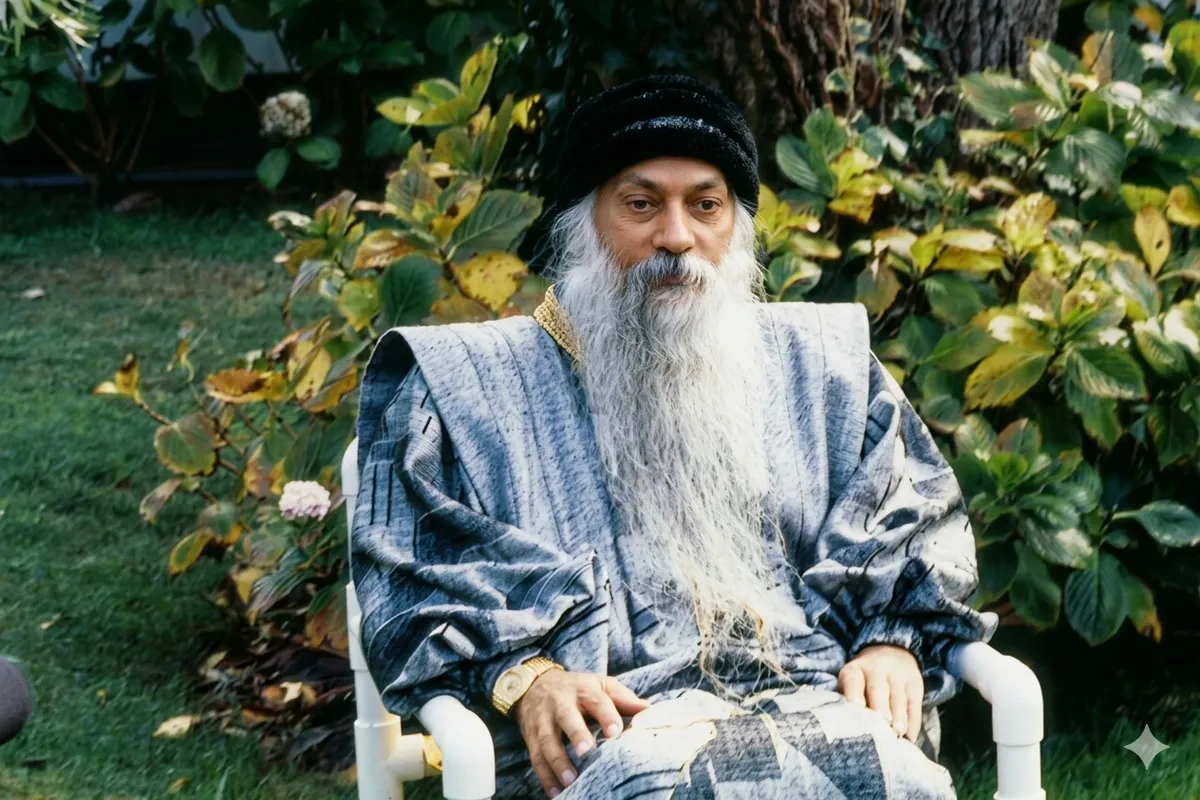
Osho's perspective on Character
When Osho Spoke About Character
Passages from the discourses where this theme comes alive.
Does this mean that character comes from society, or that character comes from right vision?
Character arises from right vision, but it will manifest in society. There are these two aspects in it, aren’t there?
प्रश्न: इसका मतलब चरित्र समाज से आया या सम्यक दर्शन से चरित्र आया?
चरित्र तो आएगा सम्यक दर्शन से, लेकिन प्रकट होगा समाज में। ये दो बातें हैं उसमें न!
All right, so much is said about character—what is your definition of it? Its essential characteristic? Is practicing restraint what you call character? Not looking at a woman—is that called character? Different people say different things about character. What do you say?
Understand me well. I do not call self-restraint character. And one who is afraid to meet a woman’s gaze is without character.
प्रश्न: अच्छा, यह चारित्र्य के बारे में इतना कुछ कहा जाता है, उसके बारे में आपकी डेफिनिशन क्या है? कैरेक्टर स्टीक। संयम करना--उसका नाम चारित्र्य है? किसी औरत के सामने नहीं देखना--उसका नाम चारित्र्य है? अलग-अलग लोग अलग-अलग बात करते हैं चारित्र्य के बारे में। उसके बारे में आपका क्या कहना है?
मेरी बात समझ लीजिए। संयम करने को मैं चारित्र्य नहीं कहता हूं। और जो स्त्री के सामने देखने से डरता है वह चरित्रहीन है।
Question: Osho, about what you have been saying on the Jain perspective, it seems to me that two-thirds of it everyone could agree with, but there is one-third with which agreement is difficult. The first thing you say is about samyak-darshan (right vision). Anyone who has read even a little scripture knows that without right vision, character has no meaning; whatever happens without right vision cannot be called character at all. This view is very clear. And it is also clear that character has no meaning other than self-abidance: to be established in the soul is precisely what character means. On these two points I find myself in agreement with you. But between having right vision and being fully established in the self, in that interval your view seems to me different from the traditional view.
One thing can be right in one situation and can be wrong in another situation -- the same thing. If by a small lie you can save a man's life then how will you decide what is right and what is wrong? You can tell just a small lie, that 'I was not there, I and you were there,' but that can save a human life which may have infinite potential, infinite possibilities, which may blossom. The man may become a Buddha -- who knows? Tomorrow is unpredictable, so is it right to say a lie or wrong? In this situation it is perfectly right to tell a lie, in other situations it would not be right to tell lies. Who is going to decide? -- because ultimately. You have to encounter the situations. You cannot go on carrying the Bible and the Koran and the Vedas and consulting them.
Profound Quotes on Character
Explore our structured collection of meaning-mapped quotes regarding Character.