
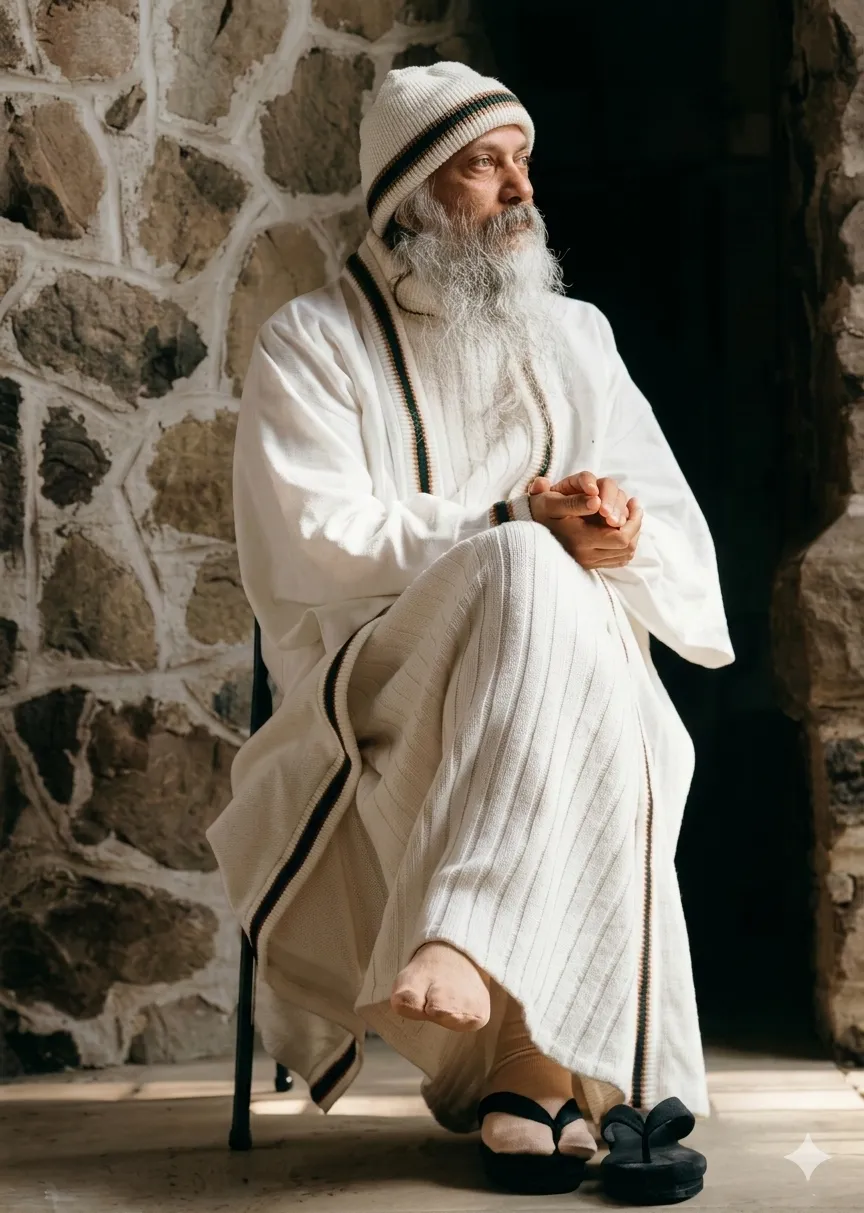
Osho's perspective on Realization
When Osho Spoke About Realization
Passages from the discourses where this theme comes alive.
Osho, you said... then you will find that the devotee is God. The question arises: if one devotee prefers to be God and another wants to remain only a devotee, then which of the two is superior?
The one who wants to be God will not be able to be. And the one who wants to remain a devotee will become God. The question of superior or inferior does not arise, because only one of the two will happen. The one who does not want to be will be. The one who wants to be will be deprived. That very wanting is of the ego. But the matter is a little delicate. Sometimes humility too belongs to the ego. Beware that your humility may not be of the ego. Perhaps you are saying, “No, I don’t want to be,” because you know that those who refuse are the ones who attain. Then you are clever. Then your humility is adulterous. Your humility is not pure, not sacred, not virginal—it is like a prostitute. The one who wants to be God, whose ego says, “I must become God,”…
दूसरा प्रश्न: ओशो, आपने कहा... तब पाओगे कि भक्त ही भगवान है। प्रश्न उठता है कि एक भक्त भगवान होना पसंद करे और दूसरा सिर्फ भक्त रहना चाहे, तो दोनों में श्रेष्ठ कौन है?
जो भगवान होना चाहे वह तो हो न पाएगा। और जो भक्त भक्त ही रहना चाहे वह भगवान हो जाएगा। श्रेष्ठ-अश्रेष्ठ का सवाल नहीं उठता, क्योंकि एक ही हो पाएगा। जो नहीं होना चाहता वही हो पाएगा। जो होना चाहता है, वह तो वंचित रह जाएगा। वह तो चाह भी अहंकार की ही है। लेकिन मामला थोड़ा नाजुक है। कभी-कभी ऐसा होता है कि विनम्रता भी अहंकार की ही होती है। कहीं तुम्हारी विनम्र्रता भी अहंकार की ही न हो। कहीं तुम इसलिए ही न कर रहे होओ कि नहीं मैं नहीं होना चाहता, क्योंकि तुम जानते हो कि जो इनकार करते हैं वही हो पाते हैं। तो तुम चालाक हो। तो तुम्हारी विनम्रता व्यभिचारी है। तो तुम्हारी विनम्रता शुद्ध नहीं, पवित्र नहीं, कुंआरी नहीं, वेश्या जैसी है।
Osho, among the saints some have called the ultimate realization “light,” some “a Holi of colors,” and some “the taste of nectar.” Why this difference?
The difference is not in that ultimate state; the difference is in the experiencer’s mode of sensitivity. Everyone’s sensitivity is different. A blind person, for instance, can also experience the divine—blindness is no obstacle. God is not experienced through your eyes, nor will God be withheld because you lack eyes. Eyes have nothing to do with it. But if a blind person has the experience—say Surdas—then it will not be an experience of light. “Light” is not in his repertoire; it exists nowhere in his felt world, nowhere in his lexicon. But a blind person’s ears are highly attuned. The energy that normally flows through the eyes—about eighty percent of the body’s energy—now becomes available to the ears. That’s why eyes are our most vital organs, and why we feel such deep pity for the blind; not so much for the deaf, the lame, the maimed, or even the mute.…
दूसरा प्रश्न: ओशो, संतों में किसी ने उस परम अनुभूति को प्रकाश कहा है, किसी ने रंगों की होली और किसी ने अमृत का स्वाद। यह भेद क्यों है?
भेद उस परम अवस्था का नहीं है, लेकिन भेद उस परम अवस्था को पहुंचने वाले व्यक्ति की अनुभूति-प्रवणता का है। सबकी अलग-अलग अनुभूति-प्रवणता होती है। अब जैसे अंधे आदमी को भी परमात्मा का अनुभव हो सकता है--कोई अंधेपन से परमात्मा के अनुभव में बाधा नहीं है। न तो तुम्हारी आंखों से परमात्मा का अनुभव हो रहा है, न तुम्हारी आंखों के न होने से परमात्मा का अनुभव रुकेगा। आंख से कुछ लेना-देना नहीं है। लेकिन अगर अंधे आदमी को परमात्मा का अनुभव हो--समझो कि सूरदास को परमात्मा का अनुभव हुआ--तो वह अनुभव प्रकाश का तो नहीं होगा। क्योंकि अंधे के पास प्रकाश शब्द है ही नहीं। उसकी प्रतीति में कहीं नहीं है। उसके भाषाकोश में कहीं नहीं है। लेकिन अंधे आदमी के कान बड़े प्रवण होते हैं। आंखों से जितनी शक्ति बहती है, वह शक्ति भी कानों को मिल जाती है। आंखों से अस्सी प्रतिशत शक्ति बहती है हमारे शरीर की। इसलिए आंखें हमारे शरीर के सर्वाधिक जीवंत अंग हैं। और इसीलिए अंधे पर बहुत दया आती है। …
Lao tzu seems to be the most truthful man, but george gurdjieff used to paint sparrows and sell them as canaries. Lao tzu says to do nothing and realize, gurdjieff says only a superhuman effort will do. Is gurdjieff's realization as great as lao tzu's? How do you explain the difference?
Yes, there are no degrees of enlightenment; either it is or it is not. Lao Tzu and Gurdjieff are both enlightened, and there are no degrees, so nobody is more enlightened and nobody is less enlightened. But their working is different, their time is different, the age they live in is different, the people they have to tackle and the disciples they get are different. Lao Tzu lived in a very primitive world. People were very simple, humble, not tense, not in a hurry -- in fact they had no time sense, they were more natural. Gurdjieff lived in a totally opposite time. Lao Tzu lived in the East and Gurdjieff lived in the West -- and in the twentieth century -- the maddest century ever; almost everybody is neurotic. Gurdjieff had to devise different things for this different type of person. This type of man had not existed in…
Osho, is the experience of the Divine different for each person?
Think of it like this: you go home from this garden, and your children say, “Tell us—what was the garden like?” A painter might tell you by making a painting: “It was like this.” A poet will write a poem—of the trees, of the winds passing through them, of the sun filtering between their leaves. Now a poem and a painting differ greatly. Or perhaps someone is a musician; he will not even write a poem—he will lift his vina. Why write? The winds passed through the trees and there was sound and resonance—he will reproduce that resonance on the vina. The colors in the trees he will translate into tones. The sun and shade he will pour into music. He will play the garden on his vina. Another will write a poem; another will render it on paper. The three expressions will differ. And if you look only at…
तीसरा प्रश्न: ओशो, क्या परमात्मा का अनुभव भी प्रत्येक का अलग-अलग होता है?
ऐसा ही समझो कि इस बगीचे से तुम गए घर, और किसी ने तुमसे कहा--तुम्हारे बच्चों ने कहा कि हमें भी तो कुछ बताओ कि बगीचा कैसा था? जो चित्रकार होगा, वह शायद चित्र बना कर बता देगा कि ऐसा था। जो कवि होगा, वह एक कविता लिखेगा--वृक्षों की, वृक्षों के बीच से गुजरती हवाओं की, वृक्षों के बीच-बीच से छनती सूरज की किरणों की, वह कविता लिखेगा। अब एक कविता में और एक चित्र में बड़ा फर्क है। या हो सकता है कोई संगीतज्ञ हो, वह कविता भी नहीं लिखेगा, वह अपनी वीणा उठा लेगा। क्यों लिखे कविता? हवाएं गुजरती थीं वृक्षों से और आवाज होती थी और नाद पैदा होता था, वह वीणा पर वही नाद पैदा कर देगा। रंग थे वृक्षों में, रंगों को वह ध्वनियों में बदल देगा। धूप-छांव थी, वह धूप-छांव को संगीत में उतार देगा। वह अपनी वीणा पर बजाएगा बगीचे को। कोई कविता में लिखेगा, कोई कागज पर उतारेगा।
What does realization feel like and how can one distinguish it from self-created imagination?
outcomeProfound Quotes on Realization
Explore our structured collection of meaning-mapped quotes regarding Realization.