
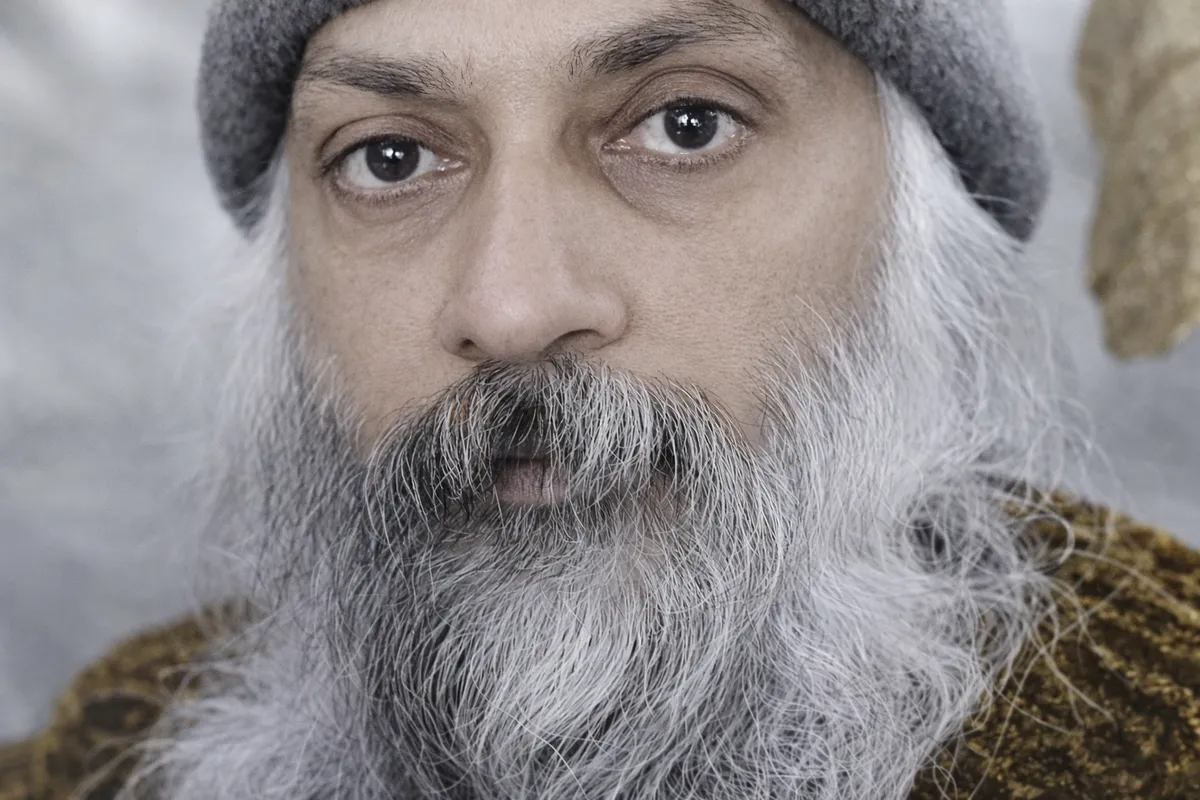
Different saints describe the same truth differently because they experience it through the senses they rely on most—hearing, seeing, or tasting.
From the Discourses
Passages where Osho speaks to this question — each links to the complete discourse.
Osho, among the saints some have called the ultimate realization “light,” some “a Holi of colors,” and some “the taste of nectar.” Why this difference?
The difference is not in that ultimate state; the difference is in the experiencer’s mode of sensitivity. Everyone’s sensitivity is different. A blind person, for instance, can also experience the divine—blindness is no obstacle. God is not experienced through your eyes, nor will God be withheld because you lack eyes. Eyes have nothing to do with it. But if a blind person has the experience—say Surdas—then it will not be an experience of light. “Light” is not in his repertoire; it exists nowhere in his felt world, nowhere in his lexicon. But a blind person’s ears are highly attuned. The energy that normally flows through the eyes—about eighty percent of the body’s energy—now becomes available to the ears. That’s why eyes are our most vital organs, and why we feel such deep pity for the blind; not so much for the deaf, the lame, the maimed, or even the mute.…
दूसरा प्रश्न: ओशो, संतों में किसी ने उस परम अनुभूति को प्रकाश कहा है, किसी ने रंगों की होली और किसी ने अमृत का स्वाद। यह भेद क्यों है?
भेद उस परम अवस्था का नहीं है, लेकिन भेद उस परम अवस्था को पहुंचने वाले व्यक्ति की अनुभूति-प्रवणता का है। सबकी अलग-अलग अनुभूति-प्रवणता होती है। अब जैसे अंधे आदमी को भी परमात्मा का अनुभव हो सकता है--कोई अंधेपन से परमात्मा के अनुभव में बाधा नहीं है। न तो तुम्हारी आंखों से परमात्मा का अनुभव हो रहा है, न तुम्हारी आंखों के न होने से परमात्मा का अनुभव रुकेगा। आंख से कुछ लेना-देना नहीं है। लेकिन अगर अंधे आदमी को परमात्मा का अनुभव हो--समझो कि सूरदास को परमात्मा का अनुभव हुआ--तो वह अनुभव प्रकाश का तो नहीं होगा। क्योंकि अंधे के पास प्रकाश शब्द है ही नहीं। उसकी प्रतीति में कहीं नहीं है। उसके भाषाकोश में कहीं नहीं है। लेकिन अंधे आदमी के कान बड़े प्रवण होते हैं। आंखों से जितनी शक्ति बहती है, वह शक्ति भी कानों को मिल जाती है। आंखों से अस्सी प्रतिशत शक्ति बहती है हमारे शरीर की। इसलिए आंखें हमारे शरीर के सर्वाधिक जीवंत अंग हैं। और इसीलिए अंधे पर बहुत दया आती है। …
Osho, is the experience of the Divine different for each person?
Think of it like this: you go home from this garden, and your children say, “Tell us—what was the garden like?” A painter might tell you by making a painting: “It was like this.” A poet will write a poem—of the trees, of the winds passing through them, of the sun filtering between their leaves. Now a poem and a painting differ greatly. Or perhaps someone is a musician; he will not even write a poem—he will lift his vina. Why write? The winds passed through the trees and there was sound and resonance—he will reproduce that resonance on the vina. The colors in the trees he will translate into tones. The sun and shade he will pour into music. He will play the garden on his vina. Another will write a poem; another will render it on paper. The three expressions will differ. And if you look only at…
तीसरा प्रश्न: ओशो, क्या परमात्मा का अनुभव भी प्रत्येक का अलग-अलग होता है?
ऐसा ही समझो कि इस बगीचे से तुम गए घर, और किसी ने तुमसे कहा--तुम्हारे बच्चों ने कहा कि हमें भी तो कुछ बताओ कि बगीचा कैसा था? जो चित्रकार होगा, वह शायद चित्र बना कर बता देगा कि ऐसा था। जो कवि होगा, वह एक कविता लिखेगा--वृक्षों की, वृक्षों के बीच से गुजरती हवाओं की, वृक्षों के बीच-बीच से छनती सूरज की किरणों की, वह कविता लिखेगा। अब एक कविता में और एक चित्र में बड़ा फर्क है। या हो सकता है कोई संगीतज्ञ हो, वह कविता भी नहीं लिखेगा, वह अपनी वीणा उठा लेगा। क्यों लिखे कविता? हवाएं गुजरती थीं वृक्षों से और आवाज होती थी और नाद पैदा होता था, वह वीणा पर वही नाद पैदा कर देगा। रंग थे वृक्षों में, रंगों को वह ध्वनियों में बदल देगा। धूप-छांव थी, वह धूप-छांव को संगीत में उतार देगा। वह अपनी वीणा पर बजाएगा बगीचे को। कोई कविता में लिखेगा, कोई कागज पर उतारेगा।
So it is. When you reach the shore of the divine and bring the experience back, by the time you get here, the chests you bring—chests of words—have killed it. The experience happens where there is no mind. But to tell of it, you must employ the mind. The very mode of that experience is so different, so unique, that you cannot catch it in words. Go beyond words—it is grasped. Bring it into words—it slips away. Still, the master speaks—not thinking he can convey it by speech, but to arouse thirst. The poet’s folly—yet I say, he did right. At least this much would happen: seeing his eyes, the effort of filling the chest—though he failed—his beloved’s thirst would awaken. A thrill would arise: “I too must go to the seashore. When I am well, I will go.
बस ऐसी ही हालत है। जब तुम जाते हो उस परमात्मा के किनारे, प्रभु-तीरे, उस तट से जब तुम अनुभव लाते हो, यहां तक लाते-लाते, जिन पेटियों में तुम लाते हो--शब्दों की पेटियां--उनमें सब मर जाता है। उसकी अनुभूति उस समय होती है, जब मन नहीं होता। और जब तुम बताते हो, तब मन का सहारा लेना पड़ता है। मन की गवाही, मन का उपयोग करना पड़ता है। इसलिए उस अनुभव की जो उपपत्ति है, वही इतनी भिन्न है, वही इतनी अनूठी है कि उसे तुम शब्दों में नहीं पकड़ पाते। शब्दों के पार जाते हो, तभी वह पकड़ में आती है। और जब शब्दों में लाने की कोशिश करते हो, तभी छूट-छूट जाती है। फिर भी सदगुरु बोलते हैं। इसलिए नहीं कि वे सोचते हैं बोल कर कहा जा सकेगा, बल्कि इसलिए कि बोल कर प्यास जगाई जा सकेगी। अब तुमने यह कवि की मूढ़ता देखी? फिर भी मैं कहता हूं, उसने ठीक ही किया। …
Osho, what does realization feel like? How can a seeker know that something has truly happened? How can one distinguish reality from self-created imagination? How can others recognize the attainment of one who is realized?
You ask: “How can a seeker know that something has truly happened?” When you have a headache, how do you know you have a headache? When I was in school, I had a Muslim teacher—perhaps he is still alive—Rahamuddin, a lovely man, but very strict in one thing: it was almost impossible to get leave from him. He himself never took leave and would not grant it to students. I often needed leave. I would say my stomach hurts, or my head hurts. He said, “Listen, I accept fever; I do not accept stomachache or headache. If you have fever, I can at least take your hand and feel it. But how am I to know whether you truly have a stomachache or headache?” I said, “Since you ask, let me ask you—have you ever had a headache? A stomachache?” He said, “I have.” I said, “What proof can you…
दूसरा प्रश्न: ओशो, उपलब्धि की क्या अनुभूति होती है? कैसे साधक जाने कि वास्तव में कुछ घट गया है? कैसे वह स्व-निर्मित कल्पना से भिन्न वास्तविकता को जाने? कैसे उपलब्ध व्यक्ति की उपलब्धि का अन्य को पता चले?
मैं स्कूल में पढ़ता था। एक मुसलमान शिक्षक थे। शायद अब भी जीवित हैं, रहमुद्दीन उनका नाम था, प्यारे आदमी थे। मगर एक बात में बहुत सख्त थे। किसी तरह उनसे कोई बहाने से छुट्टी लेना मुश्किल था। छुट्टी असंभव ही थी, वे बिलकुल दुश्मन ही थे छुट्टी के। न खुद कभी छुट्टी लेते थे, न किसी विद्यार्थी को छुट्टी लेने देते थे। और मुझे आए दिन छुट्टी की जरूरत रहती। तो मैं कभी कहूं कि पेट में दर्द, कभी कहूं कि सिर में दर्द--उन्होंने कहा कि सुनो! मैं बुखार को मानता हूं, मैं सिरदर्द और पेट दर्द को मानता ही नहीं। क्योंकि बुखार हो तो मैं कम से कम तुम्हारा हाथ हाथ में लेकर देख तो सकूं कि है बुखार, अब यह पेट दर्द और सिरदर्द मैं कैसे समझूं कि हो रहा है असली में कि नहीं हो रहा है? मैंने उनसे कहा कि आप जब पूछते ही हैं, तो मैं आपसे पूछता हूं: कभी आपको सिरदर्द हुआ है या नहीं? पेट दर्द कभी हुआ है कि नहीं? उन्होंने कहा कि हुआ है। तो मैंने कहा कि आप क्या प्रमाण दे सकते हैं उसके होने का? …
The name of that center where all the senses are one is Atman. Go far—go outward—and the senses begin to separate: ear apart, eye apart, nose apart—each segregated. The senses are specialists: the eye only sees, the ear only hears. But when you arrive at the center, there the one who sees is also the one who hears and who tastes. There is the king of all the senses, the master of the senses. All his capacities… Therefore the taste of Samadhi is nectar (amrit). The experience of Samadhi is the fragrance of the Infinite. Samadhi is embrace. Samadhi is the cloudburst of a storm of light. And Samadhi is the unstruck sound (anahat nada). All the senses lay down everything of theirs. The sum of all the senses’ experiences is, of course, unprecedented.