
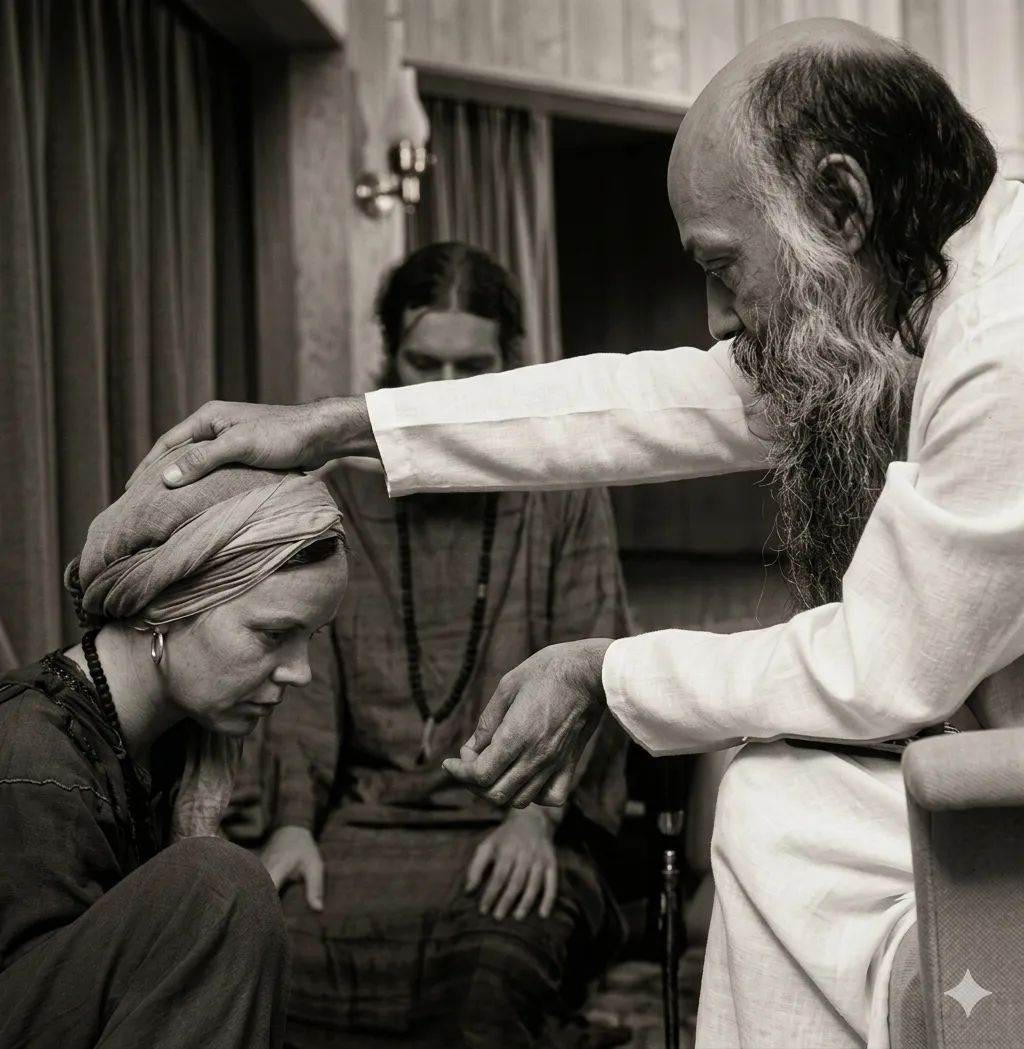
Use thinking only to notice it’s in the way; then drop all thoughts—truth shows up when the mind is still.
From the Discourses
Passages where Osho speaks to this question — each links to the complete discourse.
Osho, you said... then you will find that the devotee is God. The question arises: if one devotee prefers to be God and another wants to remain only a devotee, then which of the two is superior?
The one who wants to be God will not be able to be. And the one who wants to remain a devotee will become God. The question of superior or inferior does not arise, because only one of the two will happen. The one who does not want to be will be. The one who wants to be will be deprived. That very wanting is of the ego. But the matter is a little delicate. Sometimes humility too belongs to the ego. Beware that your humility may not be of the ego. Perhaps you are saying, “No, I don’t want to be,” because you know that those who refuse are the ones who attain. Then you are clever. Then your humility is adulterous. Your humility is not pure, not sacred, not virginal—it is like a prostitute. The one who wants to be God, whose ego says, “I must become God,”…
दूसरा प्रश्न: ओशो, आपने कहा... तब पाओगे कि भक्त ही भगवान है। प्रश्न उठता है कि एक भक्त भगवान होना पसंद करे और दूसरा सिर्फ भक्त रहना चाहे, तो दोनों में श्रेष्ठ कौन है?
जो भगवान होना चाहे वह तो हो न पाएगा। और जो भक्त भक्त ही रहना चाहे वह भगवान हो जाएगा। श्रेष्ठ-अश्रेष्ठ का सवाल नहीं उठता, क्योंकि एक ही हो पाएगा। जो नहीं होना चाहता वही हो पाएगा। जो होना चाहता है, वह तो वंचित रह जाएगा। वह तो चाह भी अहंकार की ही है। लेकिन मामला थोड़ा नाजुक है। कभी-कभी ऐसा होता है कि विनम्रता भी अहंकार की ही होती है। कहीं तुम्हारी विनम्र्रता भी अहंकार की ही न हो। कहीं तुम इसलिए ही न कर रहे होओ कि नहीं मैं नहीं होना चाहता, क्योंकि तुम जानते हो कि जो इनकार करते हैं वही हो पाते हैं। तो तुम चालाक हो। तो तुम्हारी विनम्रता व्यभिचारी है। तो तुम्हारी विनम्रता शुद्ध नहीं, पवित्र नहीं, कुंआरी नहीं, वेश्या जैसी है।
Osho, I too have begun to feel that it is not valuable.
If you decide to do social service—uplift the “Harijan,” redistribute land, do this and that—and you think self-realization will result, you are mistaken. Self-realization will not come from that. You may become a good and popular person; you will taste a subtle pleasure of ego—and nothing more. You will enjoy the pleasure of being “a servant,” but you will not taste the joy of service. The pleasure of the role of “servant” is one thing; the joy of service is entirely another. But if you enter religious practice, which is utterly personal, then a day will come when that sadhana will transform your life into service. Now life is self-interest; then life will be service. In self-ignorance, life is self-centered; whatever you do, some form of self-interest is present. In self-knowledge, life is service; whatever you do, self-interest cannot remain. For me, religion is fundamental; its result will surely come.…
प्रश्न: ओशो, क्योंकि मुझे भी ऐसा लगने लगा है कि मूल्यवान नहीं है।
इसलिए अगर आपने सोचा कि समाज-सेवा करेंगे--कहीं हरिजन-उद्धार करेंगे, कहीं जमीन बंटवाएंगे, कहीं कुछ और करेंगे--अगर आपने यह सोचा और आपने सोचा इससे आत्मा की उपलब्धि होगी, तो आप बिलकुल गलती में हैं। इससे कुछ आत्मा की उपलब्धि नहीं होगी। इससे आप एक अच्छे आदमी, एक सज्जन आदमी बन जाएंगे। आप लोकप्रिय होंगे, आपमें एक सूक्ष्म अहंकार का रस और मजा होगा, और कुछ नहीं होगा। सेवक होने का सुख आप लेंगे, सेवा का सुख न ले पाएंगे। सेवक होने का सुख एक है, सेवा का सुख बिलकुल दूसरा है। लेकिन अगर आप धर्म-साधना में प्रविष्ट होते हैं, जो कि नितांत वैयक्तिक है, तो एक दिन ऐसा आएगा कि वह साधना आपके जीवन को सेवा में परिणत कर देगी। अभी वह जीवन स्वार्थ है, तब वह जीवन सेवा हो जाएगा। आत्म-अज्ञान में जीवन स्वार्थ होता है, आप जो भी करें वहां स्वार्थ किसी न किसी रूप में मौजूद रहेगा। और आत्म-ज्ञान में जीवन सेवा होता है, आप कुछ भी करें वहां स्वार्थ मौजूद नहीं रह सकता है।
Osho: You cannot be open through effort. If you are thinking this, then you have not understood it. Thinking means non-understanding. The person who thinks is a man of non-understanding. A person who knows doesn't think. (much laughter) It is not a question of thinking. He sees, he is aware, but not in thinking. Thoughts are not opening, thoughts are closing; they close your mind. The more you are in a thinking mood, the more you are closed and isolated from the whole. If you are not thinking, if you just are, if you are in a state of being, then something comes. That is not thinking, that is the realization. That is not thinking, you have not thought it. And the more you have thought about it, the less is the possibility for its coming. The known must go for the unknown to come.
A friend has asked: Osho, is the samadhi attained when consciousness is lost a state of swoon? Sri Ramakrishna Paramhansa would lie for days as if near death!
In the West they have invented new ways: even blows are not enough; so they set up many lights, rapidly changing, deafening sound, assorted dances and songs; a completely deranged atmosphere is created. After an hour in that derangement one feels: ah, there is some life, some experience of living! We have died so much that unless the blow is enormous, there is no experience of life. Soft tones we cannot hear at all. Yet the natural tones of life are all soft. We cannot hear the night’s silence, nor the heart’s own beat. Have you ever heard the sound of your blood’s flow? It is very soft; you cannot hear it; but there is a sound. Buckminster Fuller wrote that for the first time he went into a building—a scientific laboratory—completely soundproof, where no sound from outside could enter. Inside he began hearing two kinds of sounds. He asked…
एक मित्र ने पूछा है कि ओशो, चेतना के खो जाने पर प्राप्त समाधि क्या मूर्च्छा की अवस्था है? रामकृष्ण परमहंस कई दिनों तक मृतप्राय अवस्था में लेटे रहते थे!
पश्चिम में उन्होंने नए रास्ते निकाले हैं। केवल चोट से भी काम नहीं चलता, तो बहुत तरह के प्रकाश लगा लेते हैं। प्रकाश बदलते रहते हैं तेजी से। बहुत जोर से शोर मचता रहता है। कई तरह के नाच, कई तरह के गीत चलते रहते हैं। एक बिलकुल विक्षिप्त अवस्था हो जाती है। तब घंटेभर उस विक्षिप्त अवस्था में रहकर किसी आदमी को लगता है, कुछ जिंदगी है; कुछ जीवन का अनुभव होता है! हम इतने मर गए हैं कि जब तक बहुत चोट न हो, तो जीवन का भी कोई अनुभव नहीं होता। धीमे स्वर तो हमें सुनाई ही न पड़ेंगे। और जीवन के नैसर्गिक स्वर सभी धीमे हैं। वे हमें सुनाई नहीं पड़ेंगे। रात का सन्नाटा हमें सुनाई नहीं पड़ेगा। हृदय की अपनी धड़कन हमें सुनाई नहीं पड़ेगी। आपने कभी अपने खून की चाल की आवाज सुनी है? वह बहुत धीमी है; वह सुनाई नहीं पड़ेगी। लेकिन आवाज तो हो रही है। बक मिनिस्टर फुलर ने लिखा है कि मैं पहली दफा एक ऐसे भवन में गया, एक विज्ञान की प्रयोगशाला में, जो पूर्णरूपेण साउंड-प्रूफ थी, जहां कोई आवाज बाहर से भीतर नहीं जा सकती थी। …
THOUGHT CANNOT TRAVEL BEYOND THE KNOWN. No matter how high it may soar it is impossible for it to cross the frontiers of the known. Thought is the source of all that is known and the extent of the known is its whole existence. Thought is the essence of one's past experiences and the memory is its abode. But the memory is dead; it is of the past. And thought is also lifeless. Although the truth is unknown, it is what life really is. And this is why thought can never lead a man to truth. Thought is forbidden to enter the realm of the living, to enter into the unknown. Fish may be able to survive out of water for a few moments, but it is not possible for thought to take even one single step beyond the circle of dead memories that orbit the known.