
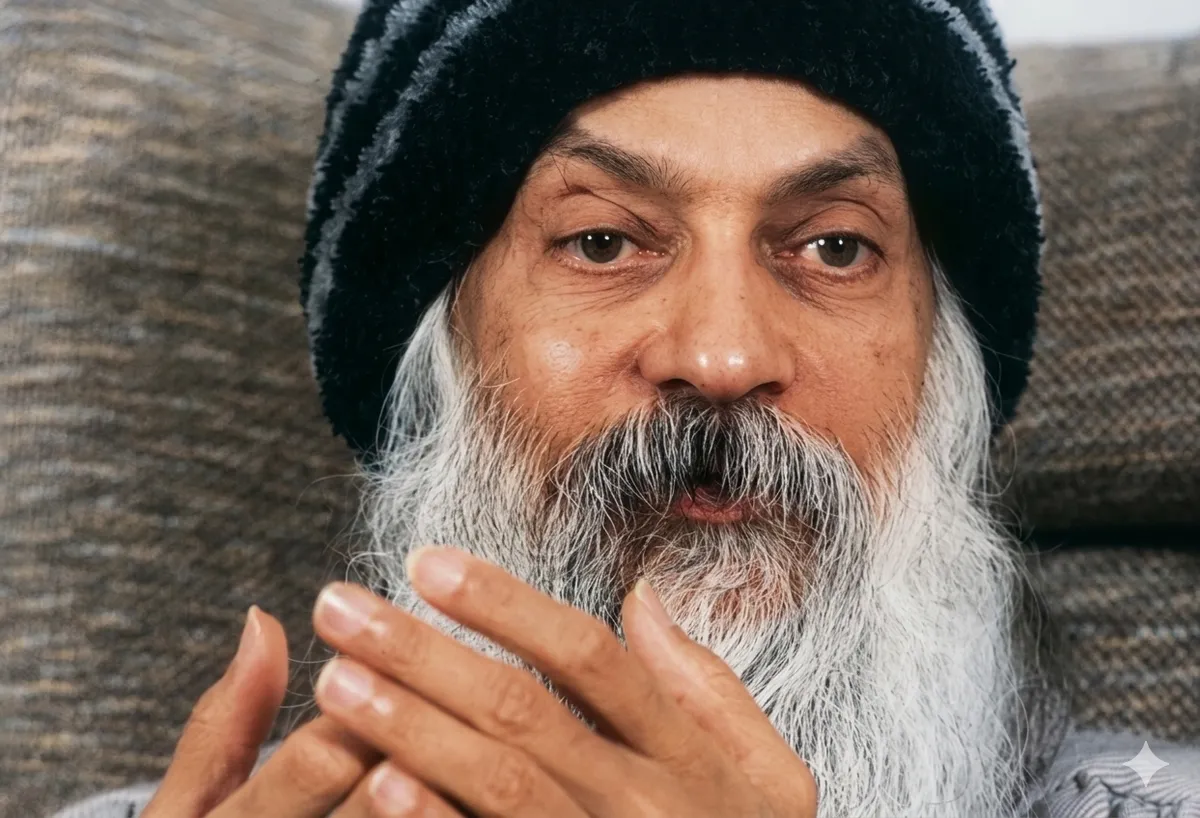
Osho's perspective on Breathing
When Osho Spoke About Breathing
Passages from the discourses where this theme comes alive.
Osho, what effect does deep breathing have on the brain and the nervous system?
As soon as you begin deep breathing, the ratio of carbon dioxide and oxygen in the body changes. The very first thing that shifts is this proportion of carbon dioxide and oxygen within us. And the moment the proportion of carbon dioxide changes, transformation begins throughout the brain, the entire body, the blood, and the nerves—everywhere. For the entire basis of our being rests on specific ratios of oxygen and carbon dioxide. A change in those ratios brings about a total change. That is why I suggested you come separately; that is a technical matter. It may not interest everyone, so I will talk with you about it. Meditation practice and self-hypnosis
प्रश्न: ओशो, डीप ब्रीदिंग का ब्रेन के ऊपर और नर्वस सिस्टम के ऊपर क्या असर पड़ता है?
जैसे ही शरीर में डीप ब्रीदिंग शुरू करेंगे तो कार्बन डाइआक्साइड और ऑक्सीजन की मात्राओं का जो अनुपात है, वह बदल जाएगा। जो मात्रा हमारे भीतर कार्बन डाइआक्साइड की है और ऑक्सीजन की है, उसका अनुपात बदलेगा सबसे पहले। और जैसे ही कार्बन डाइआक्साइड का अनुपात बदलता है वैसे ही सारे मस्तिष्क और सारे शरीर और खून और स्नायुओं में, सब में परिवर्तन शुरू हो जाएगा। क्योंकि हमारे व्यक्तित्व का सारा आधार ऑक्सीजन और कार्बन डाइआक्साइड के विशेष अनुपात हैं। उनके अनुपात में परिवर्तन सारा परिवर्तन ले आएगा।
Another friend has asked: Can the intense breathing be continued across all three stages?
It depends on you. In the first stage it is to be maintained—this is a must. For those ten minutes do not drop it. After that it depends on you. If it feels comfortable, you can continue it in the remaining two stages, or in one of them. In the fourth stage it is not to be continued—this is a must-not. In the first stage you must continue it; in the fourth stage you must not. In the other two stages it is a matter of your personal convenience. If you feel you can keep deep breathing along with dancing, jumping, shouting—keep it. If you can keep it while asking “Who am I?”—keep it. But in the second stage the emphasis will be on jumping, dancing, crying and shouting; the breath will be secondary, not primary. In the third stage the inquiry “Who am I?” will be primary; the breath…
एक और मित्र ने पूछा है कि क्या तीव्र श्वास को तीनों चरणों में जारी रखा जा सकता है?
आप पर निर्भर है। पहले चरण में रखना ही है, वह मस्ट। पहले चरण में छोड़ना नहीं है दस मिनट। उसके बाद आप पर निर्भर है। अगर आपको सुविधापूर्ण लगे तो आप बाकी दो चरणों में या एक चरण में जारी रख सकते हैं। चौथे चरण में जारी नहीं रखना है, वह मस्ट नॉट। पहले चरण में जारी रखना ही है, चौथे चरण में जारी नहीं रखना है। बाकी दो चरणों में आपकी निजी सुविधा की बात है। आपको लगे कि आप नाचने, कूदने, चिल्लाने के साथ गहरी श्वास जारी रख सकते हैं, रखें। ‘मैं कौन हूं?’ पूछने के साथ रख सकते हैं, रखें। …
Is your technique of fast breathing a sudden technique or a gradual one?
It is gradual! It is gradual! Really, sudden techniques cannot be given publicly. They cannot be given! And for sudden techniques one has to bracket the whole life out, because for sudden techniques your totality will be needed. For gradual techniques your totality is not needed. You can do them for one hour and then remain in the world for twenty-three hours. But for sudden techniques your totality will be needed; you cannot be allowed to do anything else. So the whole life has to be just bracketed out, and you have to be totally for the technique. The whole consciousness must be prepared for it because even a single part remaining unprepared will prove dangerous -- and anything can prove dangerous because the moment is so potential. The moment is so potential, you must be purified of all that goes on around you. So you have to bracket --…
Questioner: how is it that the body begins to feel light after deep and fast breathing?
It is true that the body will feel light after this meditation. It will be so because our consciousness of body is one of heaviness. What we call heaviness is nothing more than our awareness of the body. The body weighs heavy on a sick person even if he is skinny and wiry. But a healthy person, even if he is a heavyweight, carries his body very lightly. So it is really our body-consciousness which feels like a weight on us. And we become conscious of our body only when it is in pain, when it is suffering. We become conscious of our feet when they are hurting. We become aware of our head when it is aching. If there is no body pain, we are never aware of our body. This consciousness is the measure of our suffering. We define a healthy person as one who feels as if…
What happens when more oxygen than necessary enters the lungs through vigorous and deep breathing?
outcomeProfound Quotes on Breathing
Explore our structured collection of meaning-mapped quotes regarding Breathing.