
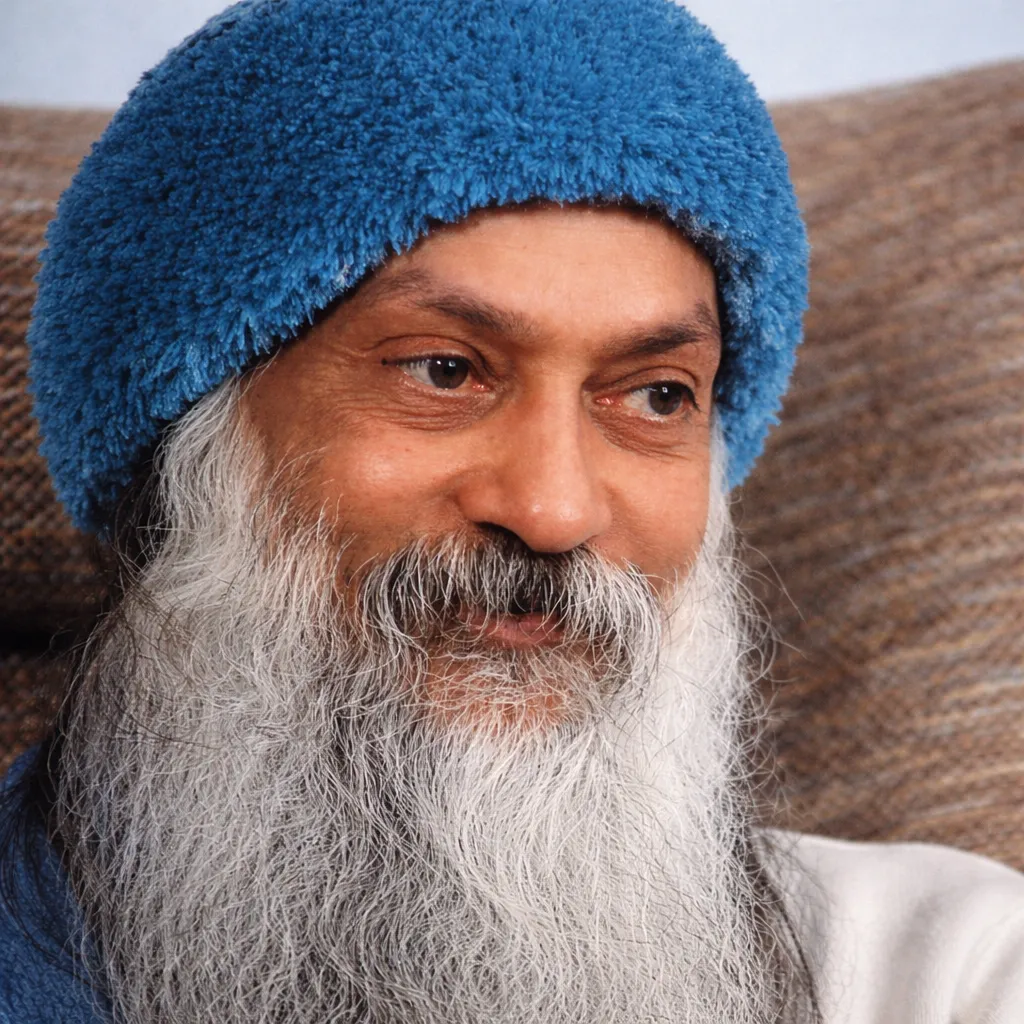
Osho's perspective on Stages
When Osho Spoke About Stages
Passages from the discourses where this theme comes alive.
Does one experience various things in this fourth stage?
Experience, as such, is psychic. There is no such thing really as "spiritual experience." It is only a gap. The experiencer is not there, so you cannot use the terminology of experience. You experience a moment which is of no-experience. As far as language can indicate it, I can only say that it is a gap. Every type of indication is bound to be negative. Language is for events, it is not for silence. If I try to express what happens in meditation through the medium of language, the terms I will use will depend on me -- and one term will be as meaningless as any other because the experience cannot be indicated by words. So you may call it Brahman, you may call it nirvana, or anything you like, but it will just be a choice between different names. Every name is as meaningless as any other, so…
Osho, once the fourth stage has happened, will the first three stages fall away?
Now, someone has stolen; he will be afraid to inquire, “Who am I?” Because the mind will say, “You are a thief.” It may blurt out loudly: “You are a thief, you are dishonest, you are a black-marketeer.” It might come out. So he will say, “Shall I ask or not? Ask very, very softly, ‘Who am I?’” Because he knows who he is—“I am a thief.” So he is repressing it. He is afraid; he asks softly so the person next to him will not hear. Lest it slip out of his mouth, “I have stolen!” It can come out; there is not much difficulty in that. So we have our reasons—reasons behind our asking—why we want these to drop quickly, not to have to do them. But no, not by dropping. They will have to be done. They can drop, but they will drop by doing. And whatever…
प्रश्न: ओशो, चौथा चरण हो जाने के बाद पहले तीन चरण छूट जाएंगे?
… जरा धीरे-धीरे पूछो कि मैं कौन हूं! क्योंकि पता तो है कि मैं कौन हूं! मैं चोर हूं। तो वह दबा रहा है उसे। तो वह डर रहा है, वह धीरे-धीरे पूछ रहा है कि यह बगलवाले को कहीं सुनाई न पड़ जाए! कहीं यह मुंह से निकल जाए कि मैंने चोरी की है! यह निकल सकता है, इसमें कोई कठिनाई नहीं है बहुत। तो हमारे कारण हैं, हमारे पूछने के कारण हैं कि हम क्यों पूछते हैं कि ये जल्दी छूट जाएं, न करने पड़ें। लेकिन नहीं, छूटने से नहीं। करने ही पड़ेंगे। …
A woman asks: with the attainment of the fourth will the first three stages drop off?
It is because of these repressions that we are afraid; we are afraid of their being exposed. We are afraid lest we should speak out something that we don't want to say, that we don't want others to know. Now if someone has committed theft, it is just possible that when he asks "Who am I?" he might blurt out that he is a thief, a crook, a black-marketeer. So he is afraid of asking the question "Who am I?" And even if he asks it he does it in a faint voice, be cause he knows that he is a thief. He is afraid and so he suppresses the question. He does not want persons sitting by his side to hear it if he blurts out that he is a thief. And he can blurt it out, there is not much difficulty about it. So there are good reasons…
To my mind the real sanity is that which comes after the transcendence of madness. Then there is neither the question nor the answer. The mind becomes calm and quiet. Then the fourth stage is reached. It comes only when you have come to the peak, to the height of tension. Then comes Relaxation. Having gone through the previous three stages each for ten minutes, for the next ten minutes or more just relax, and remain just as you are, without doing anything, because you are tired completely--The policy of 'LET GO' is achieved as an automatic process. The fourth step is the moment of doing nothing. That I call dhyana, meditation. The first three stages are steps only, the fourth is the door. Then you are there without breathing or movement. Just silence! This fourth step comes of its own accord and in these moments comes Grace.
Profound Quotes on Stages
Explore our structured collection of meaning-mapped quotes regarding Stages.