
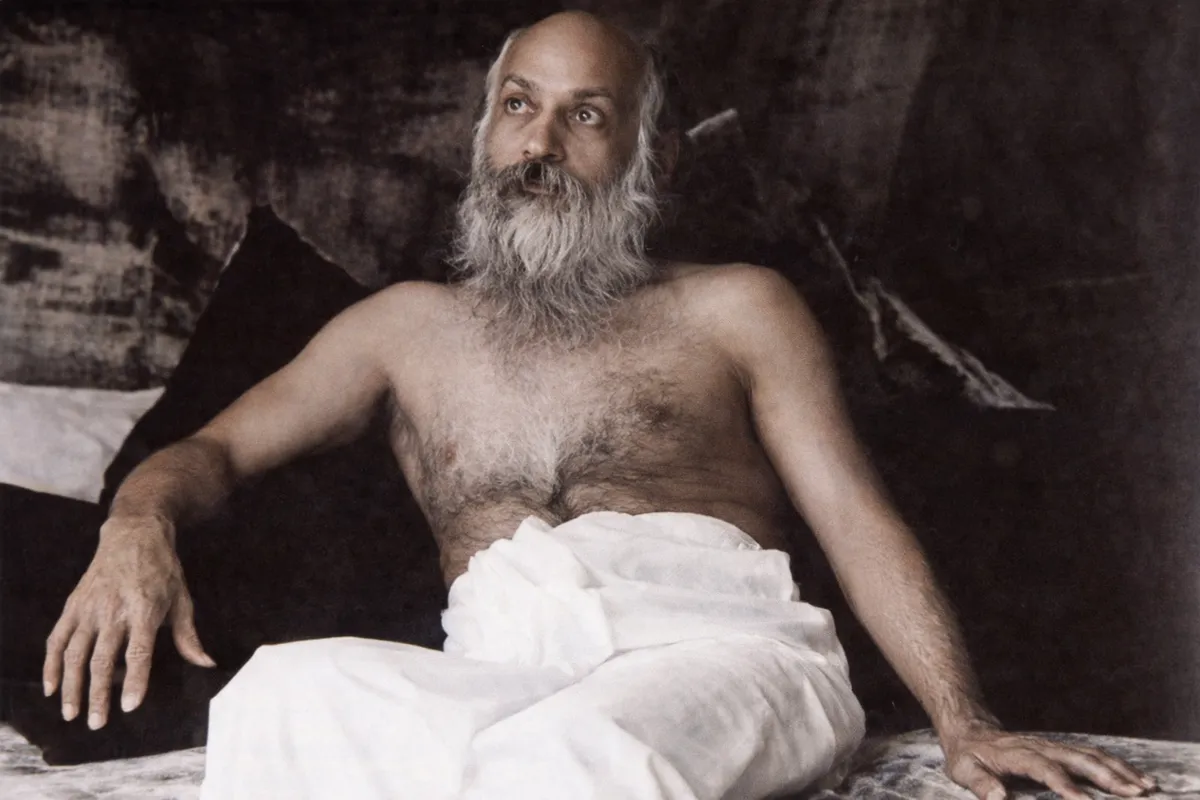
Breathing very deeply clears out stale air and fills you with fresh air, making you feel more alive, healthy, and clear.
From the Discourses
Passages where Osho speaks to this question — each links to the complete discourse.
Questioner: it is likely that through deep and in tense breathing an excess of oxygen enters the lungs of the seeker causing him great harm. What do you say?
Actually, no person uses his lungs fully while breathing. There are roughly six thousand air sacs in a person's lungs, out of which hardly fifteen to twenty hundred sacs are filled with oxygen if the person happens to be very healthy and he breathes normally. The rest of the air sacs are filled with carbon dioxide, which is another name for filth. Therefore it is difficult to find a man who takes in more oxygen than is necessary. One who takes in the necessary amount of oxygen is also rare. A major part of our lungs remains unused. It would be really a great thing if you can fill your whole lungs with oxygen; it will lead to great expansion of your consciousness. How expansive your life is can be known from the amount of oxygen you carry in your lungs. The more oxygen, the more life. And if you…
Osho, in the Buddhist practice of anapanasati, when one meditates on the breath, what effect does it have on the amount of oxygen?
A great deal. In fact—this is very amusing and worth understanding—whatever functions of life there are, if you take your attention to any one of them, its speed increases. The functions of life are going on outside your attention. For example, your pulse is beating. When your doctor checks your pulse, it is not exactly what it was before he checked; it goes up a little, because your attention and the doctor’s—both—have gone to it. And if a lady doctor is checking, it will go up even more; because even more attention goes there. You understand, don’t you? It isn’t exactly what it was; a slight difference appears. Try this experiment: first check your own pulse; then keep your attention on the pulse for ten minutes—how it is beating—and check again; you will find its vibrations have increased. In truth, whatever processes are running inside the body are running outside…
प्रश्न: ओशो, बुद्धिस्ट साधना में जो अनापानसती है, उसमें श्वास पर ध्यान करने से ऑक्सीजन की मात्रा पर क्या असर पड़ता है?
बहुत असर पड़ता है। असल में--यह बहुत मजे की बात है और समझने जैसी है--जीवन की जो भी क्रियाएं हैं, इन में किसी पर भी अगर तुम ध्यान ले जाओ, तो उनकी गति बढ़ जाती है। जीवन की जो क्रियाएं हैं वे ध्यान के बाहर चल रही हैं। जैसे तुम्हारी नाड़ी चल रही है। तो जब तुम्हारा डाक्टर तुम्हारी नाड़ी जांचता है, तो वह उतनी ही नहीं होती जितनी जांचने के पहले थी, थोड़ी सी बढ़ जाती है; क्योंकि तुम्हारा ध्यान और डाक्टर--दोनों का ध्यान उस पर चला जाता है। और अगर लेडी डाक्टर जांच रही है तो और ज्यादा बढ़ जाएगी; क्योंकि ध्यान और ज्यादा चला जाएगा। समझ रहे हैं न? उतनी ही नहीं होती, जितनी थी; थोड़ा सा अंतर पड़ जाता है। इसको तुम ऐसा भी प्रयोग करो: अपनी नाड़ी ही जांचो पहले; और फिर दस मिनट नाड़ी पर ध्यान रखो कि वह कैसी चल रही है, और इसके बाद जांचो; तो तुम पाओगे: उसके कंपन बढ़ गए।
Osho: No, no, not at their expense. Tell them about this method. They themselves will feel it. They will certainly feel the change, the transformation. Let them practise it--just as an experiment with their disturbed mind, their doubts. Let them experiment, just as an experiment. If 'something' happens, then the practice goes by itself. There is no need to convince them. And, the anarchy that is within must be exploded. It should not be stilled or cramped down. It must be expressed in total intensity. The calmness, the serenity, the Nirvana comes not by stilling the mind but by explosion. Then the stillness comes but it is not a cultivated composure. Express what you are, totally. Of course that means madness, because we are mad. So, if you express it, the madness will come out. Even you yourself will feel strange about it, unknown to yourself.
Osho, you have spoken of the four steps of meditation; please explain the full meaning of all four.
First, understand this clearly: three are only steps, not meditation; meditation is the fourth. The gateway is the fourth; the first three are only steps. Steps are not the door; they lead to the door. The fourth alone is the door—rest, pause, emptiness, surrender, dying, dissolving—that is the door. And the three steps lead you to that door. The fundamental basis of those three steps is one: if you want to enter rest, it becomes very easy after going into total tension. Just as a person who labors all day can sleep at night. The more the labor, the deeper the sleep. Someone may ask, “But labor and sleep are opposites; how can labor lead to sleep? The one who has worked all day should not be able to sleep!” And the one who has lazed on the bed all day should sleep! But the one who stayed in bed…
ओशो, ध्यान की चार सीढ़ियों की बात की है; उन चारों का पूरा-पूरा अर्थ बताएं।
पहली बात तो यह समझ लें कि तीन सिर्फ सीढ़ियां हैं, ध्यान नहीं; ध्यान तो चौथा ही है। द्वार तो चौथा ही है, तीन तो सिर्फ सीढ़ियां हैं। सीढ़ियां द्वार नहीं हैं, सीढ़ियां द्वार तक पहुंचाती हैं। चौथा ही द्वार है--विश्राम, विराम, शून्य, समर्पण, मर जाना, मिट जाना, द्वार तो वही है। और तीन जो सीढ़ियां हैं वे उस द्वार तक पहुंचाती हैं। वे तीन सीढ़ियों का मौलिक आधार एक है कि यदि विश्राम में जाना हो तो पूरे तनाव में जाने के बाद बहुत आसान हो जाता है। जैसे कोई आदमी दिन भर श्रम करता है तो रात सो पाता है। जितना श्रम, उतनी गहरी नींद। अब कोई पूछ सकता है कि श्रम करने से नींद तो उलटी चीज है। तो जिसने दिन भर श्रम किया है उसे तो नींद आनी ही नहीं चाहिए, क्योंकि श्रम और विश्राम उलटी चीजें हैं। विश्राम तो उसे आना चाहिए जो दिन भर बिस्तर पर पड़ा रहा और विश्राम करता रहा! लेकिन दिन भर जो बिस्तर पर पड़ा रहा, वह रात सो ही न सकेगा। इसलिए दुनिया में जितनी सुविधा बढ़ती है, जितना कम्फर्ट बढ़ता है, उतनी नींद विदा होती जाती है। …