
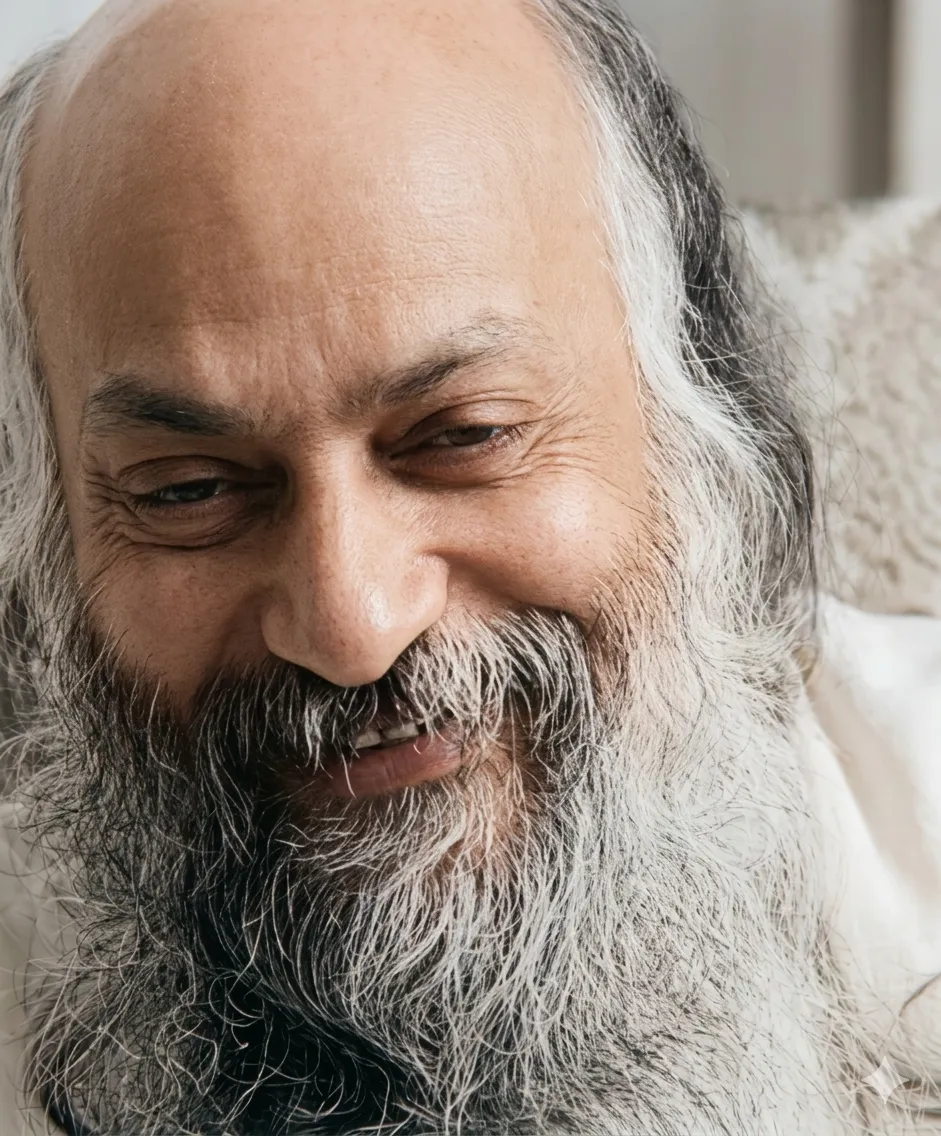
Osho's perspective on Body
When Osho Spoke About Body
Passages from the discourses where this theme comes alive.
Osho, if the fifth body becomes available while the physical body is still alive, then after death in which body will that person be born?
After the fifth body—if the fifth body has become available in the human body, and the fifth body never becomes available without awakening; if you have awakened in the fifth body (without awakening it does not become available)—then obtaining the fifth body and awakening are one and the same. Then you no longer need the earlier bodies; now you can function from the fifth body itself. You are an awakened person; now there is no difficulty. Now the earlier bodies are not needed. This question remains only up to the fourth body, always. If in the fourth body a man becomes a deva—the fourth body has become active and awake. If the fourth body remains inactive, asleep, he becomes a preta (a ghost). In both situations you will have to return, because you have not yet come to any knowing of your own nature; as yet, even to inquire into…
In order to keep his body alive, ramakrishna had to rely on the craving for food. Is it not possible for a high level body to exist without any such craving? In which body does such assistance become necessary? If the bodies are of the higher states -- such as the fifth, sixth, or the seventh body -- would they be required to be maintained with the aid of any such craving as well?
Ramakrishna was very fond of food -- excessively. One might say he was crazy after food. Even in the middle of a profound religious discussion he would walk to the kitchen and ask his wife Sharada what she was cooking for dinner. Then he would come back and resume the discussion. This caused aggravation not only to Sharada, but to his close devotees as well. The devotees were concerned that if word got around of their master's weakness for food, it would create a scandal. Actually, disciples are always greatly worried about their master! They are always very nervous lest their master's name be dragged into disgrace. So finally they said to Ramakrishna, "Your all of a sudden dropping a serious discussion for the sake of food does not look good upon you. And why should the food matter so much for a man of your stature?" What Ramakrishna said…
If the fifth plane is attained in the physical body, in which form is the person reborn after his death?
To attain the fifth body and to be awakened is one and the same thing. Then you no longer need the initial bodies. Now you can work from the fifth plane; now you are an awakened person. Hence, there is no difficulty. The initial bodies are required only up to the fourth body. If the fourth is activated and awakened the person becomes a deva -- a heavenly soul. If the fourth lies idle and asleep the person enters the realm of the pretas -- the evil spirits. You will have to return to the human form from both of these states, because you have no idea of your identity as yet. And in order to know your identity you must still have a need for the other. Only with the help of the other will you be able to know yourself. Right now to know yourself you need the…
Osho, as long as we are identified with the body, we don’t really care for it; we only use it as a means to gratify our ego. But as that identification lessens, a new recognition arises, a new feeling of friendship toward the body. Why this paradox?
As a person becomes more silent, the feeling of enmity begins to drop. It’s not a question of toward whom; the very vibration of hostility starts falling from within. A blissful person can feel only friendliness. As your meditation deepens, you will feel you have become friendly with everyone. Those who were yours remain yours; those who were strangers also become yours. The ignorant, however identified they may be with the body, still regard it as other. And however much they live in the body, they live with an inner enmity toward it. You may adorn the body as much as you like, yet inside there is a kind of hostility. You may not recognize it, but you are an enemy of the body. And that enmity can be fulfilled in two ways. One way is to make the body a means of indulgence. Then you will only destroy it.…
प्रश्न: ओशो, जब तक शरीर से तादात्म्य होता है, तब तक तो हम शरीर की कोई फिक्र नहीं करते। उसे अपना अहंकार तुष्ट करने का साधन ही बनाते हैं। लेकिन यह तादात्म्य जैसे-जैसे कम होता जाता है, वैसे-वैसे शरीर के प्रति एक नई पहचान, एक नए मैत्री-भाव का उदय होता है। ऐसा विरोधाभास क्यों है?
जैसे-जैसे कोई व्यक्ति शांत होगा, वैसे-वैसे शत्रुता का भाव गिरने लगता है। यह सवाल नहीं है, किसके प्रति? शत्रुता का भाव भीतर से गिरना शुरू हो जाता है। आनंदित व्यक्ति केवल मैत्री का ही भाव कर सकता है। जैसे तुम्हारा ध्यान गहरा होगा, वैसे ही तुम्हें लगेगा, सबसे तुम्हारी मैत्री हो गई। जो अपने थे, वे अपने रहे; जो पराए थे, वे भी अपने हो गए। शरीर, अज्ञानी कितना ही तादात्म्य रखता हो, उसे पराया मानता है। और अज्ञानी कितना ही शरीर में जीता हो, शरीर की शत्रुता से जीता है। तुम भला कितना ही शरीर को सजाते हो, लेकिन भीतर तुम्हारे शरीर के साथ एक दुश्मनी बनी है। वह तुम्हें पहचान में न आती हो, लेकिन तुम शरीर के शत्रु हो। और शत्रुता दो तरह से पूरी की जा सकती है।
Is there a counterpart to it in the body?
definitionIs there no body?
definitionWhat is the significance of the sixth body?
definitionProfound Quotes on Body
Explore our structured collection of meaning-mapped quotes regarding Body.