
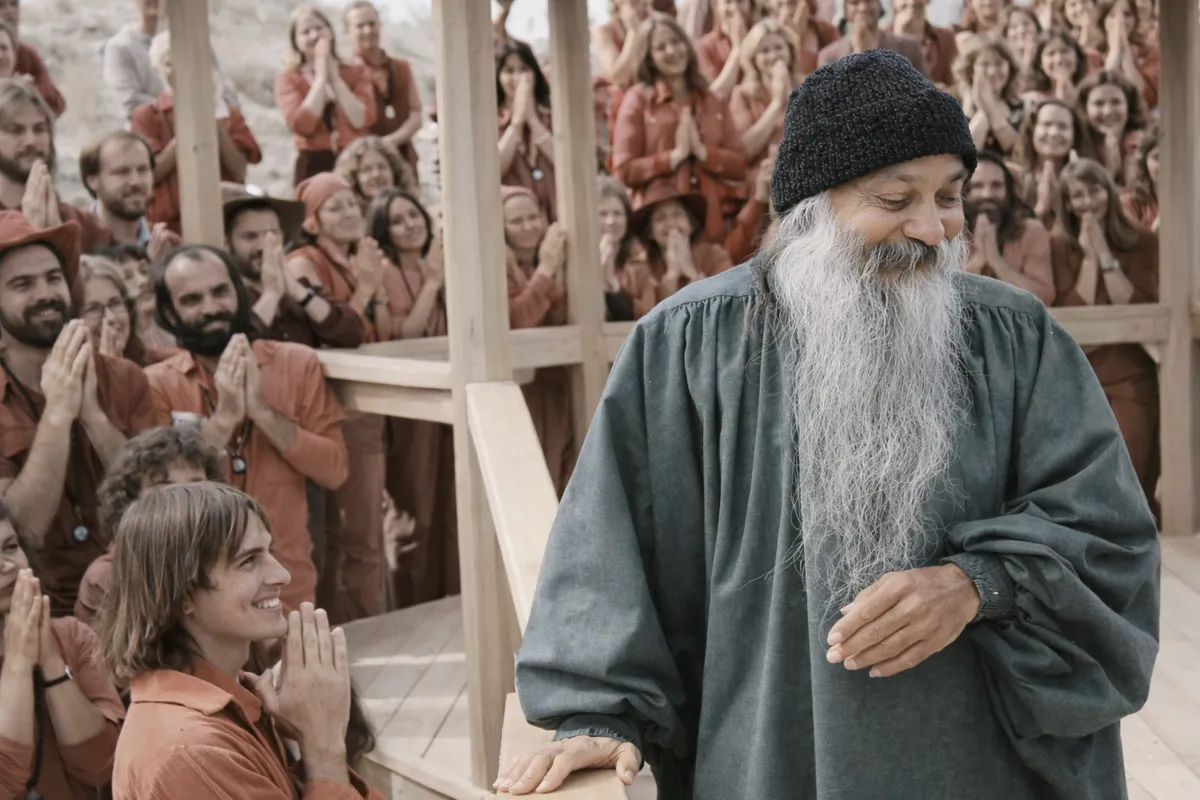
Zen says don’t depend on books—experience truth yourself, fresh and directly.
From the Discourses
Passages where Osho speaks to this question — each links to the complete discourse.
Osho, a question arises in my mind. Last night you said some things about the scriptures. It seemed to me that whatever you say could also be found in the scriptures. And what you are saying is itself gradually becoming a scripture. And what you say about the scriptures will apply verbatim to what you yourself have said as well. One who can see will see it here too; one who cannot see will not see it here either. And one who can see will also see it in the ancient scriptures, while the one who cannot see will not see it there either. Then there remains no purpose in criticizing them.
If this much becomes clear to us, then you will see I am not condemning scripture; I am stating the factual situation of scripture. And what you say is right: much of what I say will be found in the scriptures—not because it is there, but because you will have understood me. If my words have been understood by you, you will find them in the scriptures, because in scripture you will find only what your understanding is. Whatever your understanding is, that is what you will find—because we project our own understanding into scripture. Ordinarily we think that understanding comes out of scripture. It does not. We put our understanding into the scripture. That is why a thousand commentaries on the Gita are possible. If understanding came out of the Gita, how could there be a thousand commentaries? And if Krishna had a thousand meanings, then Krishna’s mind must…
Osho, you said that scriptures and religious texts are of no use—except after enlightenment. Please explain this clearly. It is generally held that after enlightenment there is no need for any scripture.
When Buddha first attained enlightenment, he came to Kashi. He stayed under a tree outside the city. No one knew him then, no one recognized him. He was an insignificant, unknown, unfamiliar beggar—a bhikkhu. The king of Kashi, much troubled and anxious one evening, went out in his chariot for some air. As he left the town, the sun’s rays were slanting; Buddha was sitting, leaning against a tree, sunlight on his face. The king said to his charioteer, “Stop, stop! This man is something extraordinary—so luminous, so peaceful! I have never seen eyes so full of music, so full of joy! Stop; let me go near him a little.” As when you pass a garden brimming with fragrance and you feel like pausing a while; or when, parched by the sun, you come under the shade of a great banyan and feel to rest awhile—so it happened to that…
Question: BELOVED OSHO, BEFORE SEEKING YOU'VE INDICATED YOU WANT ME TO INSTRUCT YOU BY LETTER IN THE DIRECT ESSENTIALS. THIS VERY THOUGHT OF SEEKING INSTRUCTION IN THE DIRECT ESSENTIALS HAS ALREADY STUCK YOUR HEAD INTO A BOWL OF GLUE. THOUGH I SHOULDN'T ADD ANOTHER LAYER OF FROST TO THE SNOW, NEVERTHELESS WHERE THERE'S A QUESTION IT SHOULDN'T GO UNANSWERED. I ASK YOU TO ABANDON AT ONCE ALL THE JOY YOU'VE EVER FELT IN READING THE WORDS OF THE SCRIPTURES YOURSELF OR WHEN BEING AROUSED AND INSTRUCTED BY OTHERS. BE TOTALLY WITHOUT KNOWLEDGE AND UNDERSTANDING, AS BEFORE, LIKE A THREE-YEAR-OLD CHILD. THOUGH THE INNATE CONSCIOUSNESS IS THERE, IT DOESN'T OPERATE. THEN CONTEMPLATE WHAT'S THERE BEFORE THE THOUGHT OF SEEKING THE DIRECT ESSENTIALS ARISES: OBSERVE AND OBSERVE.
Osho, why do you liken devotion to love? Is there no other apt analogy?
I know why this question has arisen in you. For centuries your so‑called religious people have condemned love—called it base, impure, a sin. Hence you feel, “Wouldn’t some other analogy be better?” Somewhere within you there is condemnation of love—rejection, fear. I understand you—and I understand your so‑called saints as well. But the one who fears love has not understood love; the fear has arisen out of ignorance. The one who is afraid of the courtyard has not understood it. The courtyard had walls—and it had the sky; he focused on the walls and forgot the sky. I want you to focus on the sky and forget the walls. The walls are there and will remain. Man is encased in the wall of body; as long as you have a body, there will be walls. How will they disappear? You cannot get rid of even your own wall—how will you…
The zen master mu-nan had only one successor. His name was shoju.
AFTER SHOJU HAD COMPLETED HIS STUDY OF ZEN, MU-NAN CALLED HIM INTO HIS ROOM AND SAID, "I AM GETTING OLD, AND AS FAR AS I KNOW YOU ARE THE ONLY ONE WHO WILL CARRY ON THIS TEACHING. HERE IS A BOOK. IT HAS BEEN PASSED DOWN FROM MASTER TO MASTER FOR SEVEN GENERATIONS, AND I HAVE ALSO ADDED MANY POINTS ACCORDING TO MY UNDERSTANDING. THIS BOOK IS VERY PRECIOUS, AND I AM GIVING IT TO YOU TO REPRESENT YOUR SUCCESSORSHIP." SHOJU REPLIED, "PLEASE KEEP THE BOOK. I RECEIVED YOUR ZEN WITHOUT WRITING, AND I WAS VERY HAPPY WITH IT, THANK YOU." MU-NAN REPLIED, "I KNOW THAT, BUT THIS GREAT WORK HAS BEEN CARRIED FROM MASTER TO MASTER FOR SEVEN GENERATIONS, AND IT WILL BE A SYMBOL OF YOUR LEARNING. HERE, TAKE THE BOOK." THE TWO WERE TALKING IN FRONT OF A FIRE, AND THE INSTANT SHOJU FELT THE BOOK IN…