
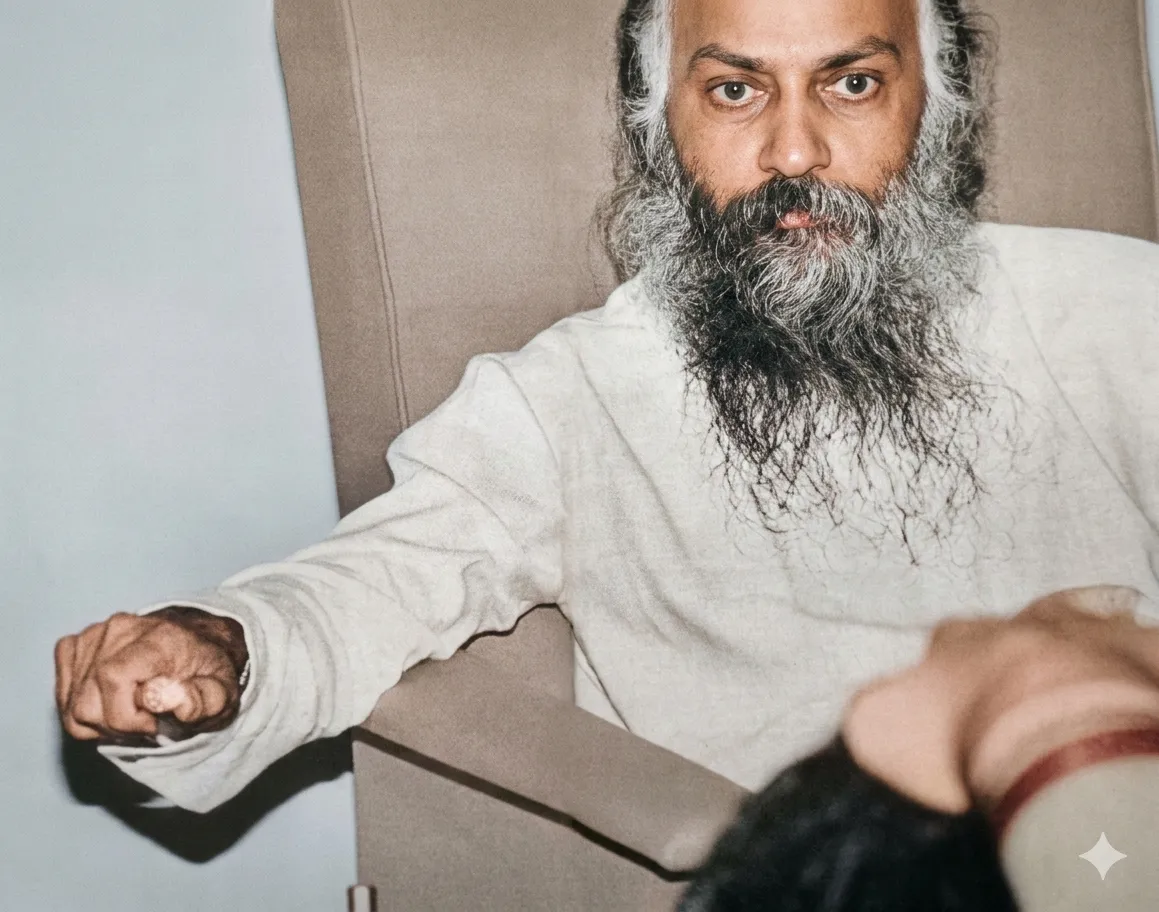
Osho's perspective on Memory
When Osho Spoke About Memory
Passages from the discourses where this theme comes alive.
Beloved Osho, are there two kinds of memories, a factual memory, and a spiritual memory? If yes, is there a connection between them?
It seems there is an automatic reversal process. You have to reverse a tape, but your brain reverses immediately. When you put the needle on the dream center again it starts from A B C, not from the point where it has stopped. If you take the needle away again, it reverses so quickly that no time is lost. Put the needle back and it starts from A B C again. If the man was saying, "I am Alexander the Great..." -- if you have touched his past life memory center and he was saying, "I am Alexander the Great," and if you take the needle away and put it back again, he will again start with, "I am Alexander the Great." Your brain contains all the memories, psychological memories of your past lives. But the more you meditate, the more you go on erasing all psychological memories. Begin first…
Questioner: what is the place of memory in what you call a sequential life and in a life of spontaneity?
While a life with sequence follows its memory like a slave, a spontaneous life uses it like a master. This is the difference. If you live a natural life, if you are renewed from moment to moment, it does not mean your memory is wiped out -- it is rightly stored in your mind, and you can use it as you like. It is as if many things are stored in the basement of your house and you can take out anything you need from this store. That is why Buddha has called it an agaar, a storehouse of memories, of consciousness. One who lives spontaneously also needs his memory. If he is in town and wants to return to his house in the evening, it is his memory of the house and the way to it that will enable him to do so. And he will use it rightly.
Why can I remember the useless things for years, but not the essential ones? I forget the essential almost immediately.
The essential ones are against your mind. The mind is continuously afraid of allowing any truth to enter you. It finds a thousand and one ways to avoid the truth, because the truth is going to shatter it. It allows only that which is supportive. And because mind itself is rubbish, it collects rubbish, and very joyously. What Buddha has said will be forgotten. Buddha used to repeat each statement three times. Once somebody asked, "Why do you repeat three times?" He said, "Because I know, the first time you don't hear at all. The second time you hear, but you hear something else that I have not said. The third time I hope that you hear that which is said, exactly that which is said." It is very difficult to read Buddhist scriptures, because each statement repeated three times becomes very tiring. So now they have invented a device:…
Osho, when it happens—when the leap takes place—will memory completely vanish, go far away? But words should still be remembered, right? Technical words, technical education—these should remain in this process.
So today when you come, I will see you—not the one who abused me yesterday. Where is he now? Much water has flowed down the Ganges. For all I know, you may be coming to ask forgiveness, and I am thinking you are the same man who abused me. Who knows what you have become in twenty-four hours! In twenty-four hours one has no certainty about oneself—how can one have certainty about another? So memory is a corrupting element. If you identify yourself with it, you are finished. In the end you will go mad if you are completely caught in its corruption. But if you stand entirely outside it and memory remains only a mechanical device that serves you—where the house is, where the shop is, where what you have read is kept—then it is merely a mechanical device you use. Soon enough, we have already made small computers…
प्रश्न: ओशो, जब ऐसा होगा, छलांग लगेगी, तब स्मृति तो बिलकुल लुप्त हो जाएगी, दूर हो जाएगी। परंतु वर्ड्स तो याद रहने ही चाहिए, टेक्निकल वर्ड्स, टेक्निकल एजुकेशन, इस प्रोसेस में याद रहना चाहिए।
तो आज तुम आ रहे हो तो मैं तुम्हीं को देखूंगा, उसको नहीं जिसने कल मुझे गाली दी थी। क्योंकि वह अब कहां है? गंगा का बहुत पानी बह गया। अब तुम पता नहीं क्षमा मांगने आ रहे होओ और मैं सोच रहा हूं कि तुम वही आदमी हो जो गाली दे गया था। पता नहीं अब चौबीस घंटे में तुम क्या हो गए हो! क्योंकि चौबीस घंटे में अपना ही भरोसा नहीं कि क्या हो जाएंगे, दूसरे का क्या भरोसा! तो स्मृति जो है, वह करप्टिंग एलिमेंट है। अगर तुमने उससे अपने को आइडेंटिफाइ किया, तुम मरे। बस आखिर में तुम पागल हो जाओगे। अगर उसके करप्शन में पूरे पड़ गए तो पागल हो जाओगे। अगर उससे तुम पूरे बाहर हो गए और स्मृति तुम्हारी सिर्फ एक मैकेनिकल डिवाइस रही जो तुम्हें काम देती है कि मकान कहां है, दुकान कहां है, जो पढ़ा है वह कहां है, वह सिर्फ एक मैकेनिकल डिवाइस है, जिसका तुम उपयोग कर लेते हो...
What is the significance of old memories?
definitionWhat is the source of remarkable memory?
definitionProfound Quotes on Memory
Explore our structured collection of meaning-mapped quotes regarding Memory.