
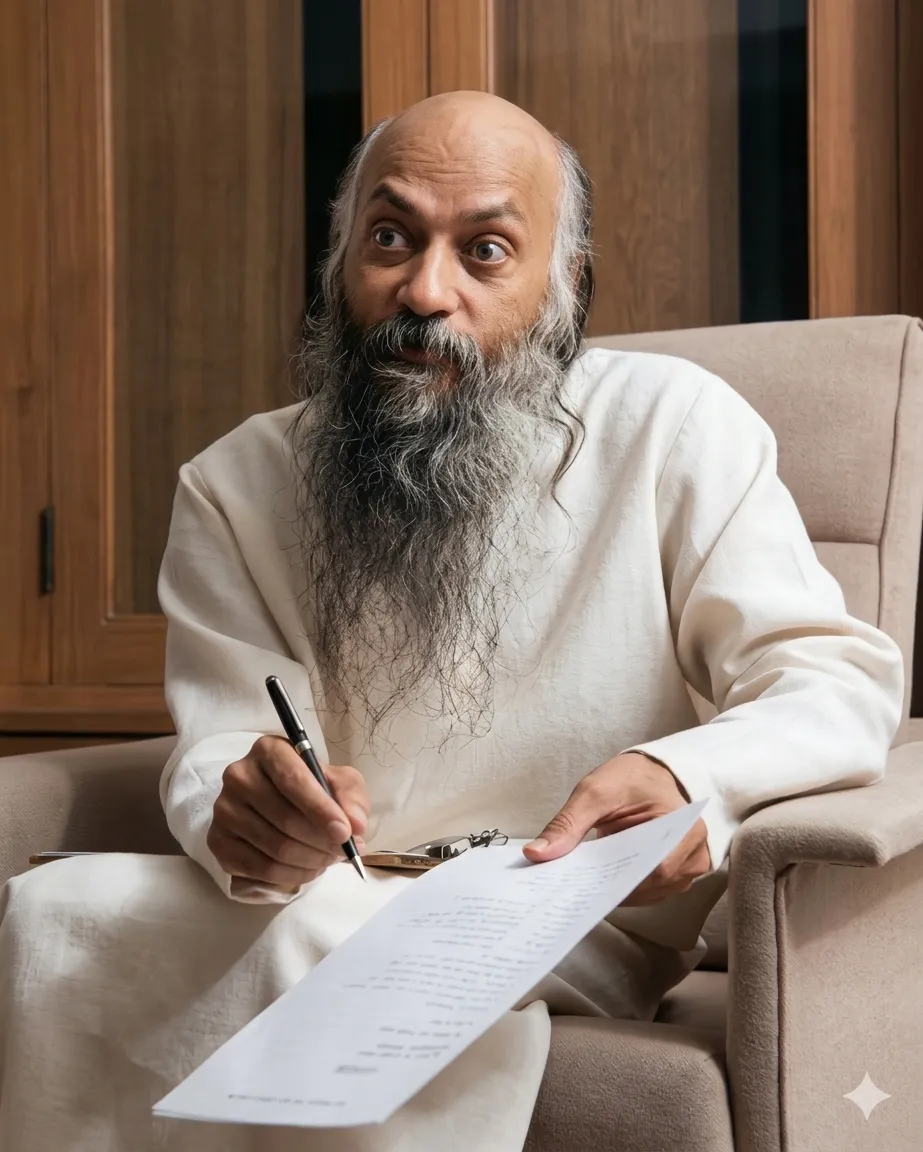
According to Osho, Zen means no teaching because truth can’t be given, defined, or borrowed; it arises in wordless, meditative no‑mind. Hence Zen rejects doctrines and scriptures and relies on a living transmission—heart to heart—between Master and disciple, not head-to-head instruction. In this ego-free communion, the vertical dimension of awareness opens and truth ‘descends’ or ‘ascends’ within you, rather than coming from outside.
Zen says nobody can hand you truth; you discover it in deep inner quiet, often awakened by a wise friend’s silent presence.
From the Discourses
Passages where Osho speaks to this question — each links to the complete discourse.
Osho, you have spoken many times about zen masters, and today you said that j. Krishnamurti is zen and zen means no teaching. Can you explain this point?
The disciple accepts the Master so that he can come closer to him. In saying yes to the Master he becomes attuned to the Master. The word "attunement" is beautiful; it means "at-onement". He becomes one with the Master. In that oneness something that cannot be given through words is transpired through the being -- something like bringing an unlit candle close to a lit candle. There is a certain point when the unlit candle comes within that limit -- suddenly the flame from the lit candle jumps into the unlit candle. The lit candle loses nothing at all, but the unlit candle gains infinitely. Now the reverse process is happening: when the disciple comes to the Master he gives his ego and thinks he is losing much -- and the Master gets nothing. When the Master gives something he gives infinitely, he gives his light. but he loses nothing;…
Osho, what is zen?
Sagar, IT IS ALMOST IMPOSSIBLE TO ANSWER because Zen is not a philosophy, it is not a doctrine. It is an experience, an experience of your own interiority, of your own subjectivity -- not an objective experience. If it were some object outside you, there would be a possibility of describing it, of analyzing it, of defining it. It is indefinable by its very nature; it is not within the grasp of intellect. It is an experience of dropping out of your mind, disappearing from your mind into your being, slipping out of the mind and entering into your being. The mind is a false entity; your being is your real face, your original face. The mind is created by the society, hence there are different kinds of minds -- Hindu mind, Christian mind, Jewish mind -- but the being is one; it is neither Christian nor Hindu nor Mohammedan.…
Kakua was the first japanese to study zen in china, and while he was there he accepted the true teaching.
WHEN HE WAS IN CHINA HE DID NOT TRAVEL. HE LIVED IN A REMOTE PART OF A MOUNTAIN AND MEDITATED CONSTANTLY. WHENEVER PEOPLE FOUND HIM AND ASKED HIM TO PREACH, HE WOULD SAY A FEW WORDS, AND THEN MOVE TO ANOTHER PART OF THE MOUNTAIN WHERE HE COULD BE FOUND LESS EASILY. WHEN KAKUA RETURNED TO JAPAN, THE EMPEROR HEARD ABOUT HIM AND ASKED HIM TO COME TO COURT TO PREACH ZEN FOR THE EDIFICATION OF HIMSELF AND HIS SUBJECTS. KAKUA STOOD BEFORE THE EMPEROR IN SILENCE. HE THEN PRODUCED A FLUTE FROM THE FOLDS OF HIS ROBES, BLEW ONE SHORT NOTE, BOWED POLITELY, AND DISAPPEARED. NO ONE EVER KNEW WHAT BECAME OF HIM. Remember, you are a vast universe. The surface that you have taken it for granted that you are is just the beginning, the porch. If we are talking on the porch it is because of you.…
Question: BELOVED OSHO, THERE WAS A MONK IN TRAINING UNDER DOGO CALLED SOSHIN. HE WAS A SINCERE YOUNG MONK WORTHY OF HIS NAME, WHICH MEANT "TO REVERE AND BELIEVE." HE HAD BECOME DISTRESSED, AND FELT IT TO BE BEYOND ENDURANCE: SINCE THE TIME HE HAD COME TO THE MONASTERY FOR TRAINING, HIS TEACHER, DOGO, HAD NOT GIVEN HIM, EVEN ONCE, ANY INSTRUCTIVE SERMON OR APPROPRIATE GUIDANCE. ONE DAY SOSHIN, WHO COULD NOT STAND IT ANY LONGER, WENT TO HIS TEACHER DOGO AND ASKED: "EVER SINCE I CAME TO THIS MONASTERY, YOU HAVE NOT GIVEN ME YOUR GRACIOUS TEACHING EVEN ONCE. WHAT COULD BE THE REASON FOR THIS?" THE MASTER GAVE THE LEAST EXPECTED REPLY, FOR HE SAID, "WHY, EVER SINCE YOU CAME TO MY MONASTERY, I HAVE NOT, EVEN FOR ONE MOMENT, NEGLECTED TO TEACH YOU." "WHAT KIND OF TEACHING HAVE YOU GIVEN ME, MASTER?" SOSHIN ASKED. "WELL, WELL!
Question: BELOVED OSHO, HYAKUJO HAD A UNIQUE WAY OF GUIDING MONKS. FROM MORNING TILL NIGHT HE KEPT ON SAYING, "WORK FOR ME IN THE FIELD, AND I WILL TEACH FOR YOU." HE THUS MADE HIS DISCIPLES WORK IN THE FIELD ALL THE TIME; BUT HE DID NOT SEEM TO BE PREPARED TO GIVE ANY LECTURES OR SERMONS. FINALLY, THE MONKS, NOT ABLE TO STAND IT ANY LONGER, WENT TO THE MASTER AND ASKED: "WOULD YOU PLEASE BE GRACIOUS ENOUGH TO GIVE US AN EDIFYING SERMON?" THE MASTER'S UNWAVERING REPLY WAS: "WORK FOR ME IN THE FIELD, AND I WILL TEACH FOR YOU." SEVERAL DAYS PASSED, AND THE IMPATIENT MONKS WENT TO THE MASTER AGAIN AND URGED: "PLEASE GIVE US A SERMON." THIS TIME, HE QUITE READILY AGREED TO DO SO. AFTER A WHILE ALL THE MONKS GATHERED TOGETHER IN THE HALL.