
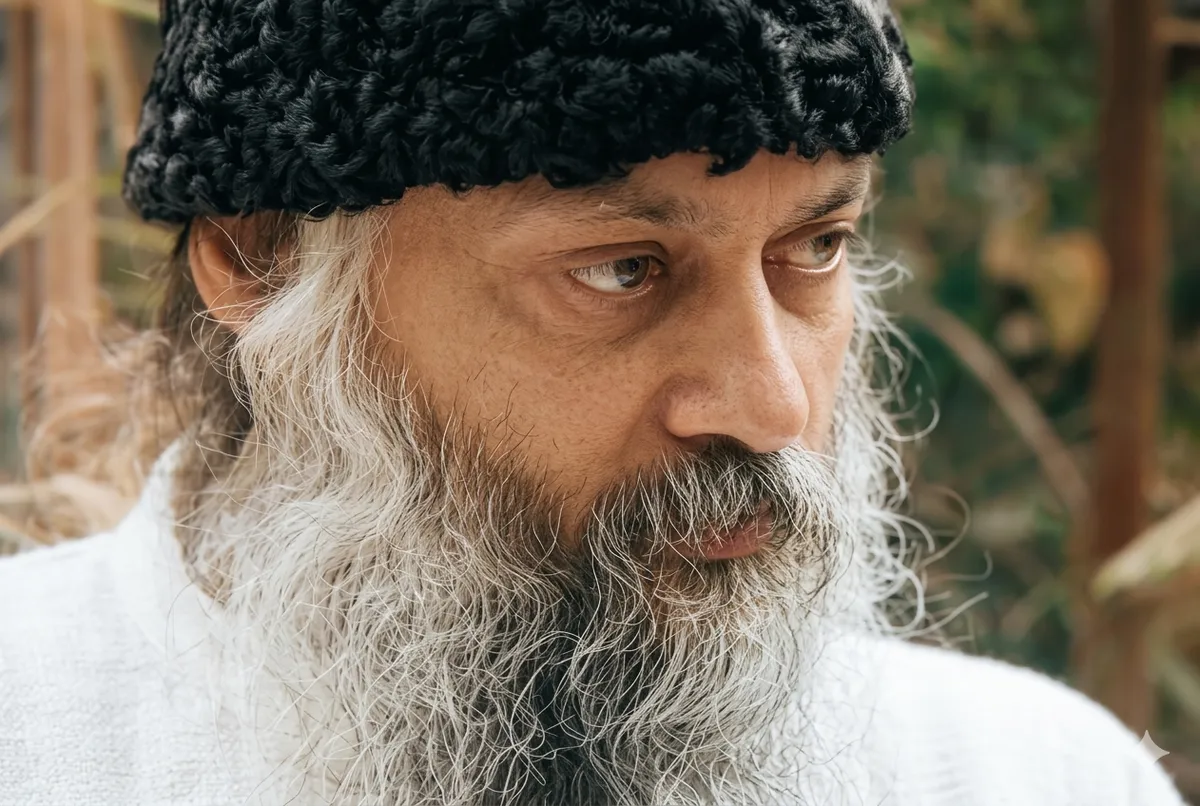
Osho's perspective on Gita
When Osho Spoke About Gita
Passages from the discourses where this theme comes alive.
Osho, a part of my earlier question remained to be taken up. It is this: by combining Shankara’s supermoralism and Tilak’s activism, do you think the Gita would be complete? Because the supra-morality you speak of is what Shankara speaks of, not Tilak. Tilak is intensely moralistic. And the engagement you speak of is what Tilak speaks of; Shankara does not—he follows the path of renunciation (nivritti-marga).
A dead sum is only the complete total of its parts. A living whole is a little more than its parts. Consider yourself: if we calculate all the constituents of your body—how much iron, copper, aluminum, salt, water, phosphorus—we could list it all. In a human body, at best there are only a few rupees’ worth of materials; most of it—perhaps ninety percent—is just water. If we were to put all this on paper, add it up, the sum would be complete. But you would not be in it. Everything would be there—except you. Because you are a living person, something more than that sum. You are within the sum, yet you are not the sum. The total can be complete, and yet you will be absent. Krishna’s life-vision is an organic unity. A thousand commentaries have been written on its many facets. Ramanuja says one thing, Shankara another, Nimbarka…
ओशो, मेरे पूर्व प्रश्र्न का एक अंश बाकी रहा लेने से। वह यह कि शंकर का सुपरामॉरलिज्म और तिलक का एक्टिविज्म, दोनों को मिलाने से क्या आप मानते हैं कि गीता पूरी हो जाएगी? क्योंकि जिस अति-नैतिकता की बात आप करते हैं, उसकी बात शंकर करते हैं, तिलक नहीं। तिलक घोर नैतिकवादी हैं। और जिस प्रवृत्ति की बात आप करते हैं, उसकी बात तिलक करते हैं, शंकर नहीं, वह निवृत्तिमार्गी हैं।
मृत जोड़ अपने अंशों का पूरा जोड़ होता है। जीवंत जोड़ अपने अंशों से थोड़ा ज्यादा होता है। जीवंत जोड़ का मतलब है, जैसे आप हैं, अगर आपके शरीर के हम सारे अंगों का हिसाब-किताब कर लें कि कितना लोहा है आपके भीतर, कितना तांबा है आपके भीतर, कितना अल्युमिनियम है आपके भीतर, कितना नमक है, कितना पानी है, कितना फास्फोरस है, कितना क्या है वह हम सब जोड़ कर निकाल लें, तो एक आदमी के भीतर मुश्किल से तीन-चार रुपये का सामान होता है। इससे ज्यादा नहीं होता। ज्यादा हिस्सा, कोई नब्बे हिस्सा तो पानी ही होता है। जिसका दाम लगाना फिलहाल ठीक नहीं। बाकी जो एल्युमिनियम, फास्फोरस, लोहा इत्यादि सब होता है मिला-जुला कर, वह कोई तीन और चार रुपये, पांच और चार रुपये के बीच में होता है। यह सारा अगर हम एक कागज पर रख लें, सब, और इसको जोड़ दें, तो जोड़ तो हो जाएगा, लेकिन आप उसमें बिलकुल नहीं होंगे; आप भर नहीं होंगे, और सब होगा। क्योंकि आप एक जीवंत व्यक्ति थे, जो इस जोड़ से ज्यादा थे। इस जोड़ के भीतर थे, लेकिन जोड़ ही नहीं थे। इस जोड़ के भीतर मौजूद थे, लेकिन जोड़ ही नहीं थे। यह जोड़ पूरा हो जाएगा और आप नहीं होंगे।
Osho, will you regard the Gita as the authentic words of Krishna?
You ask whether I will regard the Gita as the authentic words of Krishna? If there has been a person like Krishna, then a discourse like the Gita would indeed be authentic. The question is not whether Krishna actually spoke it or not. The question is that if Krishna were to speak, he could only speak like this. And even if Krishna did not speak and Vyasa alone wrote the Gita, it doesn’t make much difference, because Vyasa could not write it unless there were a person like Krishna. In the end one has to say—let it be Vyasa who wrote it, it makes no difference—but Vyasa too would be speaking the Gita, no! What difference does it make? It makes no difference. Whether Krishna speaks, or Vyasa speaks, or A, B, C—someone else—speaks, to speak the Gita there must be someone within. This Gita doesn’t drop out of the…
ओशो, गीता आप प्रामाणिक वचन मानेंगे कृष्ण के?
… कृष्ण जैसा व्यक्ति हुआ हो तो गीता जैसा वचन प्रामाणिक ही होगा। यह सवाल नहीं है कि कृष्ण ने ऐसा बोला कि नहीं बोला। सवाल यह है कि कृष्ण बोलेगा तो ऐसा ही बोल सकता है। और अगर कृष्ण ने न बोला हो और व्यास ने ही गीता लिखी हो, तो कोई बहुत फर्क नहीं पड़ता, क्योंकि व्यास लिख नहीं सकता अगर कृष्ण जैसा व्यक्ति न हो। आखिर व्यास को भी कहना पड़े--व्यास लिखे, कोई फर्क नहीं पड़ता है--लेकिन व्यास भी तो गीता बोलेगा न! इससे क्या फर्क पड़ता है? इससे कोई फर्क नहीं पड़ता। अगर कृष्ण बोले, व्यास बोले, कोई अ ब स कोई और बोले, लेकिन गीता बोलने के लिए एक भीतर कोई चाहिए न! …
Questioner: a part of my question remains unanswered. Do you think the geeta will be complete if shankara's supra-moralism and tilak's activism are made into one piece? Because the supra-rationality that you speak about is echoed by shankara, not tilak; the latter is out and out a moralist. On the other hand tilak, not shankara echoes your positivism, your dynamism. Shankara is for renunciation.
Putting different parts together is a mechanical process, it cannot be organic. We can break up a machine into its parts and remake it by putting the parts together again. But we cannot do the same with a live, organic body. Please bear in mind this fundamental difference between organic unity and mechanical togetherness. While a mechanical combination is equal to the totality of parts, an organic unity is much more than the sum total of its parts. For example. if we make a list of all the ingredients that make up a human body -- like iron, copper, sodium, aluminum, phosphorus and the rest of it, they will be worth four to five rupees, not more, Nine-tenths of a human body is water, which does not cost anything at the moment. And the rest of these things are available in the market. If however, you put them all together…
Questioner: do you take the geeta as the authentic voice of krishna?
You ask if I take the GEETA to be the authentic voice of Krishna. If a person like Krishna has happened then the GEETA has to be authentic. It is not relevant if Krishna said it or not, what is relevant is that if a person like Krishna says something, he will only say something like the GEETA. Even if the GEETA is taken to be written by Vyasa, and not delivered by Krishna, it does not make a difference. A Vyasa cannot write the GEETA without a Krishna being there. Even if it is taken to have been said by Vyasa and not by Krishna, it is the GEETA that he spoke, and it remains the same. It is immaterial whether Krishna, Vyasa or some xyz is the author of the GEETA. Authorship is not important, what is important is the GEETA itself. It has not appeared from the…
Is any commentary on the Gita complete?
definitionWas the war suspended for four hours during the dialogue between Krishna and Arjuna in the Gita?
outcomeWhat is the role of Sanjaya in the Gita?
definitionWhat is the significance of the Gita's teachings in relation to time and individual context?
definitionWhy does Krishna repeat himself in the Gita?
definitionWhy is there so much repetition in the Gita?
definitionProfound Quotes on Gita
Explore our structured collection of meaning-mapped quotes regarding Gita.