
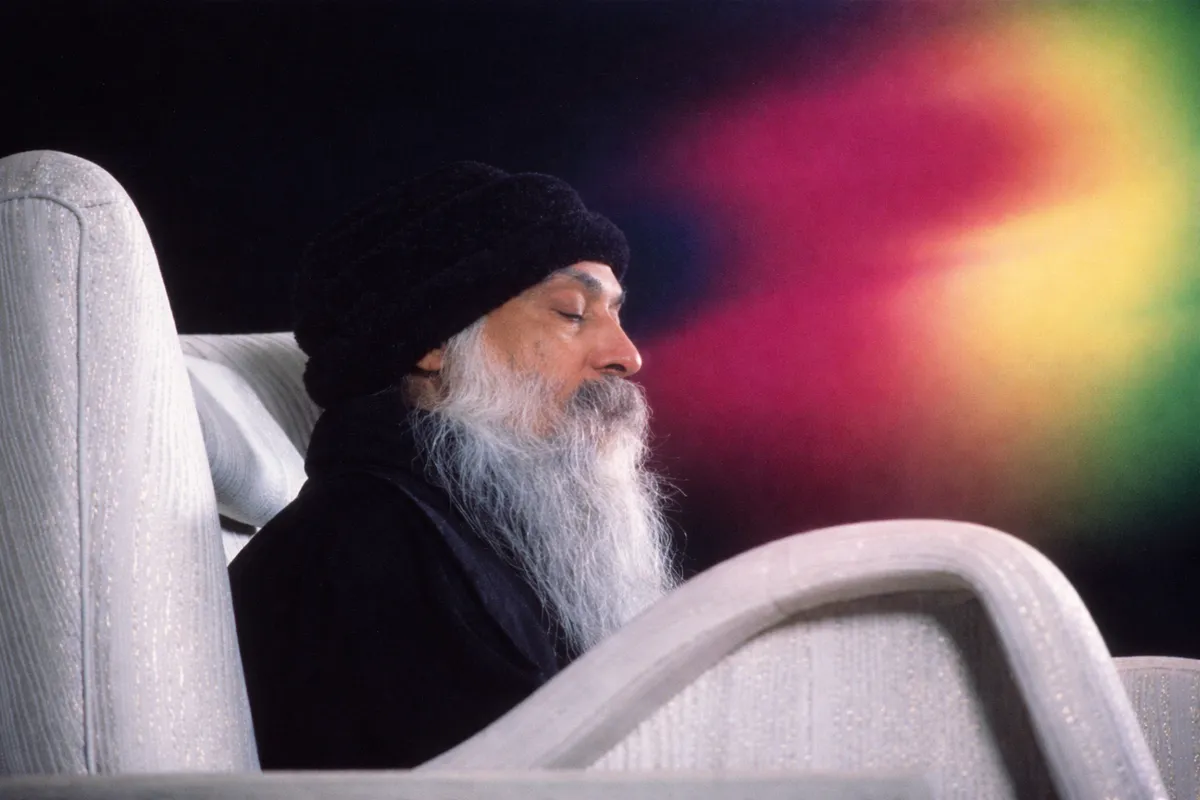
Osho's perspective on Wholeness
When Osho Spoke About Wholeness
Passages from the discourses where this theme comes alive.
Osho, we are incomplete. However much we search outside or inside, how will the Whole ever be seen? How will we find the Whole?
It’s true. You are incomplete; all your seeking will remain incomplete. But non-seeking can be complete. Whatever you seek, you will be the seeker; it will be a search of your own hand, it will be like you. Whatever you make will carry your imprint. Whatever you construct, whatever you create, will be incomplete. If the maker is incomplete, how can the creation be complete? Quite right. Whatever you think will be incomplete. Whatever ideas you entertain will be fragmentary. Whatever conclusions you draw can never be whole and total. If you have faith, it will be incomplete; if you doubt, that too will be incomplete. You go into the world—half-and-half; you enter the temple—half-and-half. Because you are incomplete. That’s right. Then is there no way? God is complete and you are incomplete. And whatever you do will be incomplete—prayer incomplete, sadhana incomplete, samadhi incomplete. So how will you find…
तीसरा प्रश्न: ओशो, हम अधूरे हैं। हम बाहर या भीतर कितनी ही खोज करें, हमें पूरा कैसे दिखेगा? पूरा कैसे मिलेगा?
तुम जो भी खोजोगे, तुम्हीं खोजोगे; तुम्हारे हाथ की ही खोज होगी, तुम्हारे जैसी ही रहेगी। तुम जो भी बनाओगे, उसमें तुम्हारी ही छाप होगी। तुम जो भी निर्मित करोगे, सृजन करोगे, वह अधूरा ही होगा। क्योंकि अधूरा बनाने वाला है, तो कृति कैसे पूरी हो सकती है? बिलकुल ठीक बात है। तुम जो भी सोचोगे, वह अधूरा होगा। तुम जो भी विचार करोगे, वह खंडित होगा। तुम जो भी निष्कर्ष लोगे, वह कभी संपूर्ण और समग्र नहीं हो सकता। तुम श्रद्धा करोगे, तो अधूरी; तुम संदेह करोगे, तो अधूरा। तुम संसार में जाओगे, तो आधे-आधे; तुम मंदिर में प्रवेश करोगे, तो आधे-आधे। क्योंकि तुम अधूरे हो। बात ठीक है। तो क्या फिर कोई उपाय नहीं है? क्योंकि परमात्मा तो पूरा है और तुम अधूरे हो। और तुम जो भी करोगे, वह सब अधूरा होगा--प्रार्थना भी अधूरी, साधना भी अधूरी, समाधि भी अधूरी। तो तुम पूरे परमात्मा को कैसे पाओगे?
Questioner. I have a question in regard to wholeness. You say that emptiness is the basic characteristic of wholeness. Buddha had attained to absolute emptiness. Should he not be called whole? And why is emptiness not multidimensional in itself?
In the meantime the Master went his own way. He bathed himself in the morning, dug holes in the garden and watered the plants, ate his meals and went to bed at night. In two days' time the visitor was annoyed and again he said, "I am here to learn meditation. I have nothing to do with what you do from morning to night." The Master smiled and said, "I don't teach doing, I teach being. If you see me digging holes, then know it is how meditation digs. When you see me eating, then know it is how meditation eats. I don't do meditation, I am meditation itself." Now the visitor became worried and said, "It seems I came to a madman. I was always told that meditation is doing, I had never heard someone can be meditation itself." To this the Master simply said, "It is difficult to…
Osho, there was a question about perfection. In the morning you said you regard emptiness as the fundamental hallmark of perfection. Then Buddha too was the ultimate void. So can he not be called complete? And along with that, is emptiness itself not multidimensional?
A few points. First, Buddha arrived at emptiness—as I was just saying, Buddha arrived at emptiness. That was his achievement; he attained it. He became empty. The emptiness that is attained becomes one-dimensional. It acquires a direction. It becomes dependent on the attainer. Understand it this way. In fact, whatever I negate within myself, whatever I cut off and set aside, will be finished, removed from within me. A certain kind of emptiness will be available. But that emptiness will come as the absence of something. There is another emptiness that we do not bring about; it is born in the very awareness of our being. We are emptiness—we do not become empty. Emptiness is our nature. That is how we are. The day emptiness is our nature—no discipline, no practice, no attainment—on that day emptiness becomes multidimensional. We have not emptied out anything to become empty; we have simply…
ओशो, पूर्णता के संबंध में एक प्रश्र्न था। आपने सुबह कहा कि पूर्णता का मूल लक्षण आप शून्यता मानते हैं। तो बुद्ध भी तो परम शून्य थे। तो क्या उन्हें पूर्ण नहीं कहा जा सकता? और उसी के साथ क्या शून्यता स्वयं में बहुआयामी नहीं है?
एक तो, बुद्ध शून्यता पर पहुंचे, जैसा मैं अभी कह रहा था, बुद्ध शून्यता पर पहुंचे। वह उनका अचीवमेंट है। वह उन्होंने पाया। वे शून्य हुए। जो शून्यता पाई जाएगी, वह वन डायमेंशनल हो जाती है। उसकी एक दिशा हो जाती है। वह पाने वाले पर निर्भर हो जाती है। इसको ऐसा समझें। असल में मैं अपने भीतर से जिस चीज को शून्य कर दूंगा, जिस चीज को काट डालूंगा, अलग कर दूंगा, वह समाप्त हो जाएगी, मेरे भीतर से हट जाएगी। एक तरह का शून्य उपलब्ध होगा। लेकिन वह शून्यता किसी चीज का अभाव होकर आएगी। एक और शून्यता है, जो हम लाते नहीं, जो हमारे होने के बोध में ही जन्मती है। हम हैं ही शून्य, हम होते नहीं शून्य। शून्यता हमारा स्वभाव है। ऐसे हम हैं ही। …
Beloved Osho, for years I have contemplated what seems to me to be the basic message for well-being: love yourself. When I was a therapist, all day hearing, "I hate myself; I feel sorry for myself; I am proud of myself; I want to destroy myself," I started wondering -- who is this self? I love when you say there is no self. That seems so freeing. Could you please say more?
The whole therapeutic movement has gone wrong on that point: Love thyself. Socrates used to say, "Know thyself." And there have been masters, particularly Sufis, who say, "Be thyself." But there is only one person in the whole history of man, Gautam Buddha, who said, "There is no self. You are an emptiness, utter silence, a non-being." His message was much opposed by all the traditions, because they all depended in some way or other on the idea of the self. There may have been differences on other points, but on one point they were all totally in agreement -- and that was the existence of the self. Even people like George Gurdjieff, who used to talk about a very novel idea -- that you are not born with a self, you have to earn it: "Deserve thyself" -- finally, he also ends up with the self. Gautam Buddha does…
How will we find the Whole?
outcomeProfound Quotes on Wholeness
Explore our structured collection of meaning-mapped quotes regarding Wholeness.