
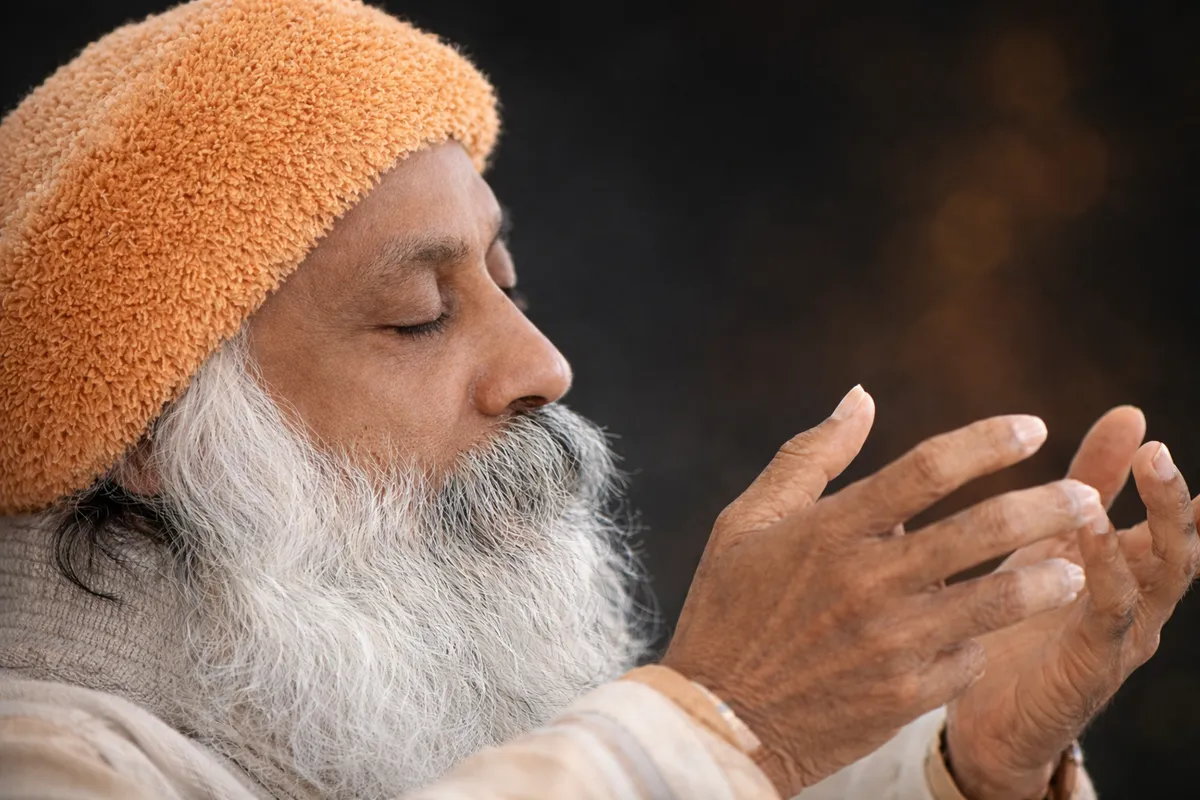
Like digging a well, you first pull out dirt (anger) before you reach water (love); keep cleaning and don’t throw new dirt back in.
From the Discourses
Passages where Osho speaks to this question — each links to the complete discourse.
Beloved Osho, during catharsis I express only negative emotions, anger, jealousy, anguish, etcetera. Why do I not express love, devotion, bliss and religious emotions? Do I not possess them?
They are in you but they are a little deeper. When a well is dug, first of all it is stones, pebbles and mud which come out and not the water. It depends on the land also. Somewhere the water is at thirty feet and somewhere the water is at sixty feet deep. Water is certainly there. Every land has water underneath it but the difference is of depth. A simple-minded person will get the water soon -- maybe at two, three or ten feet, and if a complicated person digs then he may get it at fifty or sixty feet. An innocent-minded person will get it quickly, but a violent, angry man will take a long time to reach the water level. The difference is in the layers of the land. Water is underneath all land. The soul is there in everyone, godliness is there in everyone -- the…
Osho, when I do catharsis, only negative emotions like anger, jealousy, sorrow come out. Why don’t love, devotion, joy and religious feelings appear? Are they not within me?
The head servant got very angry. “Why did you hide it so long?” The servant said, “Even now I lack the courage to say it, but it has become unbearable; first hear my whole story.” The head said, “First tell me his name. Who is he? He will be punished.” The servant who had come to reveal the secret lowered his head and sat silently. The head asked, “Why don’t you speak? Say his name. What are you afraid of?” The servant said, “You won’t be able to believe it. It was our master who threw the seeds. Those weeds—our master himself sowed them.” Then both decided to keep this to themselves, to tell no one. Jesus’ story says: What you build in the day, you erase in the night; in sleep, in unconsciousness, you undo what you created in wakefulness. There are people who somnambulate—walk in sleep. Such cases…
तीसरा प्रश्न: ओशो, रेचन करता हूं तो केवल क्रोध, ईर्ष्या, दुख आदि के नकारात्मक भाव ही बाहर आते हैं। प्रेम, भक्ति, आनंद और धर्म के भाव क्यों बाहर प्रकट नहीं होते? क्या वे मेरे भीतर नहीं हैं?
प्रधान नौकर तो बहुत नाराज हुआ। उसने कहा कि तुम इतनी देर क्यों छिपाए? उस नौकर ने कहा, अभी भी मेरी हिम्मत नहीं थी आकर कहने की, लेकिन अब बरदाश्त के बाहर है; पहले मेरी पूरी कथा सुन लो। प्रधान ने कहा, तुम पहले उस आदमी का नाम बताओ, वह कौन है? उसे सजा दी जाएगी। वह नौकर जो रहस्य का उदघाटन करने आया था, सिर झुका कर बैठ गया। प्रधान ने पूछा, तुम बोलते क्यों नहीं, उसका नाम लो, डर क्या है? उस नौकर ने कहा, तुम भरोसा न कर सकोगे, वह हमारे मालिक ने ही वे बीज फेंके हैं; वह घास-पात भी, हमारे मालिक ने ही वे बीज फेंके हैं।
"what are the possible reasons for not having an explosive catharsis? I constantly, even with today's shaktipat meditation, have only a very mild catharsis. Does it necessarily mean that I am not open or not open enough, or are there other possible reasons? My concern over this then becomes a distraction to me during the meditation and after."
The first thing to be noted, to be remembered: catharsis will happen deeply if you just help it to happen, if you just cooperate with it. Mind is so suppressed, and you have so much pushed things down, that to reach them your cooperation is needed. So whenever you feel even a light catharsis, help it to become stronger. Don't just wait. If you feel that your hand is trembling, don't just wait, help it to tremble more. Don't feel, think that it has to be spontaneous, so you have to wait. If it has to be spontaneous, then you will have to wait for years, because for years you have been suppressing and the suppression was not spontaneous. You have done it on purpose. You will have to do quite the opposite now. Only then can the suppressions be brought to the surface. You feel like weeping; you weep…
Of what value are the 'cathartic' therapies: the reliving of one's traumatic moments or acting out of fears etc? Is not insight enough? Or bliss methods, such as sufi dance?
Mantra, insight is enough, but how to get the insight? It is hidden in much rubbish. The diamond is there, but it is hidden under much debris, dirt. The dirt has to be removed only then will the diamond be available, will the insight be available. The therapies do the spade work. If insight were available directly, it would have been very easy. Then you could become blissful any moment. But you are layers upon layers of repression. You have repressed your fear, you have repressed your anger, you have repressed your love, you have repressed your sex. You have repressed so many things! The insight is there, but these layers of repression have to be thrown out. The cathartic therapies help. They will not produce your insight, they will only clear the way. They will only make the insight available to you. The insight is there. Everybody has brought…
Osho, meditation increases sensitivity. But as sensitivity grows, living seems to become more difficult—because the mind’s reactions become sharp and intense, and it feels as if one’s whole life is at stake at every small turn. In such a state, how can one find and hold the point of balance?
Certainly: as meditation deepens, sensitivity will also deepen. And with heightened sensitivity, problems grow too. Sensitivity means you will experience everything—every event—in its full velocity, with full intensity. If someone insults you, the way that hurt reverberates inside a meditator will not be the same for a non-meditator. If a thorn pricks, the meditator’s awareness of that sting will be much clearer than that of the non-meditator—because the non-meditator lives in a kind of stupor, a haze of unawareness. The duller the awareness, the less the pain is consciously felt. Perhaps that is exactly why we reduce our awareness—so we can feel less pain. Ask a psychologist and he will say: every child learns early how to numb their awareness. All children are born sensitive. Then they begin to kill their sensitivity—because living with raw sensitivity is very difficult. A certain blunting of feeling becomes “necessary.” That is why, at…
प्रश्न: ओशो, ध्यान से संवेदनशीलता बढ़ती है। लेकिन संवेदनशीलता बढ़ने पर जीना और मुश्किल हो जाता है। क्योंकि मन की प्रतिक्रियाएं तीव्र तथा उत्कट होती हैं। और बात-बात में जैसे पूरे प्राण दांव पर लग जाते हैं। तो ऐसी स्थिति में संतुलन का मध्यबिंदु कैसे साधा जाए?
निश्चय ही, जैसे-जैसे ध्यान बढ़ेगा, संवेदनशीलता भी बढ़ेगी। संवेदनशीलता बढ़ने से समस्याएं भी बढ़ेंगी। क्योंकि संवेदनशीलता का अर्थ है, हर चीज, हर घटना उसकी पूरी त्वरा में, तीव्रता में अनुभव होगी। अगर कोई गाली देगा, तो उसकी चोट ध्यानी के भीतर जिस भांति गूंजेगी, वैसी गैर-ध्यानी के बीच नहीं गूंजेगी। अगर कांटा चुभेगा, तो उसकी चुभन का जैसा स्पष्ट बोध ध्यानी को होगा, वैसा गैर-ध्यानी को नहीं होगा। क्योंकि गैर-ध्यानी जीता है मूर्च्छा में, उसका होश धुंधला-धुंधला है। जितना होश धुंधला है, उतनी ही पीड़ा भी कम अनुभव होती है।