
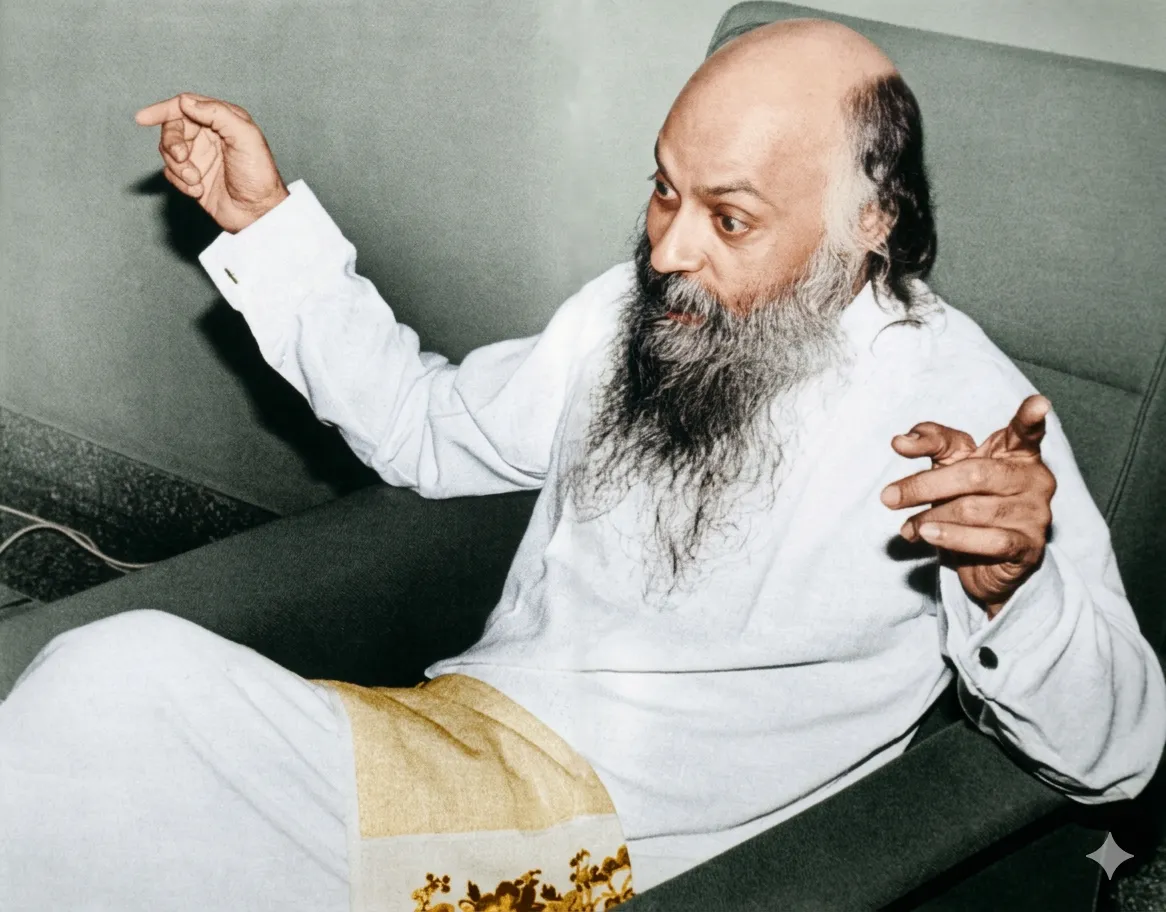
Osho's perspective on Nonviolence
When Osho Spoke About Nonviolence
Passages from the discourses where this theme comes alive.
Osho, what is the first experience of samadhi like?
You will know only when it happens. It cannot be said; at most a few hints can be given. It is as if, in the dark, a lamp is suddenly lit. Or as if a dying patient, right at the edge of death, suddenly finds a medicine that works; life’s wave, life’s thrill spreads again—so it is. As if a corpse becomes alive—such is the first experience of samadhi. It is the taste of nectar. The experience of the ultimate music. But it will be only when it happens; and only then will you understand. You will not understand by my saying it. It is as with love. How can anyone explain it? To someone who has never loved, never known love, no matter how many explanations you offer—he will hear it all and still ask, “I haven’t understood; please explain a little more.” It is like explaining light to…
तीसरा प्रश्न: ओशो, समाधि का पहला अनुभव कैसा होता है?
होगा तो ही जानोगे। कहा जा सके, ऐसा नहीं है। कुछ-कुछ इशारे किये जा सकते हैं। जैसे अंधेरे में अचानक दीया जल जाये, ऐसा होता है। या जैसे बीमार मरता हो और अचानक कोई दवा लग जाये...मरते-मरते कोई दवा लग जाये; और जीवन की लहर, जीवन की पुलक फिर फैल जाये--ऐसा होता है। जैसे कोई मुर्दा जिंदा हो जाये--ऐसा होता है समाधि का पहला अनुभव। अमृत का अनुभव है। परम संगीत का अनुभव है। पर होगा तो ही होगा। और होगा तो ही तुम समझ पाओगे; मेरे कहने से समझ में न आ सकेगा। प्रेम में जैसा होता है। अब कोई किसी को कैसे समझाये? …
Osho, in the previous discourse you said that nonviolence is man’s nature and violence is man-made. Would you please clarify this again and tell us whether violence is not a nature-given fact?
But how unfortunate it is that no animal attacks one of its own kind—yet man does! And no animal ever kills without cause—this too is curious—except man. An animal does not kill without cause. If it ever kills, there is a need. It is hungry, so it kills. It has to defend itself, so it kills. Man kills without need. There is no need, and yet he kills. Sometimes it even seems that because he has to kill, he manufactures the need! He cannot live without killing, so he creates the need. Sometimes he creates the need in Vietnam, sometimes in Korea, sometimes in Kashmir. There is nothing necessary in it—neither in Kashmir nor in any Vietnam nor in any Cambodia. Nowhere is there a real need. But man creates the need, because to kill without a need would not look proper! Man is rational only in one sense: he…
ओशो, पिछले प्रवचन में आपने कहा था कि अहिंसा मनुष्य का स्वभाव है और हिंसा मनुष्य द्वारा निर्मित है। कृपया इसे पुनः स्पष्ट करेंगे और बताएंगे कि क्या हिंसा प्रकृति-प्रदत्त तथ्य नहीं है?
लेकिन यह कितनी दुर्भाग्यपूर्ण बात है, कोई पशु अपनी जाति के पशु पर हमला न करे, आदमी करे! और कोई पशु अकारण कभी नहीं मारता--यह भी मजे की बात है--सिर्फ आदमी को छोड़ कर। अकारण नहीं मारता। अगर कभी मारता भी है, तो उसकी जरूरत होती है। भूख होती है, तो मारता है। रक्षा करनी होती है, तो मारता है। आदमी बेजरूरत मारता है! कोई जरूरत नहीं होती है, तब भी मारता है। कभी-कभी तो ऐसा लगता है कि मारना होता है, इसलिए जरूरत पैदा करता है! बिना मारे नहीं रह सकता, तो जरूरत पैदा कर लेता है। कभी वियतनाम में जरूरत पैदा करता है, कभी कोरिया में जरूरत पैदा करता है, कभी कश्मीर में जरूरत पैदा करता है।
Osho, what is the constructive, positive form of nonviolence? And why did Mahavira never offer anyone physical help?
From the very word ‘ahimsa’ comes the sense of the negative, the prohibitive, the “no.” It means: no violence. So the word itself is negative. Why did Mahavira choose that word? He could have chosen love. Love is a constructive, positive word. Ahimsa means: do not cause anyone pain. Love means: give someone happiness. Because ahimsa means “do not cause pain,” it is prohibitive. That is, if I simply do not hurt you, I become nonviolent. Love is an affirmative word: it means giving happiness. So if I merely refrain from hurting you, the matter is not complete; did I also give you joy? Only if I give joy is love fulfilled. Thus love is a constructive word. Jesus used love. Ahimsa is a negative word, and Mahavira used it. Therefore it needs to be understood very deeply. Why does Mahavira employ the formula “do not give pain to anyone”?…
प्रश्न: ओशो, अहिंसा का विधायक स्वरूप क्या है? और महावीर ने किसी की शारीरिक सहायता क्यों नहीं की?
‘अहिंसा’ शब्द से ही निगेटिव का, निषेध का, नकारात्मक का बोध होता है। बोध होता है, हिंसा नहीं। तो अहिंसा शब्द ही नकारात्मक है। महावीर ने क्यों उस शब्द को चुना? वे प्रेम भी चुन सकते थे। प्रेम विधायक शब्द है, वह पाजिटिव है। अहिंसा का मतलब होता है, किसी को दुख नहीं देना है। प्रेम का मतलब होता है, किसी को सुख देना है। अहिंसा का मतलब है, किसी को दुख नहीं देना है। इसलिए निषेधात्मक है। यानी अगर मैंने आपको दुख नहीं दिया तो मैं अहिंसक हो गया। प्रेम विधायक शब्द है। प्रेम का मतलब है, किसी को सुख देना है। तो मैंने आपको दुख नहीं दिया, इतने से ही काफी बात नहीं हल होती, मैंने आपको सुख दिया कि नहीं? अगर सुख दिया तो ही प्रेम पूरा होता है। तो प्रेम तो विधायक शब्द है। जीसस ने प्रेम का उपयोग किया। …
Man can become violent or nonviolent as he wishes. This is man's freedom. Beasts haven't got it. It is the helplessness of a beast. That is why there is no difference between the nature of beasts and the fact of being beasts. There is no distance between the future and the past of a beast. There is no difference in being a beast and in the possibility of what it can be. The beast is what it can be. That which is possible, is actual. There is no distinction between the actuality and possibility of beasts. The whole matter is different in the case of man. Man can be different from what he is The actuality of man is not his possibility. He can be something else tomorrow from what he is really today.
Was Mahavira's restraint due to fear of violence or an upsurge of nonviolence and compassion?
definitionWhat is the difference between the nonviolence of Bhagwan Mahavira and that of Mahatma Gandhi?
definitionWhat is the relationship between nonviolence and discipline in the context of personal freedom?
definitionProfound Quotes on Nonviolence
Explore our structured collection of meaning-mapped quotes regarding Nonviolence.