
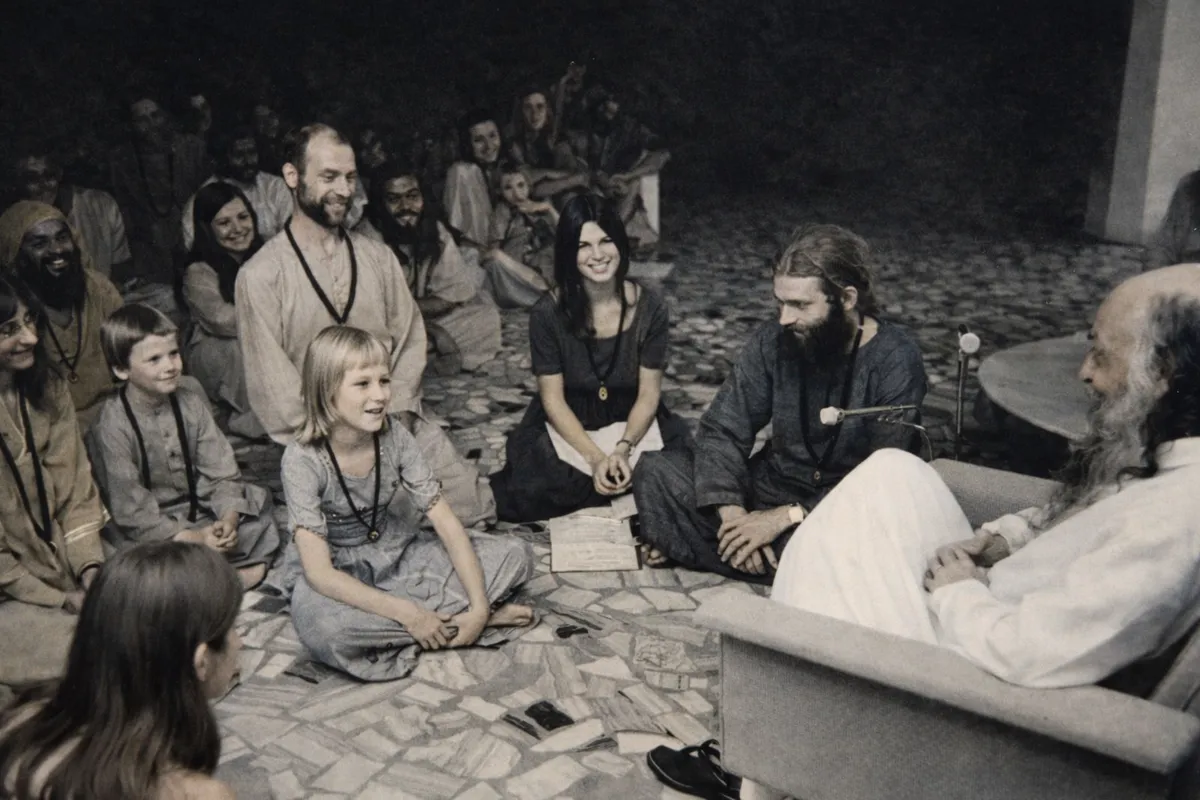
You’re crying because your favorite old beliefs got praised—not because truth is transforming you.
From the Discourses
Passages where Osho speaks to this question — each links to the complete discourse.
Beloved Osho, during your first discourse on the mahagita many people were weeping streams of tears. What does this mean? Are those who were crying weak hearted or is it the power of your voice? Please throw some light on this.
Everywhere in the world it has always been like this. Politicians only have lust for power, they are not concerned with order or revolt. Yes, when they are not keeping order, when the power is not in their hands, then they say everything is wrong; then a revolution is needed. And as soon as they come to power, revolution isn't needed any more because the work of the revolution is complete. Its work was this -- to bring him to power -- the job is done. Then whoever mentions revolution is an enemy. And those that speak of revolution also have nothing to do with it. It is an amazing thing to watch -- it is happening every day, and still man does not become alert. All revolutionaries become counter-revolutionary when they come to power. And all ousted politicians become revolutionaries as soon as they step down from office. Political…
Beloved Osho, during your first discourse on the mahagita many people were weeping streams of tears. What does this mean? Are those who were crying weak hearted or is it the power of your voice? Please throw some light on this.
Everywhere in the world it has always been like this. Politicians only have lust for power, they are not concerned with order or revolt. Yes, when they are not keeping order, when the power is not in their hands, then they say everything is wrong; then a revolution is needed. And as soon as they come to power, revolution isn't needed any more because the work of the revolution is complete. Its work was this -- to bring him to power -- the job is done. Then whoever mentions revolution is an enemy. And those that speak of revolution also have nothing to do with it. It is an amazing thing to watch -- it is happening every day, and still man does not become alert. All revolutionaries become counter-revolutionary when they come to power. And all ousted politicians become revolutionaries as soon as they step down from office. Political…
I don't understand what you say, Osho, but while sitting alone or in discourse something happens to me and tears start coming out of my eyes. What is this all, oh my master?
SO YOU HAVE STARTED LISTENING TO ME. Shivananda, that's the way to listen to me -- through tears. That's the way to listen to me -- through love, through the heart. Pulsate with me. Let my words be drowned into your tears. You will not be at a loss, because what I am saying is not important. Far more important is some other energy that goes surrounding those words that reach you. Don't pay too much attention to the words. If your heart is open, the energy will be released into the heart. My words are just carriers, they are containers. The content is utterly different. The content is diametrically opposite. The container is the word, but the content is a wordless silence. It is my love. The word is just a capsule. The capsule is not the medicine; the medicine is inside it. Forget about the capsule. Drink me…
Osho, just hearing your voice, my tears start to pour. Then why does a prayer not arise such that only the prayer remains and I do not? Why does the world still entice just as much and call me toward itself? Are these tears merely crocodile tears?
What you said that day— as if those words were not words: they were trees, they were dwellings, they were persons. Sometimes beneath them, sometimes within them, sometimes clasping them, I live. And even if I turn away from them for a while, their shade comes and touches me morning and evening. What you said that day— as if those were not words, they were trees, dwellings, persons. What I am saying to you is not mere saying. I am not telling a tale; I am speaking the anguish of your life. And I am indicating the way to go beyond the anguish of your life. And beyond your life’s anguish there is a treasure; I am reminding you of it. My words are an invocation, a call—to take you on the journey to the Vast, if you consent to move. If tears have begun to come, it means your…
पहला प्रश्न: ओशो, आपकी आवाज मात्र सुन कर मेरे आंसू झरने लगते हैं। फिर क्यों नहीं ऐसी प्रार्थना का जन्म होता कि प्रार्थना ही बचे, मैं नहीं? संसार फिर भी क्यों उतना ही लुभाता है और अपनी ओर बुलाता है? क्या ये आंसू मगरमच्छ के ही आंसू हैं?
मुझे सुनते हो, कोई भूली-बिसरी याद जगती है। कोई स्वप्न जो तुम्हारे भीतर पड़ा है, रूप लेने लगता है। निराकार की थोड़ी सी झलक आने लगती है। मैं तुमसे जो बोल रहा हूं, वे अगर शब्द ही होते तो ऐसा नहीं हो सकता था। शब्दों के साथ मैं भी हूं। उस दिन तुमने जो कहा था मानो वे शब्द नहीं थे वृक्ष थे आवास थे व्यक्ति थे कभी उनके नीचे कभी उनमें कभी उनसे लिपट कर रहता हूं विमुख भी हो जाऊं कभी उनसे तो उनकी छाया आ छूती है सुबह-शाम तुमने उस दिन जो कहा था मानो वे शब्द नहीं थे वृक्ष थे, आवास थे, व्यक्ति थे मैं तुम्हें जो कह रहा हूं, वह कहना मात्र ही नहीं है। मैं कोई कथा नहीं कह रहा हूं; मैं तुम्हारे जीवन की व्यथा कह रहा हूं। और तुम्हारे जीवन की व्यथा के पार जाने का उपाय कह रहा हूं। और तुम्हारे जीवन की व्यथा के पार एक संपदा है, उसकी तुम्हें स्मृति दिला रहा हूं। मेरे शब्द आवाहन हैं, एक पुकार हैं--जो तुम्हें विराट की यात्रा पर ले जाएं, अगर तुम चलने को राजी हो जाओ। …
Osho, when I listen to you, every word sinks to the depths of my heart and stirs me. But when I read you, it remains a mental game. Please tell me why this happens.
It’s plain. The arithmetic is simple. When you read, only you are there; I am not. What you read is nothing but you. It becomes a game of the mind. When you listen to me, then sometimes—knowingly or unknowingly—I also slip into you. You seldom give such a chance, but now and then a lapse happens on your side. Unaware, you leave the door a little open—and I come in. So when you are hearing me, it’s a different matter. That is why truth has always been spoken, not written. It cannot be written. Even speaking it is very difficult, yet it can still be said—at least a little can be said, a little news can be given. Because in speaking, many elements are involved that are lost in writing. When you read a book, the book is dead. A book cannot create an atmosphere around you. A book has…
आखिरी प्रश्न: ओशो, जब आपको सुनता हूं तो आपका प्रत्येक शब्द दिल की गहराई तक उतर जाता है और हलचल पैदा करता है। लेकिन जब आपको पढ़ता हूं तो वह दिमागी खेल बनकर रह जाता है। कृपया बताएं कि ऐसा क्यों होता है?
साफ-साफ है। गणित बिलकुल सीधा है। जब तुम पढ़ते हो तब तुम्हीं होते हो, तब मैं नहीं होता। जो तुम पढ़ते हो, वह तुम ही तुम हो। दिमागी खेल बनकर रह जाता है। जब तुम मुझे सुनते हो तो कभी-कभी तुम्हारे जाने-अनजाने मैं भी तुम में प्रवेश कर जाता हूं। कम ही तुम ऐसा मौका देते हो। लेकिन कभी-कभी चूक तुमसे हो जाती है। कभी-कभी बे-भान, तुम जरा दरवाजा खुला छोड़ देते हो, मैं भीतर आ जाता हूं। इसलिए तुम जब मुझे सुन रहे हो तो बात और है। इसलिए सत्य सदा कहा गया है, लिखा नहीं गया। लिखा जा नहीं सकता। कहना भी बहुत मुश्किल है, लेकिन फिर भी कहा जा सकता है, थोड़ा-सा कहा जा सकता है। ऐसी थोड़ी-सी खबर दी जा सकती है। क्योंकि कहने में कई बातें सम्मिलित हैं, जो लिखने में खो जाती हैं।