
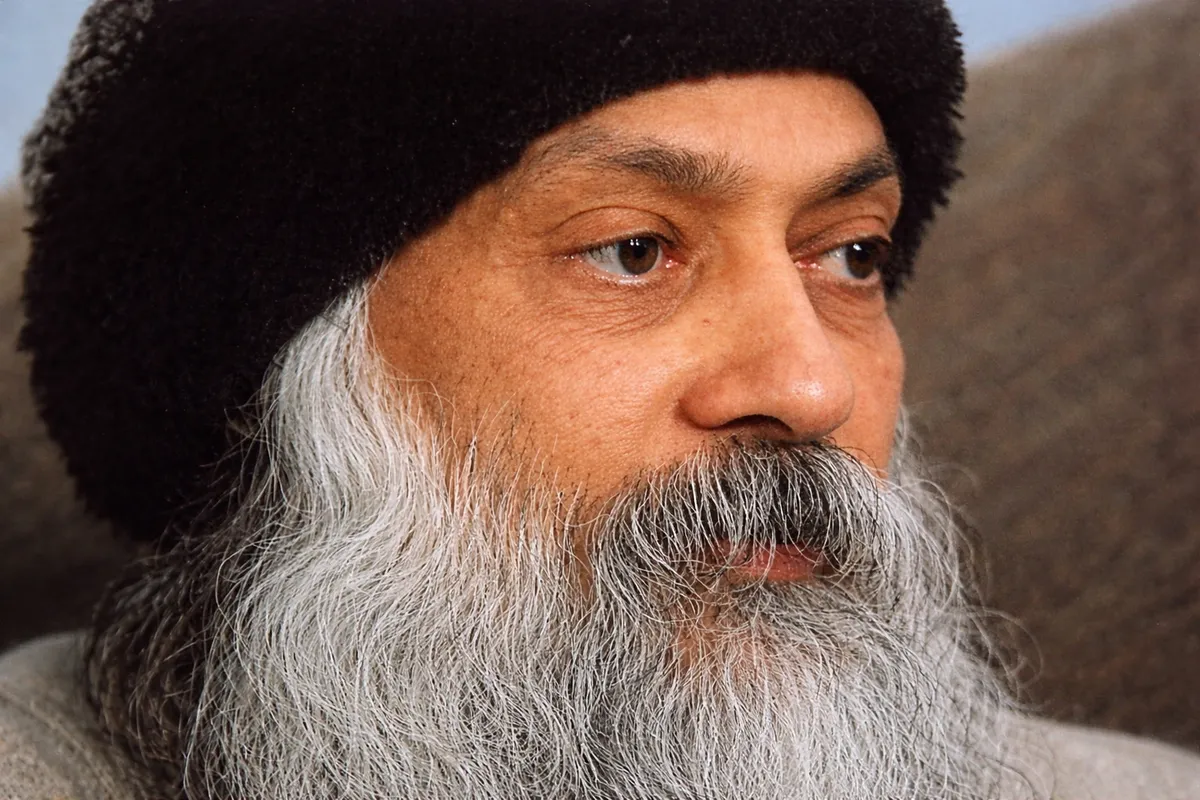
Osho's perspective on Creed
When Osho Spoke About Creed
Passages from the discourses where this theme comes alive.
Osho, I frequently hear a question being asked about the ashram.... There is so much vitality here now and so much creativity with all these shows and music and fashions and crafts, as well as events happening abroad, that people are wondering what will happen when you are gone. When you leave your body will the ashram become a dead institution, and will you just become deified and forgotten?
These people who are wondering what will happen, are the same people who will create a dead institution. My people cannot create a dead institution -- it is impossible. Those who have been in communion with me will have learnt one thing absolutely, categorically: that life cannot be confined into institutions; the moment you try to confine it into institutions you destroy it. So while I am alive they will celebrate. When I am gone they will still celebrate. They will celebrate my life, they will celebrate my death, and they will remain alive. Remember, religions are created by guilty people, and I am not creating any guilt here. There are certain mechanisms.... If Jesus had not been crucified, there would have been no Christianity at all. The real founder of Christianity was not Jesus Christ but the high priest of Jerusalem, the rabbi, and Pontius Pilate. These two persons,…
A friend has asked: Osho, you said about a wayward son that one should let him pass through his experiences, and he will learn on his own. But even after experiencing, he still prefers the same thing—someone is asking about his wayward son—no matter how much suffering he has to endure, even if death itself should come, still he does the same. After stumbling again and again, he repeats it. What can be done? How to reform him?
You will not be able to reform him. If life cannot reform him, if even death cannot reform him, what will you be able to do? If what you say is true—that again and again, even after suffering, he does the same thing; even if death comes, he will still do the same thing, and he does not change—then take your hands off. You will not be able to reform him. You cannot be stronger than death. And one who does not learn from suffering—what will he learn from you? Do not call him a wayward son. You have found yourself a Jadabharata. Because those whom suffering does not reform, whom even death does not reform—these are great, arrived masters; they are in the ultimate state. Do not even try to reform such a one. And why are you so eager to reform another? It is enough to reform yourself.…
एक मित्र ने पूछा है कि ओशो, आपने कुपुत्र के बारे में बताया कि उसको अनुभवों में से गुजरने देना चाहिए, तो वह खुद सीख जाएगा। लेकिन अनुभव लेने के बाद भी वह वही पसंद करता है--कोई अपने कुपुत्र के संबंध में पूछ रहे हैं--चाहे कितना ही दुख झेलना पड़े, चाहे मौत भी क्यों न आ जाए, फिर भी वह वही करता है। बार-बार ठोकर खाकर भी वही दोहराता है। उसका क्या उपाय किया जाए? उसको सुधारने का क्या तरीका है?
आप न सुधार पाएंगे। जिसको जिंदगी नहीं सुधार पा रही, मौत नहीं सुधार पा रही, उसको आप क्या सुधार पाएंगे? अगर आपकी बात सच है कि बार-बार दुख पाकर भी वह वही करता है, मौत भी आ जाए तो भी वही करता है, और सुधरता नहीं, तो आप हाथ अलग कर लें। आपसे नहीं सुधर पाएगा। आप मौत से ज्यादा मजबूत नहीं हो सकते। और जो दुख से नहीं सीख पा रहा है, वह आपसे क्या सीख पाएगा? कुपुत्र मत कहिए उसको। आपको कोई जड़भरत मिल गया है। क्योंकि जिसको दुख नहीं सुधारते, मौत नहीं सुधारती, वे तो बड़े पहुंचे हुए महात्मा हैं, वे तो परम अवस्था में हैं। उनको आप सुधारने की कोशिश ही मत करिए।
Osho, the story of Reverend Jim Jones and the mass suicide in Guyana has dominated the newspapers for the last few weeks. It has all the ingredients of a perfectly sensational news story. The fallout has been endless analyses and commentaries, along with a re-examination of all nontraditional religious experiments. In the classical media vocabulary these are called “cults”—which is, in a way, a built-in accusation. I am quite sure the same label could be applied to the Osho Ashram. Would you kindly explain the difference between your teaching and experiments, and cults?
So first, this is not a cult or a sect. It is freedom from all sects. And who are these people who condemn cults and sects? They themselves are sectarians—some are Christian, some Hindu, some Muslim. They condemn sects. Why? Because their own sects feel threatened. They themselves are bound by beliefs, yet they fear a rival might appear. Yes, they have one argument: they say, “We are traditional, therefore we are not a cult; we are religion. What is nontraditional is a cult; what is traditional is religion.” What a definition! Then when Jesus first gave birth to Christianity, was that religion or a cult? It was not traditional then. Then the Jews did the right thing by crucifying Jesus, for he was a cultist, creating a sect, provoking and misleading the Jews. And when Buddha gave birth to the Buddhist way, that was a cult, a sect—not religion.…
ओशो, रेवरेंड जिम जोन्स का किस्सा और गुयाना में घटित सामूहिक आत्मघात की कहानी पिछले कुछ सप्ताहों से समाचार-पत्रों में छायी हुई है। इस कांड में एक आदर्श रोचक समाचार-कथा के सब लक्षण हैं। इस घटना की फलश्रुति हैं--अंतहीन विश्लेषण और टीकाएं, और साथ ही सभी गैर-परंपरागत धार्मिक प्रयोगों का पुनर्परीक्षण। प्रचार-साधनों की शास्त्रीय भाषा में ये चीजें संप्रदायों, ‘कल्ट्स’ के नाम से ज्ञात हैं--जो कि एक तरह से अनुमानित दोषारोपण है। मैं निश्चित समझता हूं कि यही बात ओशो आश्रम के साथ लागू हो सकती है। क्या आप हमें समझाने की कृपा करेंगे कि आपकी शिक्षा और प्रयोगों में, और संप्रदाय (‘कल्ट्स’) में क्या अंतर है?
तो पहली तो बात, यह कोई कल्ट या संप्रदाय नहीं है। यह तो समस्त संप्रदायों से मुक्ति है । और ये कौन लोग हैं जो कल्ट और संप्रदायों की निंदा करते हैं। ये खुद ही सांप्रदायिक लोग हैं--कोई ईसाई है, कोई हिंदू है, कोई मुसलमान है। ये संप्रदायों की निंदा करते हैं। क्यों? इनके संप्रदायों को खतरा है। ये खुद बंधे हैं धारणाओं में, मगर इनको डर है कि कोई प्रतिस्पर्धी न पैदा हो जाए। हां, एक बात उनके पक्ष में है कि वे कहते हैं कि हम परंपरागत हैं, इसलिए हम कल्ट नहीं हैं; हम धर्म हैं। जो परंपरागत नहीं है; वह संप्रदाय; जो परंपरागत है, वह धर्म। यह भी खूब परिभाषा हुई! तो फिर जीसस ने जब पहली दफा ईसाइयत को जन्म दिया, तब वह धर्म था या कल्ट? तब तो वह परंपरागत नहीं था। तो फिर यहूदियों ने ठीक ही किया कि जीसस को सूली पर लटका दिया। …
Osho, so many dull and crazy religions once started with a wonderful and enlightened person. Please tell me, will your sannyasins become as dull and crazy as all the other stupid religions? I am afraid to fall into another institution.
Shiva's wife, Parvati, died. Now he is the god of destruction, death, but he could not accept the death of Parvati. You see the human element? He took the dead body of his wife, carried her on his shoulders for twelve years around the country in search of a physician. There may be someone -- who knows? -- a magician, a physician, a miracle man who will revive her. He loved her so much... Now you cannot carry a dead body for twelve years. The body became rotten, it started falling into pieces. Somewhere the hand fell, somewhere the leg fell -- that's how the Hindu sacred places were born. Wherever any part of Parvati fell, one sacred place was born. So there are twelve most sacred places in India. Those places are just graveyards of parts of Parvati. Unless the whole dead body disappeared... Shiva carried her in search…
Are you going to found a new creed?
definitionWhat is the nature of a creed?
definitionProfound Quotes on Creed
Explore our structured collection of meaning-mapped quotes regarding Creed.