
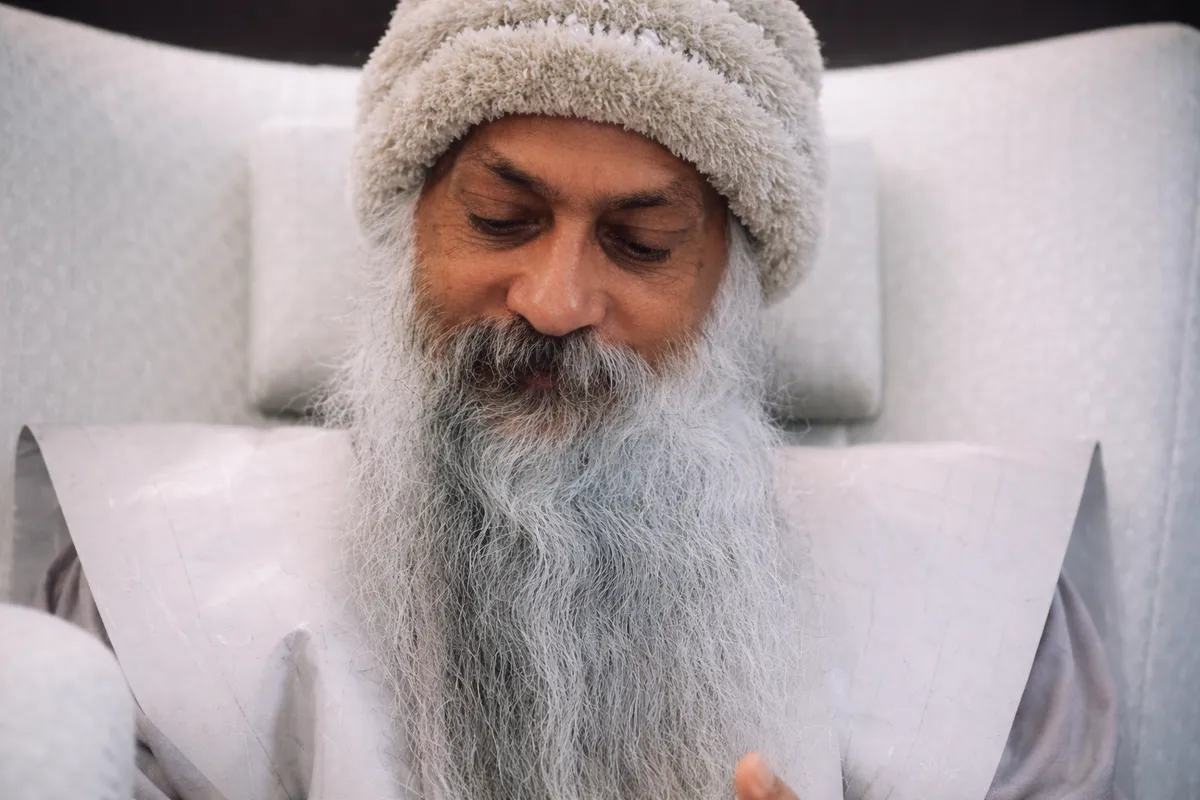
Osho's perspective on Emotion
When Osho Spoke About Emotion
Passages from the discourses where this theme comes alive.
Beloved Osho, why do I always weep when I can't laugh? Isn't weeping opposed to dancing, singing and celebrating?
The phenomenon of weeping is mysterious. It does not mean that you are sad, not necessarily. It is not necessarily against celebrating, against cheerfulness, against laughing; no. The tears have a very strange function: whenever something in your heart is so much that it cannot be expressed by normal means, tears are an emergency method. So they may mean anything. You may be very happy, so happy that laughing will look stupid but tears will look perfectly right. Your tears will show that your happiness is not an ordinary happiness -- it is so deep that only tears can express it; it is so extraordinarily deep that an emergency method is used. Two friends meeting after many days, many years, may not feel like talking; talking may look too profane. They may like just to hug each other and weep on each other's shoulders. They are saying many many things...…
Beloved Osho, during your first discourse on the mahagita many people were weeping streams of tears. What does this mean? Are those who were crying weak hearted or is it the power of your voice? Please throw some light on this.
Everywhere in the world it has always been like this. Politicians only have lust for power, they are not concerned with order or revolt. Yes, when they are not keeping order, when the power is not in their hands, then they say everything is wrong; then a revolution is needed. And as soon as they come to power, revolution isn't needed any more because the work of the revolution is complete. Its work was this -- to bring him to power -- the job is done. Then whoever mentions revolution is an enemy. And those that speak of revolution also have nothing to do with it. It is an amazing thing to watch -- it is happening every day, and still man does not become alert. All revolutionaries become counter-revolutionary when they come to power. And all ousted politicians become revolutionaries as soon as they step down from office. Political…
Osho, before the discourse, when Jagjivan’s verses were recited, my heart suddenly filled, my eyes welled up, and as the recitation continued my tears kept flowing on their own. When the recitation ended, the tears stopped. I understood the meaning of those verses after your discourse. Why did this happen?
Sumer Singh, you are fortunate that your feeling was soaked, and afterward understanding came. First dive, then understand. First be colored, then understand. First let things descend into the heart; afterward the intellect will do the arithmetic on its own. Those who say, “First we will do the intellectual accounting, and then we will drown the heart”—their heart never drowns, because the intellect’s accounting is never complete. It never completes! The intellect never comes to a conclusion; it has no conclusions. The intellect does not know how to conclude. It cannot conclude, because its nature is doubt. The heart’s nature is trust. The intellect can doubt, can think; it cannot conclude. The heart cannot think, cannot doubt; it takes the leap—and the conclusion happens. These two processes are very different. Therefore conversation between the intellectual and the feeling one cannot really happen; even in conversation, dilemma arises, dispute arises. There…
तीसरा प्रश्न: ओशो, प्रवचन से पहले जब जगजीवन के पदों का पाठ किया गया तो मेरा दिल अकस्मात भर आया, आंखें डबडबा आईं और पदों का पाठ चलता रहा तब तक मेरे आंसू आप ही आप बहते रहे। पाठ की समाप्ति हुई तो आंसू बंद हुए। मैं इन पदों का मतलब ओशो के प्रवचन के बाद समझा। ऐसा क्यों हुआ?
सुमेर सिंह, तुम सौभाग्यशाली हो कि तुम्हारा भाव भीगा, पीछे तुम्हें अर्थ समझ में आया। पहले डूबो, फिर समझ। पहले रंग जाओ, फिर समझ। पहले हृदय में उतर जाने दो बातों को, फिर बुद्धि अपने आप हिसाब-किताब लगा लेगी। जो लोग कहते हैं: पहले हम बुद्धि से हिसाब-किताब लगाएंगे, और फिर हृदय को डुबाएंगे, उनका हृदय कभी नहीं डूबता है, क्योंकि बुद्धि का हिसाब-किताब कभी पूरा नहीं होता। कभी पूरा नहीं होता! बुद्धि कभी निष्कर्ष तक आती ही नहीं, बुद्धि के पास निष्कर्ष होते ही नहीं। बुद्धि निष्कर्ष लेना जानती ही नहीं। बुद्धि निष्कर्ष ले ही नहीं सकती, क्योंकि बुद्धि का स्वभाव संदेह है। हृदय का स्वभाव श्रद्धा है। बुद्धि संदेह कर सकती है, विचार कर सकती है, निष्कर्ष नहीं ले सकती। हृदय विचार नहीं कर सकता, संदेह नहीं कर सकता, छलांग लेता है--और निष्कर्ष आ जाता है। ये दोनों प्रक्रियाएं बड़ी भिन्न हैं। इसलिए बुद्धिमान का और भावुक का वार्तालाप भी नहीं हो सकता। वार्तालाप में ही दुविधा हो जाती है, विवाद हो जाता है। …
Osho, when I listen to you, every word sinks to the depths of my heart and stirs me. But when I read you, it remains a mental game. Please tell me why this happens.
It’s plain. The arithmetic is simple. When you read, only you are there; I am not. What you read is nothing but you. It becomes a game of the mind. When you listen to me, then sometimes—knowingly or unknowingly—I also slip into you. You seldom give such a chance, but now and then a lapse happens on your side. Unaware, you leave the door a little open—and I come in. So when you are hearing me, it’s a different matter. That is why truth has always been spoken, not written. It cannot be written. Even speaking it is very difficult, yet it can still be said—at least a little can be said, a little news can be given. Because in speaking, many elements are involved that are lost in writing. When you read a book, the book is dead. A book cannot create an atmosphere around you. A book has…
आखिरी प्रश्न: ओशो, जब आपको सुनता हूं तो आपका प्रत्येक शब्द दिल की गहराई तक उतर जाता है और हलचल पैदा करता है। लेकिन जब आपको पढ़ता हूं तो वह दिमागी खेल बनकर रह जाता है। कृपया बताएं कि ऐसा क्यों होता है?
साफ-साफ है। गणित बिलकुल सीधा है। जब तुम पढ़ते हो तब तुम्हीं होते हो, तब मैं नहीं होता। जो तुम पढ़ते हो, वह तुम ही तुम हो। दिमागी खेल बनकर रह जाता है। जब तुम मुझे सुनते हो तो कभी-कभी तुम्हारे जाने-अनजाने मैं भी तुम में प्रवेश कर जाता हूं। कम ही तुम ऐसा मौका देते हो। लेकिन कभी-कभी चूक तुमसे हो जाती है। कभी-कभी बे-भान, तुम जरा दरवाजा खुला छोड़ देते हो, मैं भीतर आ जाता हूं। इसलिए तुम जब मुझे सुन रहे हो तो बात और है। इसलिए सत्य सदा कहा गया है, लिखा नहीं गया। लिखा जा नहीं सकता। कहना भी बहुत मुश्किल है, लेकिन फिर भी कहा जा सकता है, थोड़ा-सा कहा जा सकता है। ऐसी थोड़ी-सी खबर दी जा सकती है। क्योंकि कहने में कई बातें सम्मिलित हैं, जो लिखने में खो जाती हैं।
Can anything we ask make you blush?
definitionDo enlightened beings experience sadness?
definitionWhat does it mean to cry?
definitionWho is it that is crying?
definitionProfound Quotes on Emotion
Explore our structured collection of meaning-mapped quotes regarding Emotion.