
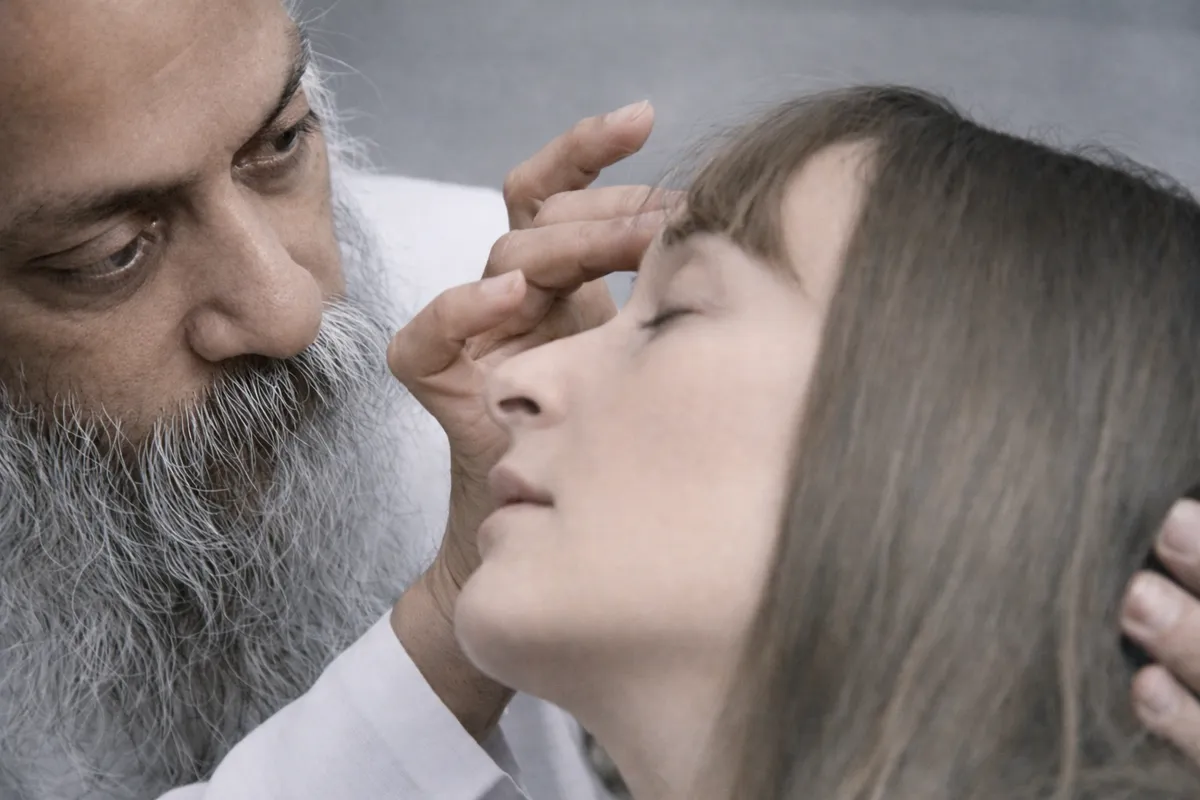
If you dance and sing with your whole heart, the outside spins so fast that a quiet, peaceful center inside shows up—just like when you sit very still.
From the Discourses
Passages where Osho speaks to this question — each links to the complete discourse.
Osho, was Chaitanya’s dance and kirtan also an intoxication?
No. Through kirtan and bhajan Chaitanya certainly attained exactly what I am talking about. Chaitanya danced his way to that which Buddha and Mahavira attain by standing still. Both ways are possible. There are two ways to catch hold of the axle-pin. One way is to become so still that no vibration remains in you—utterly unmoving, steady, in a state of just standing; then you reach the pin. The other way is to move so totally, to be in such velocity, that the whole wheel runs and the pin becomes obvious. The second is easier. When the wheel spins fast, it’s easy to spot the pin. Very few can recognize the pin when the wheel is still. Mahavira recognizes it by standing still; Krishna, by dancing. And Chaitanya danced more than even Krishna. There is simply no comparison. There has perhaps been no dance like Chaitanya’s on this earth. The…
ओशो, चैतन्य का नृत्य-कीर्तन भी क्या इनटॉक्सीकेशन था?
ये दोनों बातें हो सकती हैं। कील को पकड़ने के दो रास्ते हो सकते हैं। एक रास्ता तो यह हो सकता है कि आप इतने खड़े हो जाएं कि आपमें कोई कंपन ही न रह जाए। कंपन ही न रह जाए कोई, इतने ठहरे हो जाएं, इतने थिर हो जाएं, जस्ट स्टैंडिंग की हालत रह जाए--तो उस हालत में आप कील पर पहुंच जाएंगे। या दूसरा रास्ता यह है कि आप इतने मूवमेंट में हो जाएं, इतनी गति में हो जाएं कि चाक पूरा चल पड़े और कील पहचान में आ जाए। आसान दूसरा ही होगा। चाक जोर से चले तो कील को पहचानना आसान होगा। बहुत कम लोग हैं जो खड़े हुए चाक में और कील को पहचान पाएं। महावीर खड़े होकर पहचानते हैं, कृष्ण नाच कर। और चैतन्य तो कृष्ण भी जितना नहीं नाचे उतना नाचे हैं। चैतन्य का तो कोई मुकाबला नहीं। चैतन्य के नृत्य का तो कोई हिसाब ही नहीं है। शायद पृथ्वी पर ऐसा कोई नाचा ही नहीं। पर ध्यान में लेने की बात इतनी ही है कि हमारे भीतर दो...हमारी परिधि जो है, गतिमान है, परिवर्तन है वहां; और हमारी जो गहरी आत्मा है वहां शाश्र्वतता है, इटरनिटी है, वहां कोई परिवर्तन नहीं, वहां सब चुप और शांत और सदा खड़ा रहा है, वह कील की भांति है, वह थिर है। उस थिर को, उस परिवर्तन-अतीत को किस भांति पहचान लें!
Questioner: do you think chaitanya's singing and dancing was nothing more than a way of intoxication?
No, Chaitanya achieved the highest through singing and dancing. He achieved through dancing exactly what Mahavira and Buddha achieved through meditation, through stillness. There are two ways to come to the axle, the center, the supreme. One of the ways lies in your being so steady and still -- just at a standstill -- that there is not a trace of trembling in you and you arrive at the center. The other way is just the contrary: you get into such terrific motion that the wheel runs at top speed and the axle becomes visible and knowable. And this second way is easier than the first. It is easy to know the axle if the wheel is in motion. While Mahavira comes to know it through stillness, through meditation, Krishna knows it through dancing. And Chaitanya surpasses even Krishna in dancing; his dance is magnificent, incomparable. Perhaps no other person…
A friend has asked: Osho, you said about a wayward son that one should let him pass through his experiences, and he will learn on his own. But even after experiencing, he still prefers the same thing—someone is asking about his wayward son—no matter how much suffering he has to endure, even if death itself should come, still he does the same. After stumbling again and again, he repeats it. What can be done? How to reform him?
You will not be able to reform him. If life cannot reform him, if even death cannot reform him, what will you be able to do? If what you say is true—that again and again, even after suffering, he does the same thing; even if death comes, he will still do the same thing, and he does not change—then take your hands off. You will not be able to reform him. You cannot be stronger than death. And one who does not learn from suffering—what will he learn from you? Do not call him a wayward son. You have found yourself a Jadabharata. Because those whom suffering does not reform, whom even death does not reform—these are great, arrived masters; they are in the ultimate state. Do not even try to reform such a one. And why are you so eager to reform another? It is enough to reform yourself.…
एक मित्र ने पूछा है कि ओशो, आपने कुपुत्र के बारे में बताया कि उसको अनुभवों में से गुजरने देना चाहिए, तो वह खुद सीख जाएगा। लेकिन अनुभव लेने के बाद भी वह वही पसंद करता है--कोई अपने कुपुत्र के संबंध में पूछ रहे हैं--चाहे कितना ही दुख झेलना पड़े, चाहे मौत भी क्यों न आ जाए, फिर भी वह वही करता है। बार-बार ठोकर खाकर भी वही दोहराता है। उसका क्या उपाय किया जाए? उसको सुधारने का क्या तरीका है?
आप न सुधार पाएंगे। जिसको जिंदगी नहीं सुधार पा रही, मौत नहीं सुधार पा रही, उसको आप क्या सुधार पाएंगे? अगर आपकी बात सच है कि बार-बार दुख पाकर भी वह वही करता है, मौत भी आ जाए तो भी वही करता है, और सुधरता नहीं, तो आप हाथ अलग कर लें। आपसे नहीं सुधर पाएगा। आप मौत से ज्यादा मजबूत नहीं हो सकते। और जो दुख से नहीं सीख पा रहा है, वह आपसे क्या सीख पाएगा? कुपुत्र मत कहिए उसको। आपको कोई जड़भरत मिल गया है। क्योंकि जिसको दुख नहीं सुधारते, मौत नहीं सुधारती, वे तो बड़े पहुंचे हुए महात्मा हैं, वे तो परम अवस्था में हैं। उनको आप सुधारने की कोशिश ही मत करिए।
Osho, Buddha speaks of awareness, of waking up, and you, in between, also speak of merriment, intoxication, wine, and absorption. While speaking on Buddha, why is it necessary to discuss the opposite? Please explain.
When there is no vision, things look opposite. When there is vision, not even a trace of opposition remains. What Buddha calls awareness, the Sufis have called “unconsciousness”—a drunken swoon. What Buddha calls apramāda—heedfulness—devotees have called “wine.” There is not an inch of distance between Buddha’s sayings and Omar Khayyam. What Buddha called a temple, Omar Khayyam called a tavern. Buddha has not been understood, nor has Omar Khayyam. People thought Omar Khayyam was praising wine. Kuch apni karāmat dikha, ai Saki, Jo khol de āṅkh, vo pila, ai Saki. Hoshiyār ko dīwānā banāyā bhī to kyā? Dīwāne ko hoshiyār banā, ai Saki. You are already unconscious. You have already drunk the wine of the world. Someone has drunk the wine of wealth and is unconscious in wealth. Someone has drunk the wine of position and is unconscious in status. Someone has drunk the wine of fame. Those who couldn’t…
पहला प्रश्न: ओशो, बुद्ध बातें करते हैं होश की, जागने की, और आप बीच-बीच में मस्ती, नशा, शराब और लीनता की बातें भी उठाया करते हैं। बुद्ध पर बोलते समय विपरीत की चर्चा क्यों आवश्यक है? कृपया समझाएं।
दृष्टि न हो, तो विपरीत दिखाई पड़ता है। दृष्टि हो, तो जरा भी विपरीत दिखाई न पड़ेगा। जिसको बुद्ध होश कहते हैं, उसी को सूफियों ने बेहोशी कहा। जिसको बुद्ध अप्रमाद कहते हैं, उसी को भक्तों ने शराब कहा। बुद्ध के वचनों में और उमर खैयाम में इंचभर का फासला नहीं। बुद्ध ने जिसे मंदिर कहा है, उसी को उमर खैयाम ने मधुशाला कहा। बुद्ध तो समझे ही नहीं गए, उमर खैयाम भी समझा नहीं गया। उमर खैयाम को लोगों ने समझा कि शराब की प्रशंसा कर रहा है। कुछ अपनी करामात दिखा ऐ साकी जो खोल दे आंख वो पिला ऐ साकी होशियार को दीवाना बनाया भी तो क्या दीवाने को होशियार बना ऐ साकी तुम बेहोश हो। शराब तो तुमने पी ही रखी है। संसार की शराब। किसी ने धन की शराब पी रखी है और धन में बेहोश है। किसी ने पद की शराब पी रखी है और पद में बेहोश है। किसी ने यश की शराब पी रखी है। जिनको न पद, यश, धन की शराब मिली, वे सस्ती शराब मयखानों में पी रहे हैं। वे हारे हुए शराबी हैं।
Question: Fourth question: Osho, for an hour to an hour and a half after the daily discourse, a kind of intoxication descends. In that time, far from talking, I don’t even feel like looking at anyone. A strange smile spreads on my face. Sometimes tears come, and then I want to be alone. If anyone disturbs me at that time, I feel irritable. Please say something. It’s going well. This is exactly how it should be. This is no temple; this is a tavern. If the intoxication doesn’t come here, then nothing has happened. If you don’t get blissfully drunk here, you’ve missed. There is no preaching on scriptures going on here; here wine is being poured. Here it’s the work of drunkards. The weak have no passage here.