
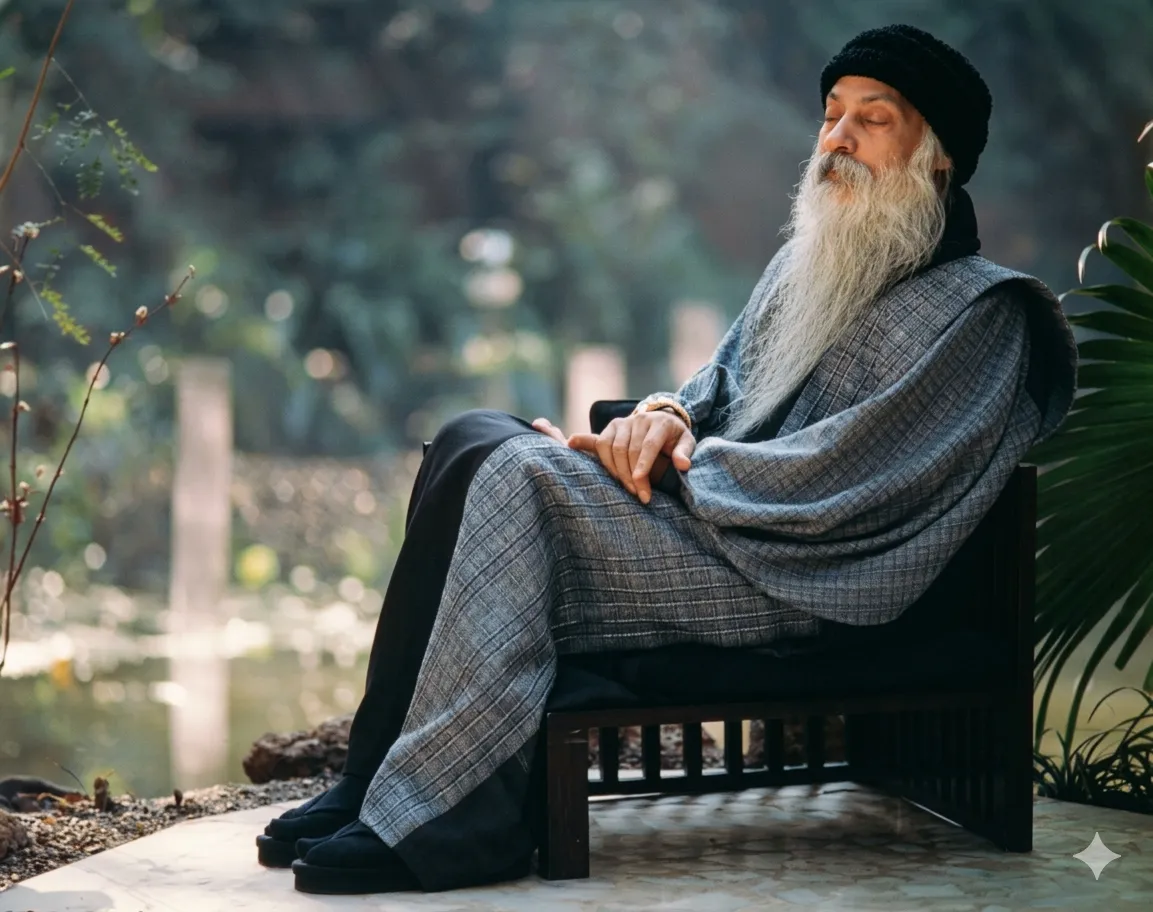
Real understanding comes from quietness, music, and meditation with a wise teacher—not from drinking or drugs.
From the Discourses
Passages where Osho speaks to this question — each links to the complete discourse.
Osho, Gurdjieff used to ply his disciples with abundant alcohol to know their innermost being. And when they got intoxicated he would listen carefully to what they said. Why don’t you do the same?
Krishnatirth, you silly fellow! And what do you think I’m doing? I pour it every day—morning and evening. What Gurdjieff poured was gross; what I pour is subtle. And the intoxication of the subtle goes far deeper. The gross can only reach the gross. Grape wine cannot go beyond the body. But there are other wines that go beyond the body. Those I am giving you: there is the wine of music, the wine of silence, the wine of meditation. And the supreme one, the Vedas called soma. Centuries have passed—countless people have been searching for soma. Scientists have tirelessly investigated in the ravines and mountains of the Himalayas: from which plant was soma produced? To this day no one has discovered how soma was made, what soma was. They will not discover it either—because soma is not something gross. Soma was obtained in the presence of the seers, by…
पहला प्रश्न: ओशो, जार्ज गुरजिएफ अपने शिष्यों का अंतरतम जानने के लिए उन्हें भरपूर शराब पिलाया करता था। और जब वे मदहोश हो जाते थे तो उनकी बातों को ध्यान से सुनता था। आप भी ऐसा क्यों नहीं करते हैं?
कृष्णतीर्थ! तुम बुद्धू के बुद्धू रहे! और मैं क्या कर रहा हूं? रोज पिलाता हूं, सुबह पिलाता हूं, सांझ पिलाता हूं। गुरजिएफ जो पिलाता था, वह स्थूल है। मैं जो पिला रहा हूं, वह सूक्ष्म है। और सूक्ष्म का नशा ज्यादा गहरे तक जाता है। स्थूल का नशा तो स्थूल तक ही जाएगा। अंगूर की शराब शरीर के पार नहीं जा सकती। लेकिन और भी शराबें हैं, जो देह के पार जाती हैं। वही तुम्हें पिला रहा हूं। संगीत की भी शराब है, मौन की भी शराब है, ध्यान की भी। और जो श्रेष्ठतम है, उसे वेदों ने सोमरस कहा है। सदियां हो गईं, न मालूम कितने लोग सोमरस की तलाश में रहे हैं! …
Osho, you sit in the tavern and, every morning and evening, you pour brimming goblet after goblet of wine. I do get intoxicated by your wine, but I don’t lose consciousness. What should I do?
That is why even a Sufi like Omar Khayyam has been misunderstood. Whatever notion you have about Omar Khayyam is wrong. The wine he spoke of is not the wine sold in taverns. The beloved he praised is not flesh-and-bone. He called the Beloved—God. And he called wine—devotion. Fitzgerald, who first translated Omar Khayyam into English, because of whom Omar became world-famous, did not understand him. Fitzgerald thought wine meant wine. He was a Western man. He took two plus two to be four. He took “wine” as wine and “beloved” as beloved. The subtle intention of the Sufis fell into a great misunderstanding. On the basis of Fitzgerald’s version the whole world translated him, and the mistake spread everywhere. Today taverns are named “Omar Khayyam.” Nothing could be more foolish. Temples should bear Omar Khayyam’s name—not taverns. Because the tavern he spoke of is of another kind. There is…
पहला प्रश्न: ओशो, आप मधुशाला में बैठ कर रोज सुबह और शाम भर-भर कर शराब के जाम पर जाम देते हैं। मैं आपकी शराब से मस्त तो होता हूं, पर होश नहीं खोता। क्या करूं?
इसीलिए उमर ख्य्याम जैसा सूफी फकीर भी गलत समझा गया। उमर खय्याम के संबंध में जो भी तुम्हारी धारणा है, सब गलत है। उसने जिस शराब की बात कही है, वह शराबखानों में बिकने वाली शराब नहीं है। उसने जिस प्रेयसी की बात कही है, वह हाड़-मांस-मज्जा की प्रेयसी नहीं है। उसने ‘प्रेयसी’ परमात्मा को कहा है। और उसने शराब ‘भक्ति’ को कहा है। फिट्जराल्ड ने, जिसने उमर खय्याम का सबसे पहले अंग्रेजी में अनुवाद किया और जिसके कारण उमर खय्याम जगत-विख्यात हुआ, उमर खय्याम को समझा ही नहीं। फिट्जराल्ड तो शराब का मतलब शराब समझा। पश्चिमी आदमी था। उसने तो दो और दो चार समझे। उसने तो शराब को शराब समझा और प्रेयसी को प्रेयसी समझा। सूफियों का अपूर्व मंतव्य ऐसे एक बड़ी गलतफहमी का शिकार हो गया। फिर फिट्जराल्ड के अनुवाद के आधार पर सारी दुनिया की भाषा में अनुवाद हुए और सब जगह भूल फैलती चली गई। आज तो शराबघरों के नाम उमर खय्याम हैं। इससे ज्यादा नासमझी और कुछ नहीं हो सकती।
Osho, why do you sometimes use wine as a symbol for the supreme experience of the Divine? Can’t a better symbol be found?
“Better” or “worse” is only a matter of how you look; otherwise, what symbol could be dearer than wine? Wine simply means this—ecstasy, blessed forgetfulness, absorption, total immersion. Among the Sufis, wine is a greatly honored symbol. Have you read the Rubaiyat of Omar Khayyam? Omar Khayyam is not a drunkard. He is a Sufi fakir, a supreme knower—like Saraha and Tilopa, a realized one of the highest order. Wine is a symbol. And there is no symbol more beautiful in relation to the Divine, because whoever drowns in That becomes forever intoxicated—God-intoxicated. A wine that never wears off once it rises; it speaks right from the head! A wine that does not merely bring unconsciousness—paradoxically, it brings wakefulness. The ego becomes unconscious, and the soul awakens. No, it won’t do otherwise. The symbol of wine must be brought in. However much one may speak of witnessing the Truth, it…
तीसरा प्रश्न: ओशो, आप प्रभु की परम अनुभूति के लिए कभी-कभी शराब जैसा प्रतीक क्यों प्रयोग करते हैं? क्या कोई अच्छा प्रतीक नहीं मिल सकता है?
अच्छा और बुरा देखने की बात है, नहीं तो शराब से प्यारा प्रतीक और क्या होगा? शराब का अर्थ केवल इतना ही है--मस्ती, विस्मरण, लवलीनता, तल्लीनता। शराब तो सूफियों का बड़ा समादृत प्रतीक है। उमर खैयाम की रुबाइयात पढ़ी है? उमर खैयाम कोई शराबी नहीं है। उमर खैयाम एक सूफी फकीर है। उमर खैयाम एक परम ज्ञानी है--जैसे सरहपा और जैसे तिलोपा, ऐसा परम ज्ञानी है। शराब प्रतीक है। और शराब से सुंदर कोई प्रतीक नहीं हो सकता परमात्मा के संबंध में, क्योंकि जो भी उसमें डूबता है सदा के लिए मस्त हो जाता है, अलमस्त हो जाता है। शराब भी और ऐसी शराब कि फिर उतरती नहीं, चढ़ी सो चढ़ी! सिर चढ़कर बोलती है, ऐसी शराब। ऐसी शराब कि बेहोशी ही नहीं लाती, बड़ी विरोधाभासी है--एक तरफ बेहोशी लाती है, एक तरफ होश लाती है। अहंकार तो बेहोश हो जाता है और आत्मा जग जाती है।
Question: The final question: Osho, do you also drink alcohol? And there is nothing else truly worth drinking. For years I haven’t drunk water—that much I can assure you; for ten years at least I haven’t touched it. I drink soda and wine. Soda on the outside, wine on the inside. I believe in balance—a little of the outer, a little of the inner. There is a wine that has never been distilled; toward it no one has ever been able to gaze. There is an elixir like that. I drink this undistilled wine. I live on this unseen elixir! And I want to make you drunkards too. Bhakti means wine. Shandilya means a drunkard. The devotee’s temple is a tavern—intoxication, sweetness, mellowness. Drink the Divine; then no other wine will remain worth drinking.
और कुछ पीने योग्य है भी नहीं। वर्षों से पानी तो मैंने पीया नहीं, इतना तो मैं पक्का भरोसा दिला देता हूं--दस साल से तो नहीं पीया। सोडा पीता हूं और शराब। सोडा बाहर का, शराब भीतर की। मैं संतुलन में भरोसा रखता हूं--थोड़ा बाहर का, थोड़ा भीतर का। जो कभी खींची नहीं गई ऐसी शराब है एक जिसकी तरफ कभी कोई ताक नहीं सका ऐसी आब है एक मैं इस बिना खींची शराब को पीता हूं मैं इस बिना देखी आब को जीता हूं! और मैं तुम्हें भी शराबी बनाना चाहता हूं। भक्ति यानी शराब। शांडिल्य यानी शराबी। भक्त का मंदिर यानी मधुशाला, मादकता, माधुर्य। परमात्मा को पीओ, फिर कोई और शराब पीने जैसी नहीं रह जाएगी। मेरे देखे, जो लोग शराब पीते हैं, वे इसीलिए पीते हैं कि उनकी असली खोज तो परमात्मा की है, और परमात्मा मिलता नहीं। असली खोज तो यह है कि कैसे अपने को डुबा दें, लेकिन ऐसी कोई जगह नहीं मिलती जहां डुबा दें, तो चलो भुला लें; डूबना तो होता नहीं, तो थोड़ी देर को भुला लें। शराब थोड़ी देर को भ्रांति देती है कि भूल गए अपने को। अहंकार बहुत पीड़ा है।
A friend has asked: Osho, you said about a wayward son that one should let him pass through his experiences, and he will learn on his own. But even after experiencing, he still prefers the same thing—someone is asking about his wayward son—no matter how much suffering he has to endure, even if death itself should come, still he does the same. After stumbling again and again, he repeats it. What can be done? How to reform him?
You will not be able to reform him. If life cannot reform him, if even death cannot reform him, what will you be able to do? If what you say is true—that again and again, even after suffering, he does the same thing; even if death comes, he will still do the same thing, and he does not change—then take your hands off. You will not be able to reform him. You cannot be stronger than death. And one who does not learn from suffering—what will he learn from you? Do not call him a wayward son. You have found yourself a Jadabharata. Because those whom suffering does not reform, whom even death does not reform—these are great, arrived masters; they are in the ultimate state. Do not even try to reform such a one. And why are you so eager to reform another? It is enough to reform yourself.…
एक मित्र ने पूछा है कि ओशो, आपने कुपुत्र के बारे में बताया कि उसको अनुभवों में से गुजरने देना चाहिए, तो वह खुद सीख जाएगा। लेकिन अनुभव लेने के बाद भी वह वही पसंद करता है--कोई अपने कुपुत्र के संबंध में पूछ रहे हैं--चाहे कितना ही दुख झेलना पड़े, चाहे मौत भी क्यों न आ जाए, फिर भी वह वही करता है। बार-बार ठोकर खाकर भी वही दोहराता है। उसका क्या उपाय किया जाए? उसको सुधारने का क्या तरीका है?
आप न सुधार पाएंगे। जिसको जिंदगी नहीं सुधार पा रही, मौत नहीं सुधार पा रही, उसको आप क्या सुधार पाएंगे? अगर आपकी बात सच है कि बार-बार दुख पाकर भी वह वही करता है, मौत भी आ जाए तो भी वही करता है, और सुधरता नहीं, तो आप हाथ अलग कर लें। आपसे नहीं सुधर पाएगा। आप मौत से ज्यादा मजबूत नहीं हो सकते। और जो दुख से नहीं सीख पा रहा है, वह आपसे क्या सीख पाएगा? कुपुत्र मत कहिए उसको। आपको कोई जड़भरत मिल गया है। क्योंकि जिसको दुख नहीं सुधारते, मौत नहीं सुधारती, वे तो बड़े पहुंचे हुए महात्मा हैं, वे तो परम अवस्था में हैं। उनको आप सुधारने की कोशिश ही मत करिए।