
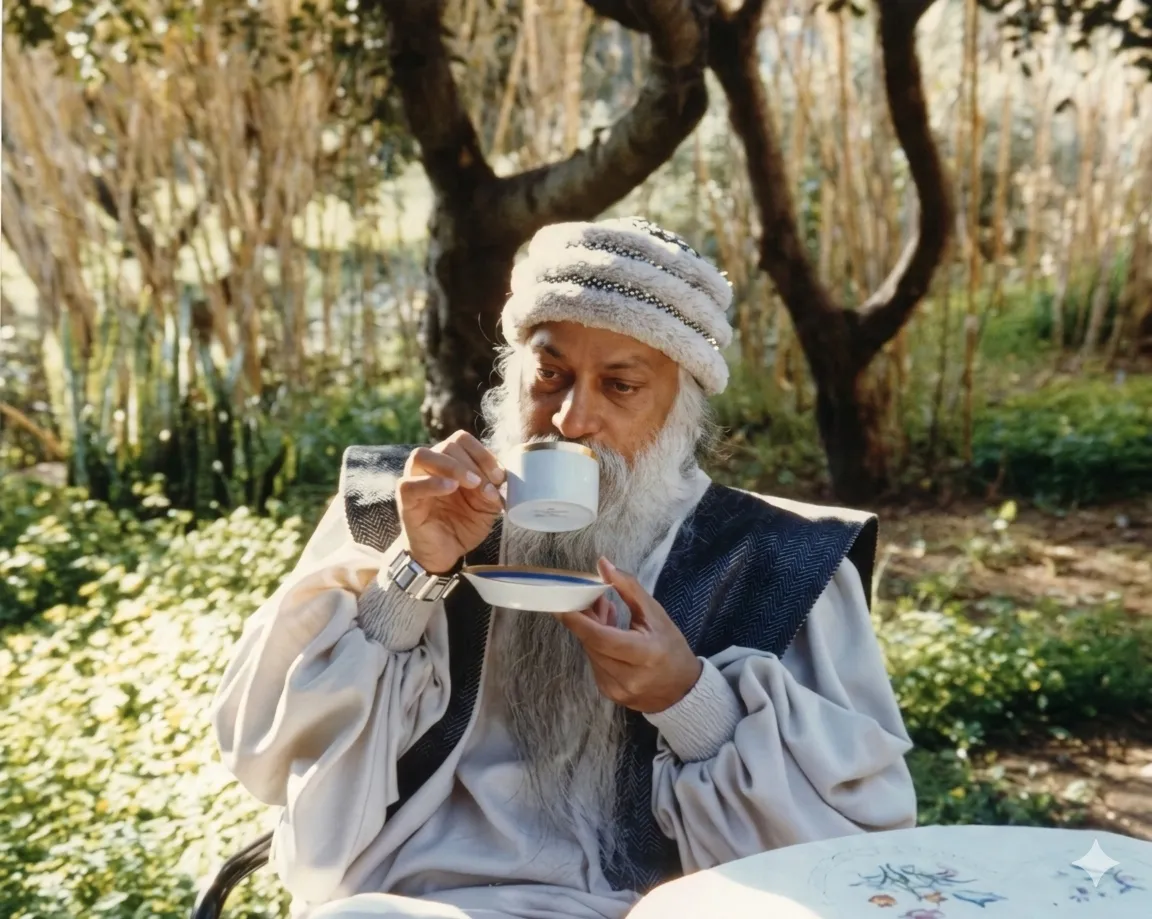
The good feeling you get from my words isn’t from me; it’s like God playing music through a flute—thank the Player, not the flute.
From the Discourses
Passages where Osho speaks to this question — each links to the complete discourse.
Osho, the one whom you look upon even once with a bliss-intoxicated glance—Osho—he will never again take a wine-cup into his hands for the rest of his life. Osho, why is there such intoxication in your words?
Dinesh! Look at the spring! Do not get entangled only in the flower. Right beside the flower stands the spring—look at spring. It has wrought the miracle. On a green tree a red flower has appeared—and an even greater marvel is happening. The flower is gross; subtler than the flower, fragrance arises. The flower is laden with the earth’s gravity, but fragrance is free of the earth’s gravity. If the flower falls, it falls toward the earth; the fragrance is “falling” toward the sky. A miracle is occurring. But behold this invisible spring. And so it happens. The Divine comes and stands by a Tilopa, a Saraha. But you only see the veena being played; you do not see His fingers. Have you ever seen love? Yet the one upon whom love showers is visible—his gait changes, his style and manner change; his life-style is transformed; eyes that yesterday were…
आखिरी प्रश्न: ओशो, जिसे तू देख ले एक बार मस्ती भरी नजर से तो ओशो--वो उम्र भर हाथों में अपने जाम न ले। ओशो, आपके शब्दों में इतनी मादकता क्यों है?
दिनेश! बसंत को देखो! फूल में ही मत उलझ जाना। फूल के ही पास खड़ा है बसंत। बसंत को देखो। उसने चमत्कार कर दिया है। हरे वृक्ष में लाल फूल आ गया--और भी चमत्कार हो रहा है। फूल स्थूल है, फूल से सूक्ष्म सुवास उठ रही है। फूल जमीन के गुरुत्वाकर्षण से भरा है, लेकिन सुवास जमीन के गुरुत्वाकर्षण से मुक्त है। फूल गिरेगा तो जमीन की तरफ गिरेगा। सुवास आकाश की तरफ गिर रही है। चमत्कार हो रहा है। मगर इस अदृश्य बसंत को देखो।
Question: Fourth question: Osho, for an hour to an hour and a half after the daily discourse, a kind of intoxication descends. In that time, far from talking, I don’t even feel like looking at anyone. A strange smile spreads on my face. Sometimes tears come, and then I want to be alone. If anyone disturbs me at that time, I feel irritable. Please say something. It’s going well. This is exactly how it should be. This is no temple; this is a tavern. If the intoxication doesn’t come here, then nothing has happened. If you don’t get blissfully drunk here, you’ve missed. There is no preaching on scriptures going on here; here wine is being poured. Here it’s the work of drunkards. The weak have no passage here. Here, drink me. And drown here so deeply that you lose all your senses.
यहां तुम मुझे पीयो। और यहां तुम इस तरह डूबो कि तुम्हारे सब होश खो जाएं। बेहोश हो गए तो भक्त हो गए। और अंगूरों की शराब तो पीयो तो एक दिन उतर जाती है। आज पीयो, सुबह उतर जाएगी, कल उतर जाएगी, सांझ उतर जाएगी। यह असली शराब है, चढ़ी तो फिर उतरती नहीं। धीरे-धीरे इसमें डुबकी लो।
Osho, you sit in the tavern and, every morning and evening, you pour brimming goblet after goblet of wine. I do get intoxicated by your wine, but I don’t lose consciousness. What should I do?
That is why even a Sufi like Omar Khayyam has been misunderstood. Whatever notion you have about Omar Khayyam is wrong. The wine he spoke of is not the wine sold in taverns. The beloved he praised is not flesh-and-bone. He called the Beloved—God. And he called wine—devotion. Fitzgerald, who first translated Omar Khayyam into English, because of whom Omar became world-famous, did not understand him. Fitzgerald thought wine meant wine. He was a Western man. He took two plus two to be four. He took “wine” as wine and “beloved” as beloved. The subtle intention of the Sufis fell into a great misunderstanding. On the basis of Fitzgerald’s version the whole world translated him, and the mistake spread everywhere. Today taverns are named “Omar Khayyam.” Nothing could be more foolish. Temples should bear Omar Khayyam’s name—not taverns. Because the tavern he spoke of is of another kind. There is…
पहला प्रश्न: ओशो, आप मधुशाला में बैठ कर रोज सुबह और शाम भर-भर कर शराब के जाम पर जाम देते हैं। मैं आपकी शराब से मस्त तो होता हूं, पर होश नहीं खोता। क्या करूं?
इसीलिए उमर ख्य्याम जैसा सूफी फकीर भी गलत समझा गया। उमर खय्याम के संबंध में जो भी तुम्हारी धारणा है, सब गलत है। उसने जिस शराब की बात कही है, वह शराबखानों में बिकने वाली शराब नहीं है। उसने जिस प्रेयसी की बात कही है, वह हाड़-मांस-मज्जा की प्रेयसी नहीं है। उसने ‘प्रेयसी’ परमात्मा को कहा है। और उसने शराब ‘भक्ति’ को कहा है। फिट्जराल्ड ने, जिसने उमर खय्याम का सबसे पहले अंग्रेजी में अनुवाद किया और जिसके कारण उमर खय्याम जगत-विख्यात हुआ, उमर खय्याम को समझा ही नहीं। फिट्जराल्ड तो शराब का मतलब शराब समझा। पश्चिमी आदमी था। उसने तो दो और दो चार समझे। उसने तो शराब को शराब समझा और प्रेयसी को प्रेयसी समझा। सूफियों का अपूर्व मंतव्य ऐसे एक बड़ी गलतफहमी का शिकार हो गया। फिर फिट्जराल्ड के अनुवाद के आधार पर सारी दुनिया की भाषा में अनुवाद हुए और सब जगह भूल फैलती चली गई। आज तो शराबघरों के नाम उमर खय्याम हैं। इससे ज्यादा नासमझी और कुछ नहीं हो सकती।
Osho, you have titled this series of talks “Sahaj Yoga.” Do “sahaj” and “yoga” not seem mutually opposed?
Anand Maitreya! They don’t just seem opposed, they are opposed. But no ultimate truth of life can manifest without contradiction. Life is made of opposites—darkness and light, day and night, woman and man, negative electricity and positive electricity, birth and death. The very structure of life is woven of opposites. Hence the opposites are not only opposed; they are complementary to each other. If you have labored hard all day, you will be able to sleep deeply. Labor and rest are opposites, yet only the one who has worked can rest deeply—and the one who has not worked cannot. So the opposites are not only opposed, they complete each other. And only the one who has rested deeply at night can rise in the morning and engage in work again. One who has not rested through the night will not be able to work in the morning. Look closely at…
पहला प्रश्न: ओशो, आपने इस प्रवचनमाला का शीर्षक दिया है--सहज-योग। क्या सहज और योग परस्पर-विरोधी नहीं लगते?
आनंद मैत्रेय! विरोधी लगते ही नहीं, विरोधी हैं। लेकिन जीवन का कोई भी परम सत्य बिना विरोधाभास के प्रगट हो ही नहीं सकता। जीवन बना है विरोधों से--अंधेरा और प्रकाश, दिन और रात, स्त्री और पुरुष, ऋण विद्युत-धन विद्युत, जन्म-मृत्यु। जीवन की संरचना विरोधों से है। इसलिए विरोधी विरोधी ही नहीं हैं, एक-दूसरे के परिपूरक भी हैं। दिन भर श्रम किया खूब तो गहरी नींद सो सकोगे। श्रम और विश्राम विरोधी हैं, पर जिसने श्रम किया है वही गहरा विश्राम कर सकेगा। और जिसने श्रम नहीं किया वह गहरा विश्राम भी न कर सकेगा। तो विरोधी विरोधी ही नहीं हैं, एक-दूसरे के परिपूरक भी हैं। और जिसने रात्रि गहरा विश्राम किया है वही सुबह जागकर फिर श्रम में संलग्न हो सकेगा। जो रात-भर विश्राम नहीं कर सका वह सुबह श्रम में भी न लग सकेगा।
Beloved Osho, modest though my experience of awareness is, when it is happening I feel intoxicated. It is a far more subtle, but headier drunkenness than anything that makes one unconscious. Is this a case of illusion or a case of divine wine?
You may have heard about sleepwalkers who get up in the middle of the night and without waking, with open eyes, without stumbling, reach directly to the kitchen, find the fridge, open it, eat anything to their heart's content, and in the day they are dieting! And the doctor is puzzled and they themselves are puzzled -- "What is the matter? The more I diet the more my weight is going up." And there are almost ten percent of people capable of somnambulism. They can walk in their sleep, they can do things, and in the morning they will be disturbed: "Who has done this?" And not just ordinary people; there are cases on record of very great geniuses. Madame Curie, one of the first women ever to receive a Nobel Prize, was struggling for three years to solve a mathematical problem, and was becoming almost hopeless. Every angle, every…